







How does Ethiopia's coffee grading system work for Yirgacheffe?
Ethiopia's coffee grading system sorts beans by defect count and cup quality, with G1 and G2 reserved for washed lots and G3 to G5 mainly for naturals. Yirgacheffe Worka, a washed cooperative coffee from the Gedeo area, is graded G1: grown between 1,650 and 1,800 meters, made up of heirloom varieties, and prized for floral aroma and citrus notes.
The system runs through the Ethiopia Commodity Exchange, and the region's standing shapes how a green coffee bean is valued. Yirgacheffe sits within Sidamo administratively but was separated because its cup profile is so distinct. A roaster tested Worka at 86°C, 90°C, and 94°C in pour-over to show how water temperature shifts the balance of fruity acidity and tea-like body.
Yirgacheffe is where many coffee enthusiasts begin their journey into the world of specialty coffee, and the Worka cooperative, as a highly representative washed processor in the region, is known for its bright floral aromas and citrus notes. This article will begin with the relationship between the Yirgacheffe and Sidamo growing regions, outline the Worka cooperative's background, its washed processing method, and the characteristics of Ethiopian heirloom varieties, and systematically introduce the Ethiopia Commodity Exchange coffee grading system. In addition, Front Street Coffee's roaster tested this bean with pour-over brewing at three water temperatures—86°C, 90°C, and 94°C—to help readers find the brewing approach that best showcases the balance between its fruity acidity and tea-like body.
\n\nFor more specialty coffee knowledge, please follow our WeChat official account: Front Street Coffee (FrontStreet Coffee)\n\nYirgacheffe enjoys considerable fame in specialty coffee circles, and many people regard it as their starting point for single-origin coffee. When Yirgacheffe is mentioned, Sidamo often comes up as well, but not everyone clearly understands the relationship and differences between the two. Both names are located within Ethiopia. If understood in terms of administrative hierarchy, Sidamo is equivalent to a province, while Yirgacheffe is a town under that province. As a sub-region of Sidamo, Yirgacheffe is also one of the highest-altitude coffee-growing areas in Ethiopia. Because its flavors are so distinctive, it was later separated from Sidamo to become a region of its own, occupying a highly prominent position on the African coffee map.\n\nWhen cupping washed Yirgacheffe, Front Street Coffee (FrontStreet Coffee) noted that the most prominent flavor labels of this bean are clear floral aromas and full citrus notes. However, coffee flavors are not fixed; factors such as brewing water temperature and roast level can all create differences in the final cup. This time, Front Street Coffee (FrontStreet Coffee) conducted a set of experiments using Worka as the sample.\n\n
\n\nBean Information\n\nFront Street Coffee (FrontStreet Coffee): Ethiopia Yirgacheffe Worka \nGrade: G1 \nVariety: Heirloom \nGrowing altitude: 1,650–1,800 meters \nProcessing method: Washed\n\n
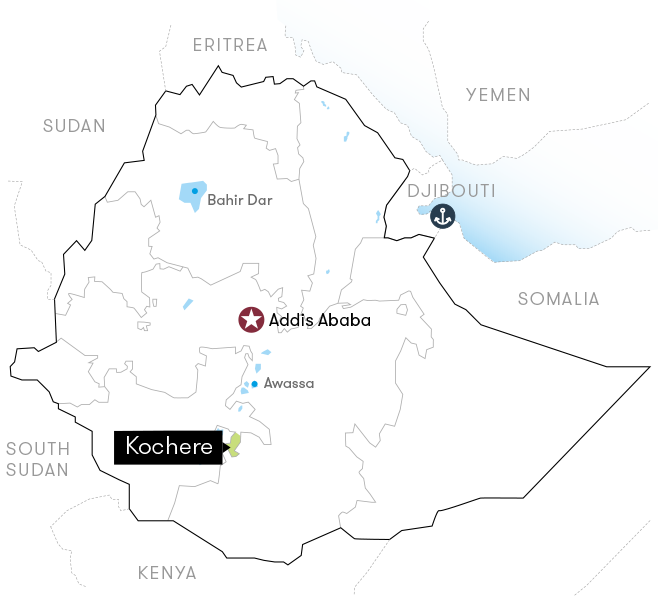
\n\nRegion Introduction\n\nYirgacheffe is located in the Gedeo region of southern Ethiopia. Within this area, Yirgacheffe and Kochere are relatively well known in coffee circles. The altitude of this area ranges from 1,700 to 2,100 meters, making it one of the highest coffee-growing origins in the world and almost a calling card for Ethiopian specialty coffee.\n\n
\n\nThe rift valley area, represented by the Misty Valley, is shrouded in fog all year round, with a mild, spring-like climate, constant breezes, and a humid, cool environment. Thousands of coffee trees grow vigorously here, creating the unique terroir expression of Yirgacheffe, where floral and fruity aromas intertwine, layered and ever-changing, and difficult to pin down.\n\nWorka Cooperative\nThis bean from Front Street comes from Ethiopia and is processed by the Worka cooperative. Alemayehu Alako Farm is one of the members of the Worka cooperative.\nWorka is located in the Yirgacheffe growing region, at an altitude of 1,800 to 2,000 meters. The Worka cooperative was established in 2005, and in the same year joined the renowned Yirgacheffe Coffee Farmers Cooperative Union (YCFCU), known for producing high-quality natural Yirgacheffe.\nThe Worka cooperative has approximately 300 coffee farmers under it.\n\n

\n\nProcessing Method\n\nThis Yirgacheffe Worka coffee bean from Front Street Coffee (FrontStreet Coffee) uses the washed processing method.\n\nThe specific process is as follows: first, selected coffee cherries are sent into a depulper to initially separate the skin and pulp. The green coffee beans with residual pulp and mucilage are then immersed in water and fermented for about 24 hours. After fermentation is complete, the green coffee beans still wrapped in parchment are moved into a flowing water channel for rinsing to remove the remaining pulp and mucilage. After washing, the coffee beans are sun-dried or assisted with a dryer until the moisture content drops to around 12%, and finally the parchment is removed.\n\n
\n\nHeirloom Varieties\n\nThe variety of this Worka coffee bean from Front Street is also classified as heirloom.\n\nUsually, coffee farmers may cultivate multiple varieties at the same time, or they may select outstanding-performing varieties separately for sale. Ethiopia's situation is rather special. Most coffee here grows in a wild or semi-wild state in fields, courtyards, or the forest understory. What farmers harvest is actually a large collection composed of numerous naturally mutated varieties.\n\nWild coffee trees are especially fond of the forest understory environment. The trees that provide shade for coffee are called "Shade Tree, or Shadow Tree," and this cultivation method is called "Shade-grown Coffee." Its advantage is that it reduces impact on the ecosystem, while rich biodiversity also helps suppress pests and diseases. In some areas, people also use local food crops such as bananas to shade coffee, achieving two goals at once.\n\n
\n\nEthiopia has nearly 2,000 recorded coffee varieties, of which 1,927 are native varieties and 128 are introduced foreign varieties. Therefore, judging by appearance alone, Ethiopian coffee varieties are like a grand garden, with every shape and size imaginable—long and short, thin and plump, there is everything.\n\nEthiopia (Grading by Defect Bean Ratio)\n\nBefore the establishment of the Ethiopia Commodity Exchange (ECX), Ethiopia's coffee export grades were set by the CLU department (Cupping and Liquoring Unit) under the Ministry of Agriculture, mainly based on the number of defect beans contained in 300 grams of green coffee. The specific standards are shown in the table below.\n\n
\n\nGenerally speaking, washed beans are classified as G1 to G2, while due to the limitations of natural processing technology at the time, natural green beans had a relatively high number of defects, usually falling between G3 and G5. With improvements in natural processing techniques, natural beans can now also reach the G1 to G2 level.\n\n
\n\nAfter the establishment of the ECX (Ethiopia Commodity Exchange) in 2008, grading was changed to combine the physical attribute characteristics of green coffee with cup profile characteristics for scoring and classification.\n\nAccording to processing method, the ECX divides all coffee into two types, unwashed and washed, and further defines three categories:\n\na. Specialty: few defects, high cup profile quality\n\nb. Commercial: does not reach specialty grade, but is above the local/domestic consumption grade;\n\nc. Local/Domestic: coffee with many defect beans (unripe beans), off-season, and poor storage leading to relatively inferior flavor.\n\nAmong these, specialty and commercial are intended for the export market. Based on the total score of physical attribute characteristics and cup profile characteristics, the ECX divides green coffee into nine grades, with physical characteristics accounting for 40% and cup quality accounting for 60%.\n\nPhysical characteristics (40%):\n\nWashed processing: defect count (20%), appearance size (10%), color (5%), odor (5%)\n\nUnwashed processing: defect count (30%), odor (10%)\n\nCup quality (60%)\n\n
\n\nSubsequently, batches from G1 to G3 are cupped again according to SCAA standards to evaluate their flavor attributes in greater detail. G1 and G2 scoring no less than 85 points are rated Q1; G1, G2, and G3 scoring between 80 and 85 points are rated Q2; all G1, G2, and G3 below 80 points are rated G3.\n\nQ1 and Q2 are classified as specialty grade for export. G4 to G9 remain unchanged in their original grading and, together with G3, are classified as commercial grade for export.\n\nRoasting Recommendation\n\nThe acidity of Yirgacheffe is its signature characteristic. In order to fully highlight this trait, Front Street Coffee's (FrontStreet Coffee) roaster recommends using a light roast.\n\nThe heating process is relatively gentle, with roasting time controlled to just over 10 minutes, giving sufficient time and temperature for the beans to dehydrate and promoting the degradation of chlorogenic acid. If degradation is insufficient, the cup will taste sharply acidic, causing discomfort on the tongue and carrying a slightly rough sensation. At the same time, continuing to supply heat after first crack allows caramelization to continue, generating sweet substances such as caramel, making sweetness more solid and substantial, while the bright fruity acidity is slightly diminished.\n\n
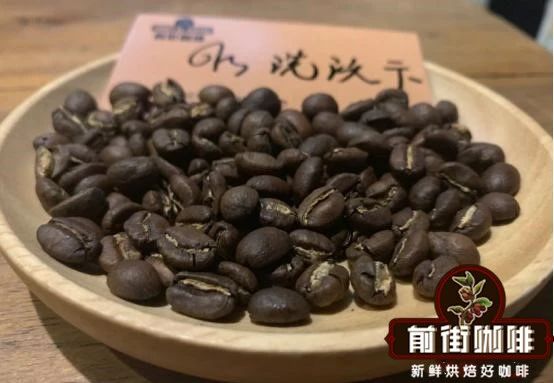
\n\nFront Street Coffee (FrontStreet Coffee) tested the flavor differences of Yirgacheffe Worka G1 (light roast) brewed at different water temperatures, keeping other parameters consistent.\n\nThree water temperature values were selected: 86°C, 90°C, and 94°C. Apart from that, the remaining parameters were kept as uniform as possible, using a Hario V60 dripper, a water-to-coffee ratio of 1:15, 15 g of coffee powder, and a grind size of EK43s setting 10 (80% passing a Chinese standard No. 20 sieve).\n\nThe brewing technique was also kept consistent, using staged extraction: 30 g of water for blooming for 30 seconds, then pouring in a small stream in circles to 125 g and pausing, and when the water level drops and is about to expose the coffee bed, continuing to pour to 225 g and stopping, with extraction time of 2 minutes (timed from the start of blooming).\n\n【87°C Pour-over Flavor】\n\nOn the palate there are lemon and tea notes, with noticeable acidity, a rounded mouthfeel, and an overall rather thin layering.\n\n
\n\n【90°C Pour-over Flavor】\n\nOn the palate there are lemon, plum, and Tieguanyin notes. As the temperature changes, caramel becomes pronounced, the acidity is bright, and the sweet aftertaste is obvious.\n\n
\n\n【94°C Pour-over Flavor】\n\nOn the palate there are lemon and berry notes, with noticeable acidity, enhanced body, and a rich tea-like character\n\n
\n\nFrom the above results, it can be seen that brewing at 90°C best showcases the bright fruity acidity and refreshing tea-like character of Yirgacheffe Worka coffee beans. At 87°C, the layering is weaker and the flavors are not prominent enough; at 94°C, although the body is enhanced, the brightness of the acidity is somewhat lacking.\n\nFor more specialty coffee beans, please add the private WeChat of Front Street Coffee (FrontStreet Coffee), WeChat ID: kaixinguoguo0925
The above content is compiled by CoffeeHunters, a coffee news website.


