







How Does the K72 Washed Process Shape Kenya Coffee Beans?
Kenya coffee beans deliver a full cherry-tomato fruit acidity with rich aroma and a balanced body, a style distinct from Ethiopia despite sharing the African continent. The K72 method, a 72-hour fermentation washed process, is central to that profile, and grading systems such as AA, AB and PB sort lots by bean size and quality.
Variety matters too: SL28 and SL34 are the cultivars most associated with the Kenyan cup. The country straddles the equator, with high-altitude zones and volcanic-influenced soils supporting coffee growth, and its history as an East African producer stretches back through the colonial era to today's specialty market.
Kenya, as an important specialty coffee-producing country in East Africa, is world-renowned for its full, cherry-tomato-like fruit acidity, rich aroma, and balanced mouthfeel. This article will start from Kenya's growing environment and history, systematically introduce the characteristics of representative varieties such as SL28 and SL34, sort out the specific standards of grading systems such as AA, AB, and PB, and provide an in-depth analysis of the process and principles of the Kenyan-style 72-hour fermentation washed processing method (K72). At the same time, Front Street Coffee will also share the brewing parameters and flavor performance of Kenyan coffee, helping coffee enthusiasts fully understand this African producing country that is completely different from Ethiopia in style yet equally wonderful.
For more specialty coffee knowledge, please follow the WeChat public account: Front Street Coffee
The African continent has always been one of the world's finest coffee-producing regions, renowned for flavor characteristics such as floral notes and fruit acidity. Coffee has long been integrated into Africans' daily lives. Whether in the most remote corners of the East African Rift Valley, or on the Masai Mara grasslands where the Maasai herd their livestock, whether in the city or the countryside, one can always catch the fragrance of coffee. Following the aroma, sitting down, and savoring it slowly, a cup of coffee helps pass Africa's seemingly endless time.
The most familiar to everyone is naturally Ethiopian coffee, especially the jasmine-like aroma and lemon-like acidity of washed Yirgacheffe, which are unforgettable for a long time. However, Kenya should not be overlooked either. The full, cherry-tomato-like mouthfeel and fruit acidity of Kenyan coffee fill the entire mouth upon entry. With its rich aroma and balanced acidity, it is famous worldwide and deeply favored by many seasoned coffee lovers.
Kenya Coffee Producing Country
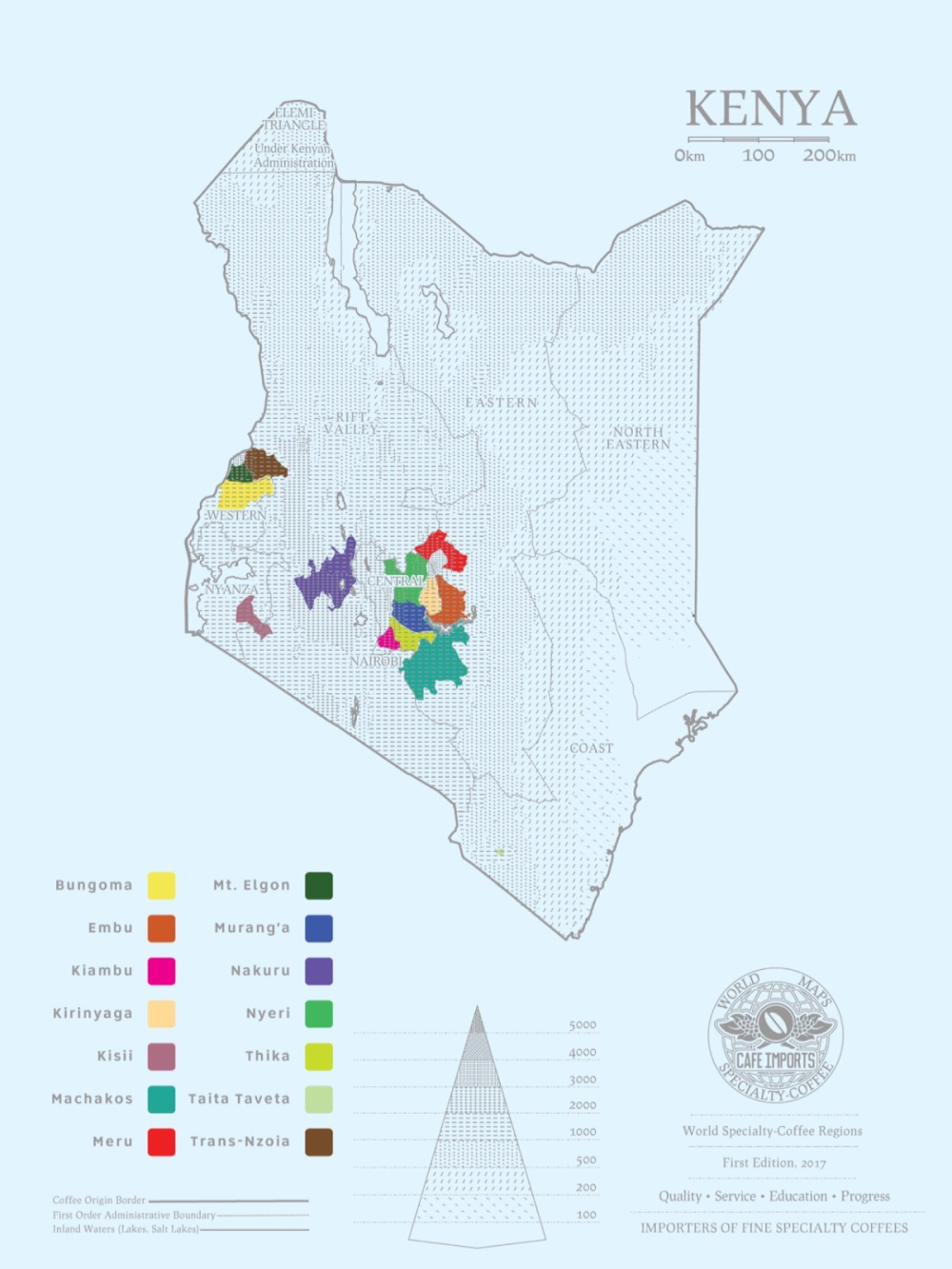
Although both are African coffee beans, Kenya's flavor is completely different from Ethiopia's, which is inseparable from its growing environment and climatic conditions. Kenya is located in East Africa, straddling the equator, bordering the Indian Ocean to the east, Ethiopia to the north, and Tanzania to the south. It is a major coffee country in East Africa and one of the extremely important and irreplaceable producing countries. Kenya belongs to a tropical producing region and has two rainy seasons a year, so it can harvest two crops, of which 60% is concentrated from October to December, and the other 40% from June to August. Coffee is mainly grown in the volcanic zone at an altitude of 1,600 to 2,100 meters from the capital Nairobi to the surrounding Kenyan highlands. Such an altitude is conducive to the development of coffee bean flavor, because the lower temperatures in the highlands slow down coffee growth, allowing aromatic components to fully accumulate, making the fruit acidity more prominent and the beans harder. This fertile, crescent-shaped coffee zone is the core producing area of Kenyan specialty beans.
Kenya Coffee History
Every coffee-producing country has its own history and legends. What was Kenya's coffee development process like? In 1878, the British brought coffee to Africa, and in the 19th century established coffee plantations in Kenya. At that time, Ethiopian coffee beverages were introduced to Kenya via South Yemen. But it was not until the early 20th century that Bourbon coffee trees were introduced to Kenya by the St. Austin Mission. After Kenya gained independence in 1964, the coffee industry continued to develop on the original foundation and has now become a world-renowned high-quality coffee-producing country. What is particularly special is that Kenya established an auction system, successfully escaping the drawbacks of other coffee-producing countries exploiting small farmers (so-called "fair trade coffee" originated from this).
Kenya Coffee Varieties
There are many coffee varieties, such as Arabica, Bourbon, Caturra, Catuai, and so on. In Kenya, common varieties include SL28, SL34, French Mission Bourbon, and Ruiru 11. The Kenyan coffee varieties of Front Street Coffee are also SL28 and SL34. What is the background of these two varieties?
As early as the 1930s, the Kenyan government commissioned the newly established Scott Labs to select varieties suitable for domestic cultivation. After 42 initially selected varieties were numbered and screened one by one, SL-28 and SL-34 were finally retained. The former originated from Bourbon, and the latter from Typica; the two are not varieties of the same series. The original goal of breeding SL28 was to mass-produce coffee beans with both high quality and resistance to pests and diseases, while in some producing areas, the breeding goal mainly focused on high yield and disease resistance, without including disease resistance in the consideration.
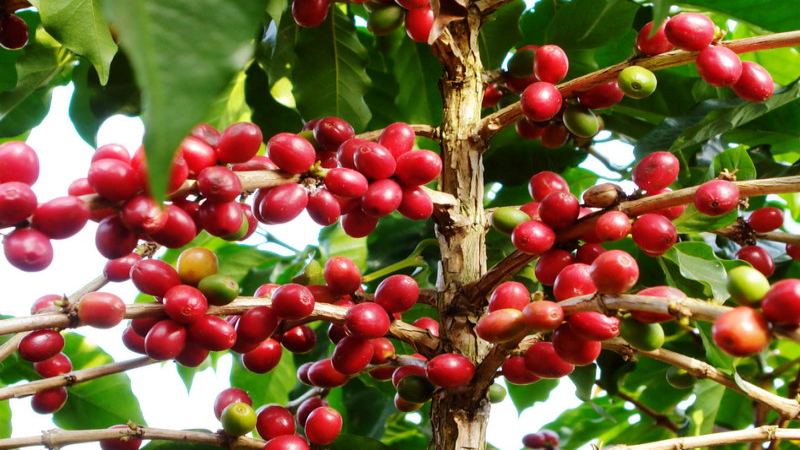
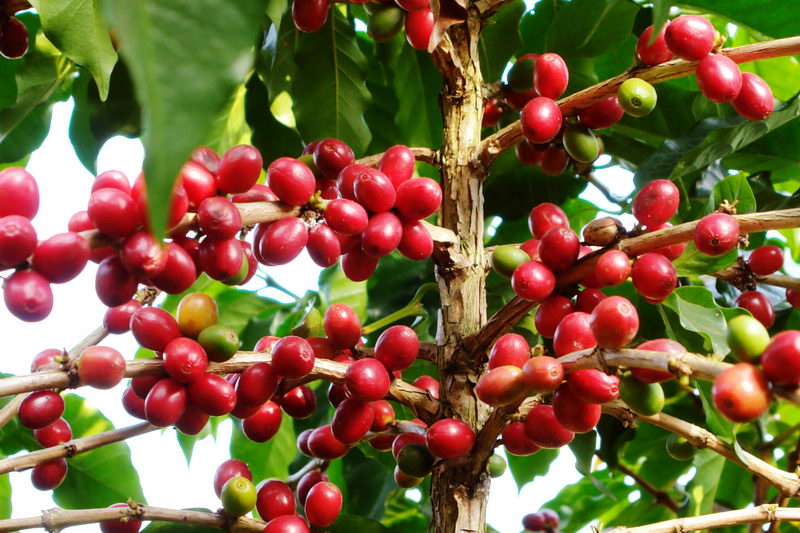
Thanks to its Bourbon genes, although SL28's yield later fell short of expectations, its bronze-colored leaves and fava-bean-like shape gave it excellent sweetness, balance, and complex, changeable flavors, with prominent citrus and smoked plum characteristics. SL34 is similar in flavor to SL28. In addition to complex and changeable acidity and an excellent sweet finish, its mouthfeel is softer and cleaner than SL28. SL34 has the bloodline of French Mission, Bourbon, and more Typica. Its bean appearance is similar to SL28, but it is better able to adapt to rainforest environments.
SL28 and SL34 currently account for 90% of Kenya's coffee production and are widely recognized as the representative varieties of Kenyan coffee. At present, South America is also actively introducing SL28.
Ruiru 11: In 1985, when global leaf rust broke out on a large scale, Kenya bred this hybrid variety under this background, emphasizing yield over quality, but its flavor quality is far inferior to SL28 and SL34, and it has not developed in the specialty coffee field. However, many suppliers, even those importing famous coffees, will mix this hybrid bean into blends to reduce costs.
Kenya Coffee Grading
There are many ways to grade coffee beans, and the grading standards of each producing country are not the same. Some grade by size, some by altitude, some by defect rate... So what is Kenyan coffee graded according to?
Kenya began implementing a strict grading system as early as the 1930s, mainly based on the size, shape, and hardness of coffee beans. From high to low, they are divided into AA or AA+, AB, PB, C, E, TT, and T. This can be used as a reference when selecting and also takes coffee flavor into account. At present, the grades commonly seen in the mass market are AA, AB, and PB. Kenya AA is world-renowned for its rich aroma and balanced acidity, and is deeply loved by many connoisseurs.
E (Elephant Bean): The "E" here stands for "Elephant," but it is not the elephant bean variety among coffee varieties. Rather, it is a bean caused by abnormal development in which two seeds become intertwined and form what appears to be "one bean," essentially a defect. Usually, there are two seeds facing each other inside a fruit, so one side is flat, called a flat bean, female bean, or double bean. E is when two seeds merge and stick together during growth, becoming abnormally large. Grade E is about 18 screen sizes (one screen is 1/64 inch) or more, and is rare in number.
AA: Beans of this grade are about 17 to 18 screen sizes (about 6.7 to 7.1 mm), and this is the Kenyan coffee grade most people have heard of. In specialty coffee, this grade is usually called AA TOP, and it is also a bean that most coffee shops will prominently feature. But AA does not mean the best quality; bean size cannot be equated with flavor.
AB: Most coffee beans fall into this grade. It is called AB mainly because A's screen hole size is 6.80 mm and B's is 6.20 mm. These two sizes of coffee beans (Grade A and Grade B) are sold mixed together, so it is called AB, about 15 to 16 screen sizes (about 6.0 to 6.4 mm).
C: The bean size is about 14 to 15 screen sizes (about 5.6 to 6.0 mm), slightly smaller than Grade B.
PB: In English it is called Peaberry, often called little round bean in Taiwan, also known as male bean or single bean. Compared with ordinary flat beans, this kind of bean is also rare, accounting for about 10% of all coffee beans. It is mainly because only one seed develops fully inside the fruit, resulting in a small, round bean. Some people particularly prefer the flavor of PB, so it is picked out and sold separately.
TT: This type of coffee bean is selected from AA and AB by airflow sorting machines as light beans. They are usually light in weight, fail to meet hardness standards, and are accompanied by cracked and defective beans.
Kenya Processing Method
The Kenyan coffee of Front Street Coffee uses the washed processing method [Washed Kenyan Coffee Beans — Asali].
This bean comes from the Asali processing plant in Kenya's Thika producing area. The Thika producing area is located in central Kenya and has the highest-altitude coffee-growing area in the region, while Thika is a secondary area within this growing area, located at the foot of the Aberdare Ridge. The soil is red volcanic soil, rich in organic matter. The processing method is the K72 washed processing method, which can make the coffee present a brighter, cleaner, and fuller flavor!
Kenyan-Style 72-Hour Fermentation Washed Processing Method
This method originated in Kenya and uses a repeated cycle of fermentation followed by washing. Post-processing is carried out on the day of harvest. The highest-quality cherries are selected for pulping and fermentation. The fermentation time is 24 hours. After 24 hours, they are washed with clean river water. Then, they are fermented again with clean river water for 24 hours and washed again. This cycle is repeated 3 times, totaling 72 hours, so it is called the Kenyan-style 72-hour fermentation washed processing method, abbreviated as K72.
After such processing, don't you want to have a cup of Kenyan coffee right away to taste it? Of course, if you want to drink a delicious cup of coffee, Front Street also has some brewing suggestions:
To enjoy a good cup of coffee, Front Street believes that the freshness of coffee beans is a crucial link. Only fresh coffee beans can allow you to experience their rich flavor to the greatest extent. The coffee beans shipped by Front Street Coffee are all within 5 days of the roasting date, because Front Street deeply understands the huge impact of coffee bean freshness on flavor. Front Street's roasting philosophy is "freshly roasted good coffee," so that every customer who places an order can receive the freshest beans when the coffee arrives. The resting period for coffee is about 4 to 7 days, so when customers receive it, it is exactly at its best flavor.
Of course, some customers need Front Street to help grind the coffee, and that is no problem either, but Front Street must remind you: once coffee beans are ground into powder in advance, they no longer need to be rested, because during transportation the pressure generated by carbon dioxide inside the package can also make the coffee flavor smoother, so you can brew a cup immediately after receiving the coffee grounds. However, coffee grounds need to be brewed as soon as possible, because after coffee grounds come into contact with air, they oxidize relatively quickly. In other words, the flavor will be lost relatively quickly, and the coffee will not taste as good. Therefore, Front Street recommends buying whole beans and grinding fresh for each brew, so that you can better taste the coffee's flavor.
Front Street's Parameters for Brewing Kenyan Coffee:
Front Street chose: V60 dripper, water temperature 90°C, water-to-coffee ratio 1:15, coffee dose 15 g, grind size (80% passing through China standard No. 20 sieve).
Use staged extraction, with 2 times the coffee dose in water for blooming, that is, 30 grams of water for a 30-second bloom. The reason blooming is needed is to allow the coffee grounds to release internal carbon dioxide gas, thereby making the later extraction more stable. Pour in a small stream in a circular motion until 125 grams, then pause, continue pouring until 225 grams and stop. After the water in the dripper has dripped through, remove the dripper. Start timing from the beginning of pouring; the extraction time is 2'00". Next, pick up the whole cup of coffee, shake it evenly, then pour it into a cup and taste.
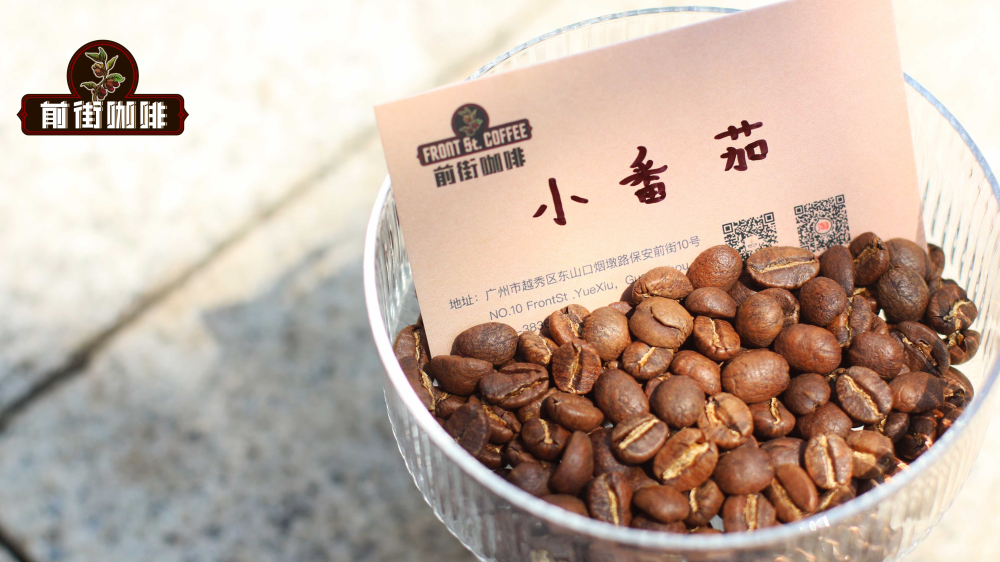
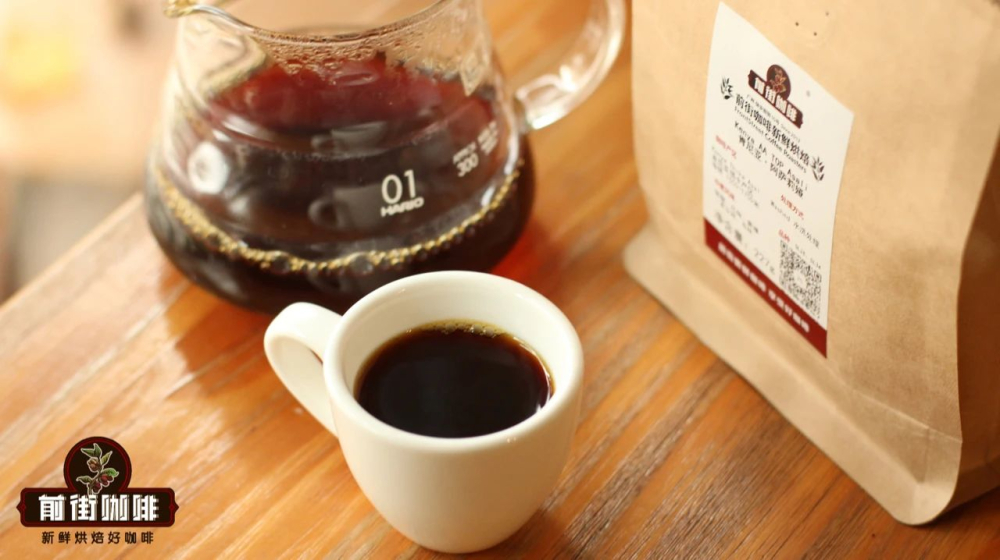
[Front Street Washed Kenya Little Tomato] It smells of light jackfruit aroma, floral aroma, and pine wood aroma. On the palate, there are acidity notes of smoked plum, lemon, citrus, and cherry tomato, with a caramel finish and a juicy feel.
If you are used to drinking Ethiopia's washed Yirgacheffe coffee, then trying a cup of Kenyan coffee will surely make you feel that these are completely two different levels of coffee — one is fresh and bright, while the other has rich fruit acidity and aroma, giving a completely different experience. Of course, Front Street also has more than fifty single-origin coffee beans from different producing areas, fully capable of giving you a rich experience!
The above content is compiled by CoffeeHunters, a coffee news website.


