







How Does the Kenyan Coffee Belt Shape AA Flavor?
Kenyan AA coffee is known for bright acidity and full fruity flavor, with notes of cherry tomato, black plum and berries. Growing areas sit along the coffee belt from Nairobi toward Mount Kenya at roughly 1,600 to 2,100 meters, where lower temperatures and acidic soil of pH 5.3 to 6.0 slow ripening and concentrate aromatic compounds.
Most Kenyan coffee trees flower in March and April after the long rains, and harvest in most regions runs from October to the end of the year, though some trees flower in October or November and are picked the following July. The K72 washed method is the main reason the cup stays clean yet complex.
Kenya AA coffee has long been renowned for its bright acidity and full-bodied fruity flavors, making it the top choice for many coffee lovers venturing into acidic coffees. This article will systematically outline the flavor characteristics, producing regions, variety origins, and grading standards of Kenya AA, with a focus on breaking down how Kenya's signature K72 washed processing method shapes its clean yet complex acidity. At the same time, drawing on the roasting and brewing practices of Front Street Coffee, it offers specific extraction parameter recommendations to help you gain a more complete understanding of this coffee from origin to cup.
In the specialty coffee world, Kenya AA is regarded as a rare find of exceptional quality. It is widely known for its rich aroma and well-balanced acidity, earning the favor of a large number of seasoned enthusiasts. The flavor profile of this bean is remarkably complete and balanced—it has strong impact without feeling overly aggressive, and it is crisp on entry yet never thin. It is a tasting experience that is layered but not heavy. For those who prefer acidic coffees, baristas at Front Street Coffee typically recommend Kenya AA as their first choice, because one can capture the rich notes of cherry tomatoes, black plums, and berry-type fruits.
Kenya's coffee-growing areas are highly concentrated, mainly distributed along the belt from the capital Nairobi toward Mount Kenya. This area is surrounded by volcanic terrain at elevations of roughly 1,600 to 2,100 meters. Such altitude is highly favorable for flavor development: temperatures in the mountains are lower, the fruit grows at a slower pace, and combined with acidic soil with a pH between 5.3 and 6.0, aromatic compounds within the coffee beans can fully accumulate, the fruit acidity is more pronounced, and the beans are denser. This fertile, crescent-shaped coffee belt is the core source of Kenya's specialty beans, covering producing regions such as Nyeri, Kirinyaga, Murang'a, and Thika.
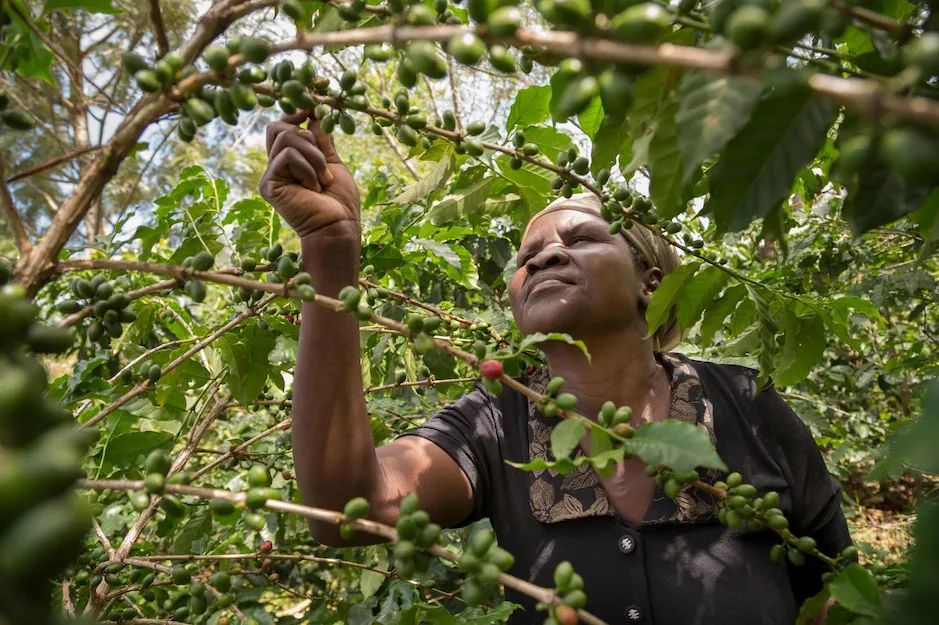
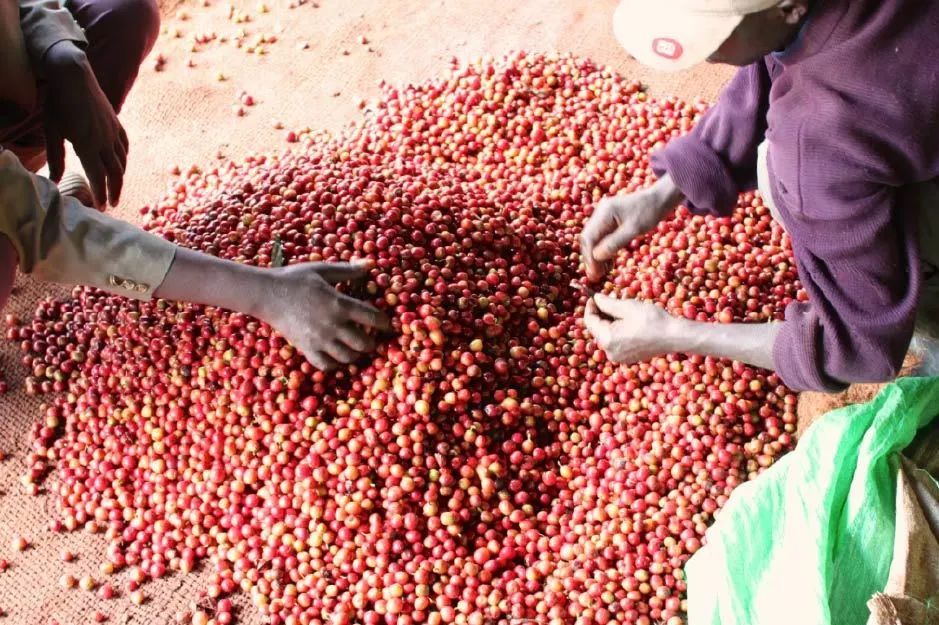
Kenya's coffee trees can have two flowering seasons each year. Most plants bloom in March and April after the long rainy season ends, while harvesting in most producing regions runs from October to the end of the year. Some coffee trees instead flower in October or November, and their fruit is not harvested until July of the following year. Kenyan coffee has always relied on hand-picking, with farmers selecting only ripe red cherries, and essentially re-picking the same tree about every ten days. The insistence on harvesting only fully red cherries is to allow the coffee beans to accumulate nutrients more fully, so the final flavor expression is richer.
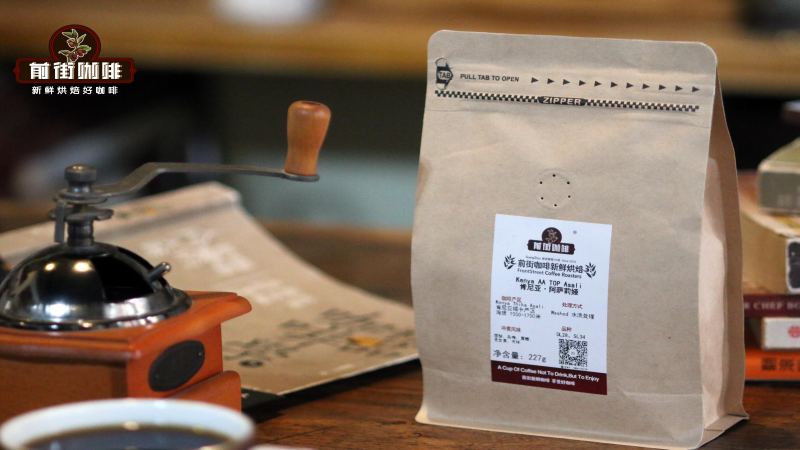
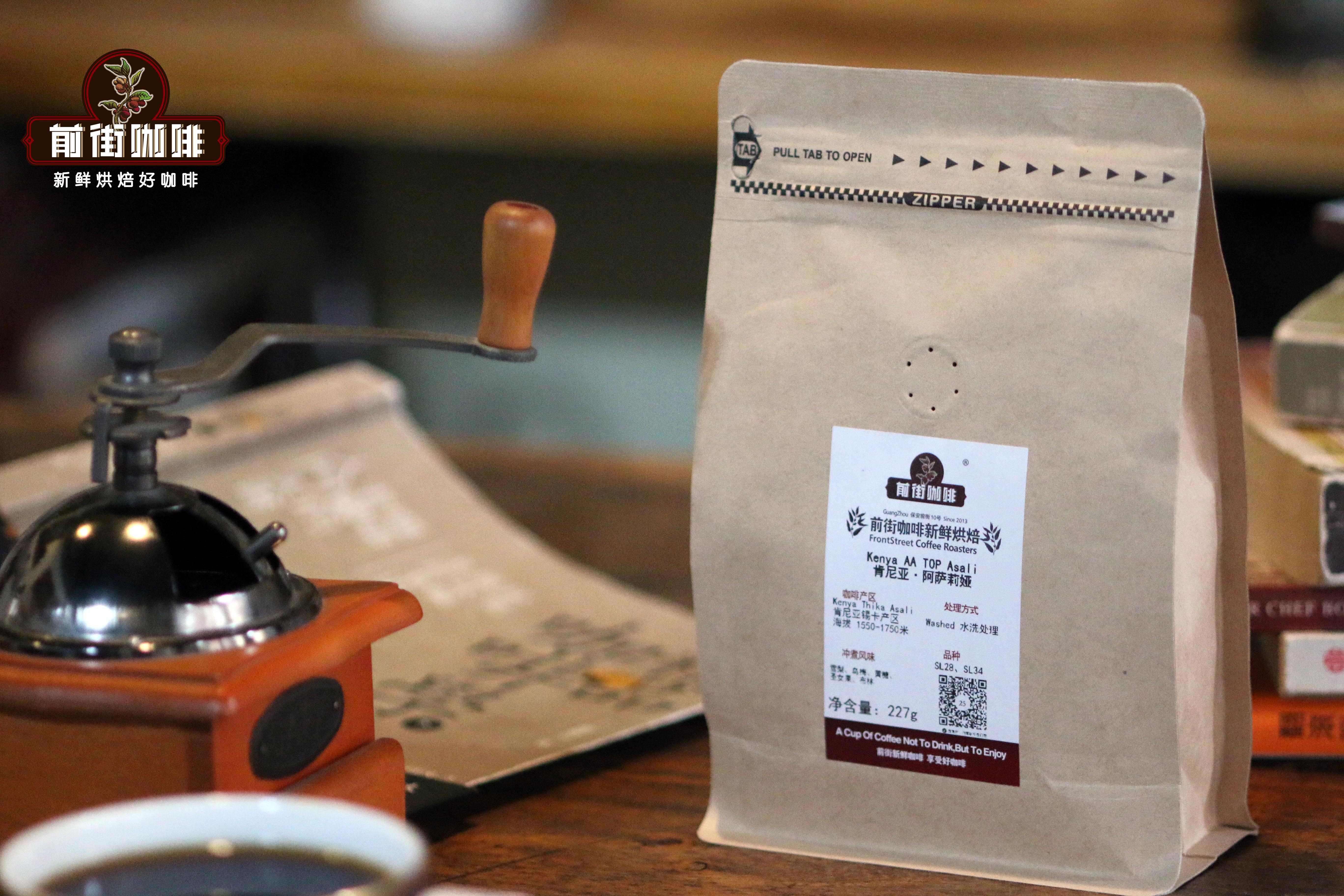
If you have bought Front Street's Kenya AA coffee beans, you should notice that the variety field on the packaging label lists SL28 and SL34—these are Kenya's two most highly regarded varieties. SL is the abbreviation for Scott Laboratories. In the 1930s, Kenya's coffee trees were widely infected with coffee berry disease, and Scott Laboratories was commissioned by the government to develop disease-resistant new varieties. Among the many research outcomes, No. 28 and No. 34 showed strong disease resistance and exceptionally outstanding flavor, so they were promoted to farmers for large-scale cultivation. The SL series belongs botanically to the Bourbon family and can express extremely excellent acidity in Kenyan producing regions. After cupping, Front Street found that SL28 and SL34 have good sweetness, balance, and complex, varied layers, with particularly prominent citrus and smoked plum characteristics.
Kenyan coffee producers generally believe that the larger the bean, the more aromatic oils it contains, which not only enhances aroma but also facilitates more even heating and transformation of flavor compounds during roasting. For this reason, the grading of Kenyan coffee beans prioritizes bean size, and can be roughly classified into AA, AB, C, E, PB, TT, T, ML, MH, and others, among which AA and AB are the most common in the domestic market. It is worth noting that PB (Peaberry) is a grade established specifically for small round beans, which usually appear at the tips of coffee trees that flowered too early or too late. Because yields are scarce, peaberries account for only about 10% of total production. When peaberries are collected separately, producers often remove defective beans, lowering the defect rate and making bean size more consistent, which leads to more even heating during roasting and an improved mouthfeel. Therefore, peaberries from the same tree usually command a higher price than other flat beans.
What gives Kenyan coffee its unique fruity charm, besides its innate growing conditions and variety advantages, is also the Kenyan-style washed processing method, known as the K72 washed process. The procedure is roughly as follows: after harvesting the coffee cherries, they are depulped and fermented, then rinsed clean with water after 24 hours; next, they are soaked and fermented for another 24 hours, then washed again, repeating this cycle 3 times, ultimately reaching a cumulative 72 hours of intense fermentation. Through this repeated fermentation and washing, the coffee beans present a brighter, cleaner acidity in flavor.
In terms of roasting and brewing strategy, Front Street also aims to preserve as much as possible the classic flavor characteristics of Kenyan coffee—that is, solid, rich acidity and full, complex floral and fruity aromas—so Front Street's roaster chose a light roast. After roasting, Front Street conducted both cupping and pour-over extraction and found that this coffee has clear notes of snow pear, plum, cherry tomato, smoked plum, and yellow sugar. It is suitable for extraction by various methods, and if you are trying this Kenya AA for the first time, Front Street suggests starting with a hot pour-over.
Front Street Coffee: Kenya Asali Coffee Beans
Region: Thika, Kenya
Washing Station: Asali Honey Processing Station Altitude: 1,550-1,750 meters Grade: AA TOP Variety: SL28, SL34 Processing Method: Kenya 72-hour washed
Front Street Brewing Recommendations
High-altitude light-roasted coffee beans have a relatively dense internal structure and require higher water temperature and finer grinding to better release aromatic compounds during extraction. Here at Front Street, we use hot water at 92–93°C for extraction, and for grind size, Front Street uses a No. 20 standard sieve with an 80% pass rate as the benchmark.
Dripper: V60 Water Temperature: 92-93°C Dose: 15g Coffee-to-Water Ratio: 1:15 Grind Size: Fine sugar consistency EK43s - setting 10 (No. 20 sieve bowl, sift powder to 80%)
For the first pour, add 30 grams of water for a 30-second bloom, then pour in 95 grams (the scale shows about 125 grams), completing the pour in about 1 minute. When the water level drops to 2/3 of the coffee bed, pour in the remaining 100 grams (the scale shows about 225 grams), completing the pour in about 1 minute 35 seconds. Dripping finishes at 2'10", remove the dripper, and extraction is complete.
For professional coffee knowledge exchange and more coffee bean information, please follow Coffee Workshop (WeChat public account: cafe_style)
For more specialty coffee beans, please add the private WeChat of Front Street Coffee: qjcoffeex
The above content is compiled by CoffeeHunters, a coffee news website.


