







Why does Panamanian Geisha thrive in the Boquete coffee belt?
Panamanian Geisha from Hacienda La Esmeralda grows in the western highlands of Chiriqui Province, mainly around Boquete and the Baru volcano. Boquete sits at roughly 1,000 to 2,000 meters, where cool air crossing the central cordillera creates a microclimate of moderate temperatures, deep volcanic soil, and steady rainfall. Those conditions shape the jasmine, citrus, and tropical fruit notes tied to the estate's classic lots.
The estate divides its Geisha into separate plots, and the Red Label and Green Label grades reflect differences in lot selection and processing rather than a single uniform product. Because this growing zone sits inside the coffee belt, altitude and microclimate do much of the work. Front Street Coffee's V60 parameters for Esmeralda Red Label Natural Geisha focus on preserving that layered aromatics during extraction.
Geisha is now the hottest variety in the specialty coffee world, and if you want to experience the most classic Geisha flavor, Panama is undoubtedly the benchmark. This article focuses on Hacienda La Esmeralda in Panama, starting with the microclimate of Boquete and the Baru volcanic region where it is located, tracing how Geisha rose to fame in this high-altitude terroir, and taking a deep dive into the estate's three major plots and the logic behind the Red Label and Green Label grade classifications. At the same time, Front Street Coffee will share the V60 pour-over parameters and extraction approach for Esmeralda Red Label Natural Geisha, helping coffee lovers recreate in the cup the layered interplay of jasmine, citrus, and tropical fruit.
For more specialty coffee knowledge, please follow our WeChat official account: Front Street Coffee
Specialty coffee has been growing hotter year after year, with excellent-flavored coffee beans emerging in endless streams on the market. When it comes to which variety is most sought after, Geisha is certainly on the list. Since Geisha shot to fame in Panama, producing regions everywhere have been introducing it, hoping to grow this "ceiling of the coffee world"—Colombia, Guatemala, Ethiopia, and even Yunnan in China have grown Geisha in recent years. But to experience the classic Geisha charm, Front Street has always believed that Panamanian Geisha is the most representative.
Panama's Specialty Coffee Growing Belt
Coffee cultivation in Panama is mainly distributed across three areas of the western highlands: Boquete, Volcan, and Renacimiento, with the Boquete Valley and the Volcan area around the Baru volcano being the most famous. Both are located in Chiriqui Province, right in the center of the coffee belt, endowed with both volcanic-rich soil and pristine forest. Panama's mountain ranges mostly run east-west, and after cold air crosses the central cordillera, it converges at altitudes above 6,500 meters, creating a unique microclimate for the Boquete and Candela areas—temperatures suitable for plant growth, thick soil, and ample rainfall are all natural advantages for cultivating premium coffee like Geisha.
The Boquete growing region belongs to Chiriqui Province and is a small town situated on a plateau at about 1,000 to 2,000 meters on the eastern side of the Baru volcano. On one side it faces the warm, humid monsoon from the Caribbean; on the other it is influenced by cold currents from the Atlantic, with steep and towering terrain. The Baru Volcano National Park within the region is an ecological conservation area with a rich diversity of species and seven microclimates. Combined with year-round mist and abundant rain, it creates extremely ideal growing conditions—and it is here that the renowned Hacienda La Esmeralda on Front Street's bean list is located.
Geisha's "Talent Scout"—Hacienda La Esmeralda
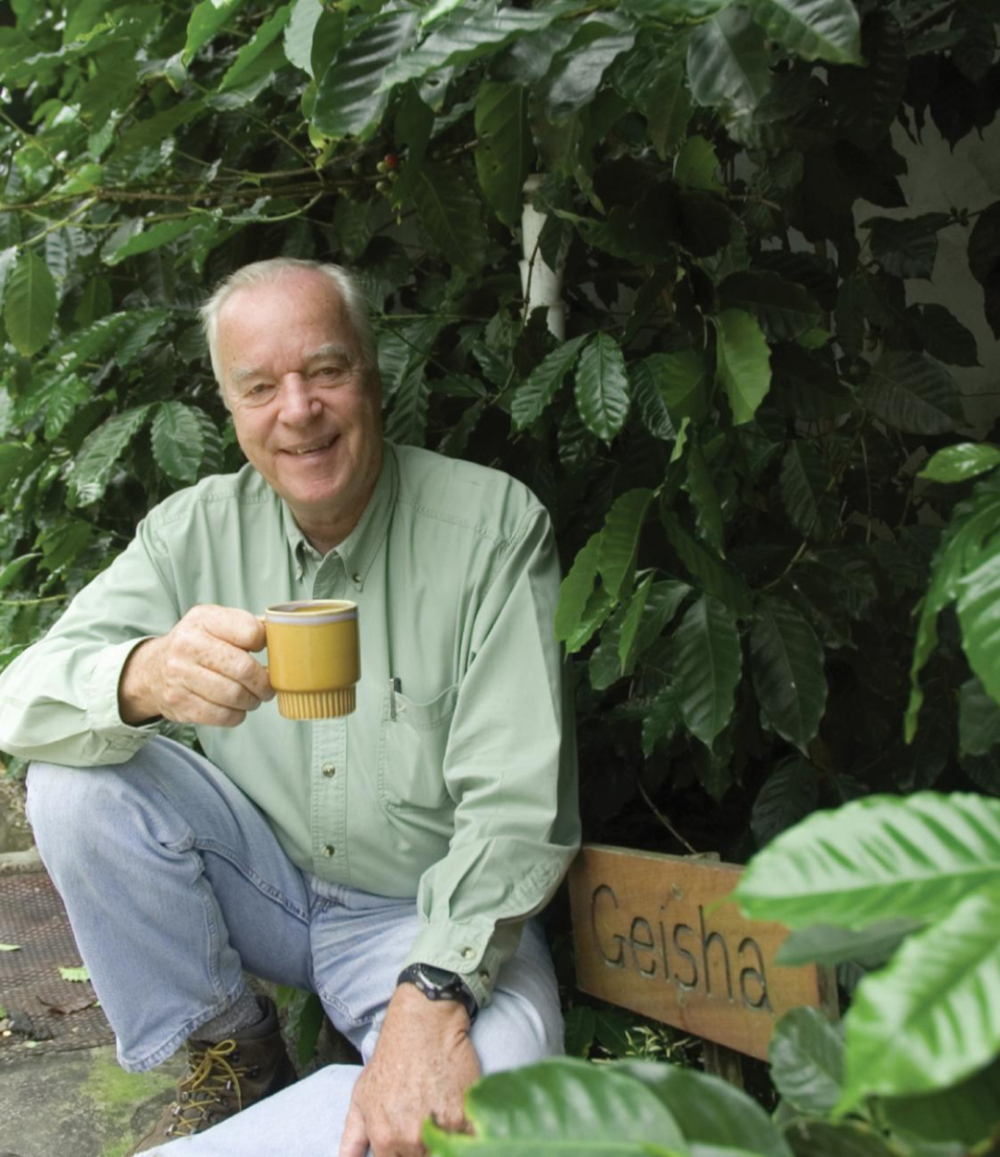
When it comes to Geisha, Hacienda La Esmeralda is a household name in the specialty coffee world. In 2004, it won the Best of Panama coffee competition that year with Geisha, and has since broken auction price records year after year, becoming the focus of the coffee world ever since. Hacienda La Esmeralda not only "made Geisha famous" but was also the first estate to strictly grade Geisha, and its Geisha lots each year are closely watched by the industry. After Geisha's victory, the estate owners, the Peterson siblings, began managing the Geisha trees on the farm more systematically based on altitude, plot, and cupping performance.
Broadly speaking, the Geisha growing areas are divided into three major plots: Cañas Verdes, Jaramillo, and El Velo. To ensure every lot can be traced back to its source, Peterson further subdivided each major plot into several smaller plots, so buyers of Geisha can trace the specific growing plot through the lot information.
The Geisha variety was first discovered in the Jaramillo plot, and it was also from this plot that the Peterson siblings decided to raise the growing altitude of Geisha. As the discovery and cultivation site of Geisha, Jaramillo became the most famous plot of Hacienda La Esmeralda, with an average altitude above 1,650 meters. The cold, humid air of the high mountains fills the Geisha here with natural essence and rich aroma. Jaramillo is currently divided into five small plots: Mario, Noria, Reina, Bosque, and Buenos Aires. Among them, Mario and Bosque have performed especially brilliantly in various competitions.
Hacienda La Esmeralda's green bean processing plant is located at Cañas Verdes, at the foot of the Baru volcano, about a twenty-minute drive from the town of Boquete. Whenever the coffee cherries ripen, the estate owner arranges for workers to operate strictly according to standards, hand-picking and selecting fresh cherries only at peak ripeness and transporting them to the factory for processing in the shortest time possible.
Red Label Geisha and Green Label Geisha
On Front Street's bean list alone there are about ten Geisha coffees to choose from, and many friends feel puzzled when they see the words "Red Label" and "Green Label"—what exactly do they represent?
Red Label, or Esmeralda Special (including auction lots), is the highest grade of Red Label, picked from Geisha coffee cherries at altitudes of 1,600 to 1,800 meters, with a cupping score above 90, mainly from the Jaramillo and Cañas Verdes farms.
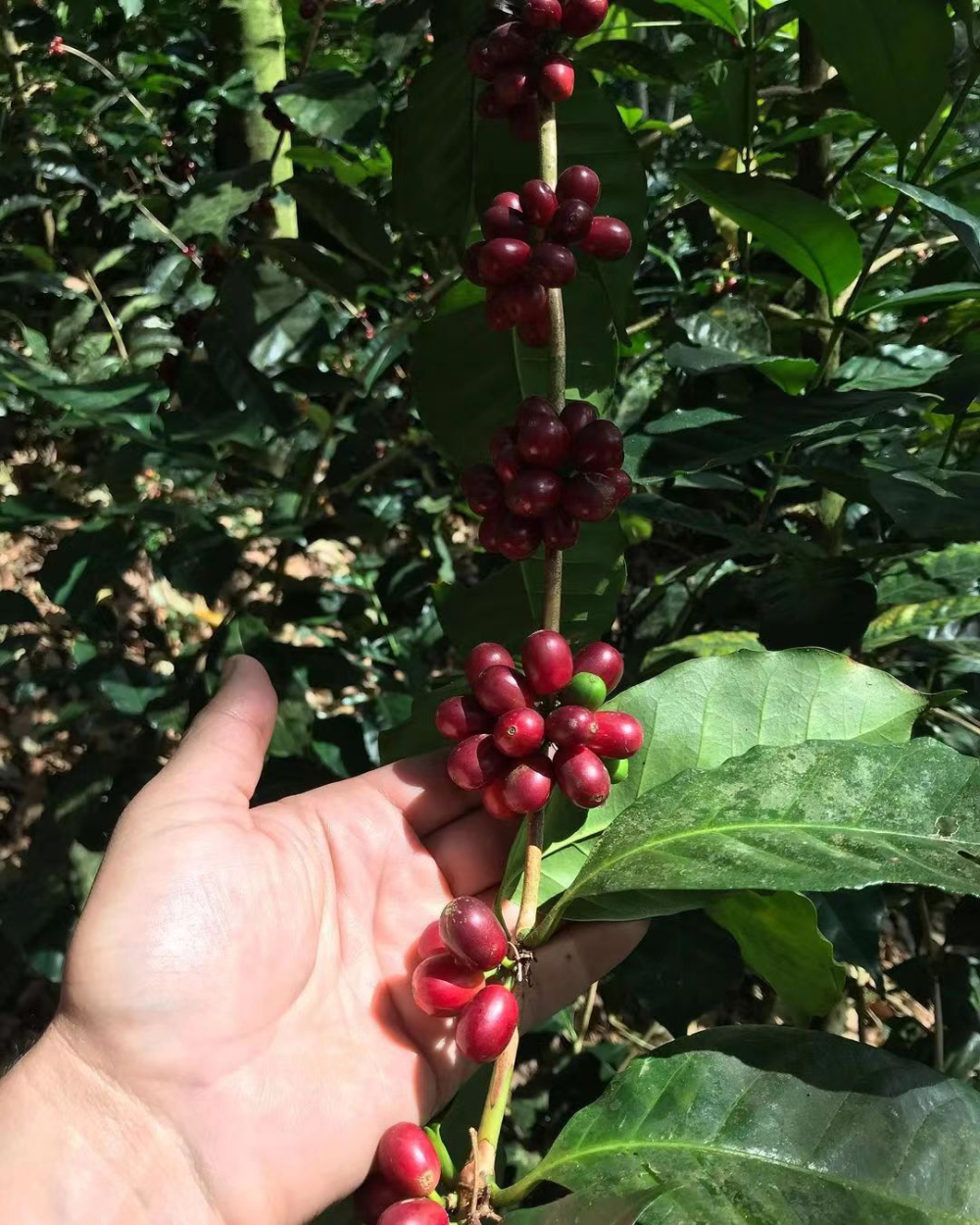
Although high altitude brings considerable challenges to cultivation and harvesting, the Geisha from the Boquete region has the most prominent floral and fruity character. Hacienda La Esmeralda holds its own independent auction, and among the divided plots, the Red Label lots put forward for competition are called auction lots. Auction lots each have a unique number, and each number corresponds to a complete lot from a specific plot. The one we hear about most often is probably the Mario plot of the Jaramillo farm. The Esmeralda Red Label Geisha beans that Front Street has procured come precisely from the Mario plot and are natural-processed.
To allow the coffee cherries to dry more evenly, Hacienda La Esmeralda's natural beans are finished using a combination of traditional patio drying and electric Guardiola dryers. The Guardiola allows constant hot air to circulate around the beans, evenly removing moisture and presenting a more balanced flavor profile.
Green Label refers to Private Collection, selected from growing areas at altitudes of 1,600 to 1,800 meters, also picked from the Jaramillo and Cañas Verdes plots, but Hacienda La Esmeralda does not specify the plot information, so it does not participate in the auction either. Although its grade is lower than Red Label, Green Label mainly showcases the classic flavor that is the hallmark of high-altitude Geisha. The Green Label Geisha that Front Street has procured is washed-processed, with a cupping profile of fresher, more natural lemon, berry, pomelo, and Tieguanyin tea flavors.
What Are the Particulars of Pour-Over Geisha Coffee?
Geisha coffee is renowned for its rich floral aromas and complex fruity notes. Front Street's roaster hopes to preserve more of Geisha's fine acidity, so a medium-light roast is chosen (with slight adjustments for different lots). This roast level does not significantly alter the high hardness of high-altitude beans, so brewing requires a somewhat higher extraction yield to present a fuller layering of flavor. Here a higher water temperature and a finer grind are used to draw out more aromatic compounds; in addition, Front Street wants Geisha's flavor to be clearer, so the coffee-to-water ratio is widened a bit, using 1:16.
To increase the extraction yield of Geisha coffee, avoid over-extraction, and highlight the sweet-and-sour flavor layers, Front Street Coffee's baristas choose the V60 dripper. The V60 has ribs connecting the top and bottom and a large central hole, which speeds up the flow of water; the spiral vent design lengthens the water path, increasing contact time between coffee grounds and hot water. Each stream of water converges along the grooves toward the center of the dripper, concentrating the pressure on the coffee grounds, resulting in a more layered extraction.
Below, Front Street demonstrates the brewing steps for the Esmeralda Red Label Natural Geisha served in our shop. You can use it as a reference and compare it with your own brewing approach.
The pour-over parameters for Red Label Geisha coffee are: Dripper: V60, Water temperature: 92°C, Dose: 15g, Coffee-to-water ratio: 1:16, Grind size: fine granulated sugar (80% passing a No. 20 sieve)
Fold the filter paper and fit it snugly against the dripper, wet the filter paper with a small amount of water while making it adhere better, and pour out the water in the server. Then add the coffee grounds and tap gently to distribute the bed evenly. For the first pour, gently add 30 grams of water to bloom for 30 seconds; for the second pour, add water up to about 125 grams, circling outward evenly and steadily. Then wait for the coffee liquid to drop, and when it has dropped halfway, add the final pour up to 240 grams. After all the coffee has dripped through, the total extraction time is generally about 2 minutes.
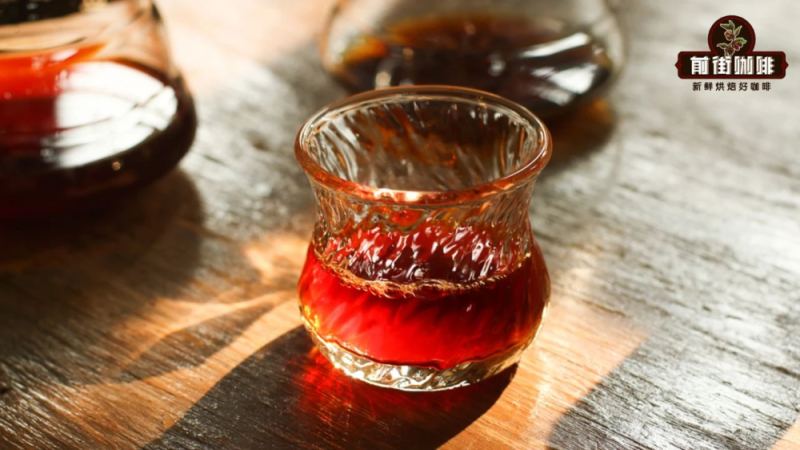
The pour-over Esmeralda Red Label Geisha coffee tastes of fresh jasmine, citrus, and tropical fruit acidity, with flavor layers that change with temperature, an overall smooth mouthfeel, and a pleasant tea-like finish.
The above content is compiled by CoffeeHunters, a coffee news website.


