







What blooming time suits yellow bourbon coffee from Brazil?
Brazil COE Fazenda Rainha Yellow Bourbon comes from the Alta Mogiana region of São Paulo state, grown at 1,400 to 1,950 meters with an average annual temperature near 19°C. Slow fruit maturation gives dense beans, and after medium-dark roasting the cup shows nutty notes, chocolate aroma, balanced acidity, a clean faint bitterness, and a silky body. Pour-over blooming typically runs about 30 seconds.
The estate covers 280 hectares, with 200 planted to Yellow Bourbon, and it has been a repeated award winner in Brazil's Cup of Excellence. The pulped natural process, which leaves some mucilage on the parchment during drying, supports the sweetness and full mouthfeel. Baristas recommend a medium-fine grind and a steady three-stage pour to get the most from these green coffee beans.
Located in the Mogiana region of São Paulo state, Fazenda Rainha (Queen Farm) is a perennial award-winning estate in Brazil's COE Cup of Excellence competition. With Yellow Bourbon as its core variety, grown at elevations of 1,400 to 1,950 meters and an average annual temperature of just 19°C, it produces specialty coffee with dense beans and outstanding aroma. The Brazil Queen Farm Pulped Natural Yellow Bourbon coffee beans launched by Front Street Coffee present rich nutty notes and a full-bodied mouthfeel after medium-dark roasting, with a cupping profile of balanced, smooth acidity, a clean and faint bitterness, chocolate aroma, and a silky, delicate texture. This article will introduce in detail Queen Farm's origin background, the characteristics of the Yellow Bourbon variety, and the pulped natural processing method, and provide Front Street Coffee baristas' recommended pour-over parameters and blooming time suggestions to help coffee lovers brew a great cup at home.
For more specialty coffee knowledge, please follow the WeChat official account: Front Street Coffee (FrontStreet Coffee)
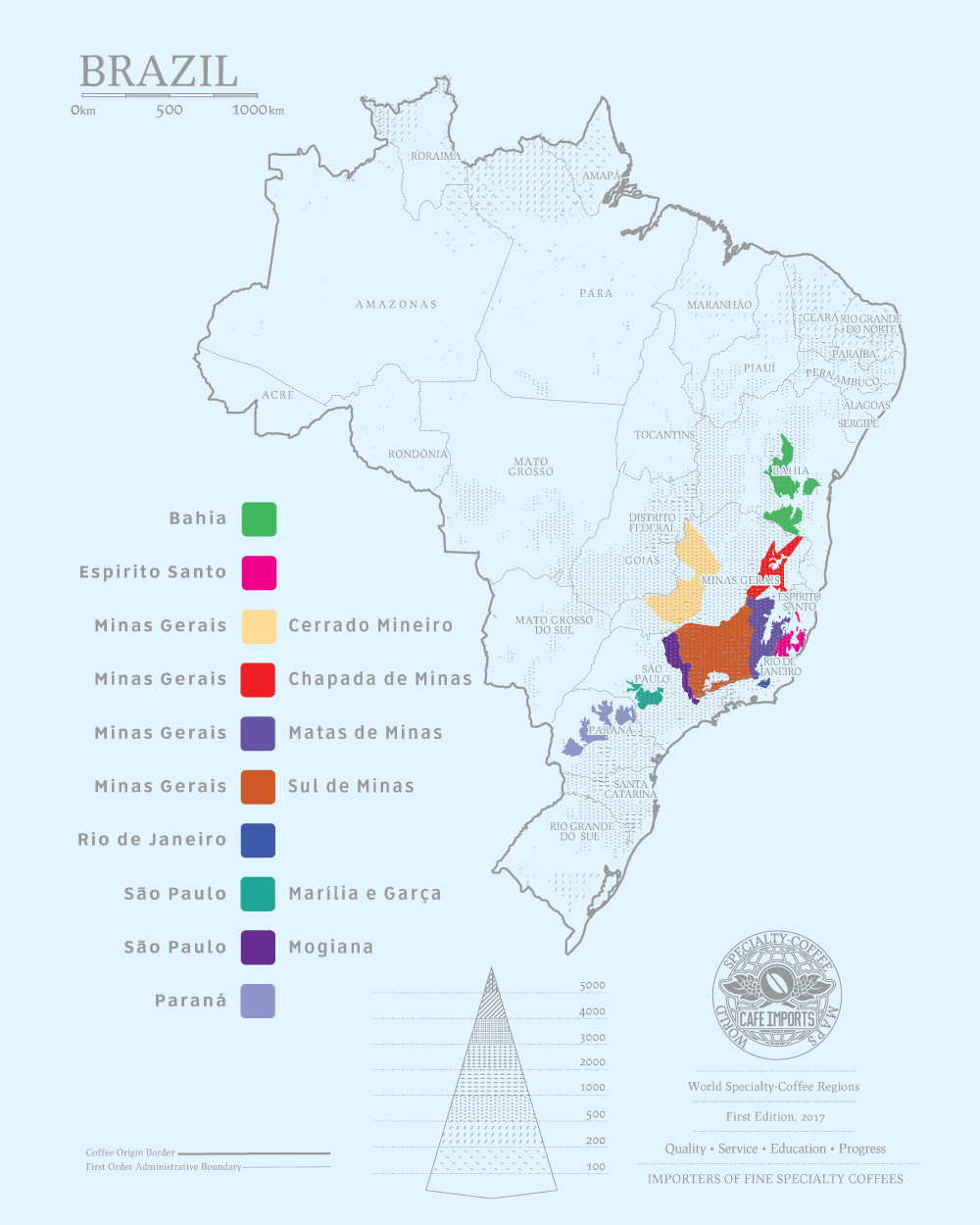
Fazenda Rainha (Queen Farm) is located in the Alta Mogiana region of São Paulo state, north of São Paulo city, not far from another Brazilian specialty coffee producing region—MINAS GERAIS in Minas state.
Brazil Specialty Coffee Producing Region - Alta Mogiana, São Paulo State
Coffee in the Alta Mogiana region is usually grown at elevations between 1,100 and 2,000 meters, interplanted with shrubs, grasses, and other vegetation. The area has both large farms following traditional models and small operators taking a modern approach. It is precisely this combination of modern technology and mountain coffee-growing tradition that produces extremely high-quality green coffee beans.
The region's average annual temperature is only 19°C, so the fruit matures relatively slowly, but the beans are dense and solid. Although yields are not particularly high, the aroma and flavor are far beyond those of ordinary Brazilian highland beans. The estate is dominated by Bourbon varieties, including some old Bourbon plants over 110 years old.
Introduction to Brazil Queen Farm
Brazil Queen Farm coffee is located in the Alta Mogiana region at elevations between 1,400 and 1,950 meters, with a total area of 280 hectares, of which 200 hectares are planted with the Yellow Bourbon variety. The excellent geographical conditions and pleasant climate make this an ideal place for specialty coffee.
Yellow Bourbon is a Bourbon mutation unique to São Paulo state, Brazil. When the fruit ripens, it does not turn red but orange-yellow, hence the name "Yellow Bourbon." When planted at high elevations, Yellow Bourbon often exhibits excellent flavor. Its acidity is balanced and soft, its bitterness faint and clean, and the overall cup is bright and refreshing.
Yellow Bourbon beans are naturally sweet and clean. Using the natural method (or pulped natural) slightly reduces acidity, but it combines well with sweetness, carrying tropical fruit aromas.
The Brazil Pulped Natural Yellow Bourbon coffee beans currently offered by Front Street Coffee (FrontStreet Coffee) come precisely from this estate. To highlight the rich nutty notes and full-bodied mouthfeel characteristic of the Brazilian producing region, Front Street's roaster, after fully understanding the beans' characteristics, roasted this Brazil Queen Farm coffee to a medium-dark roast.
According to cupping by Front Street Coffee (FrontStreet Coffee) baristas, this coffee has distinct nutty flavors, balanced and smooth acidity, a faint and clean bitterness, rich chocolate aroma and nutty flavors, a bright and refreshing mouthfeel, and a silky, delicate texture.
At Queen Farm, all workers live on the farm, there is no temporary employment, and they receive proper support such as health plans and unlimited hospital care. The workers recently even built a second teaching building for the Pedro Roza IT school, as well as a small chapel designed by Oscar Niemayer. Fazenda Rainha's environmental policy is based on harmonizing production with environmental protection. The estate is BSCA certified and adopts the UTZ-certified social and environmental management system, and has been shortlisted in the Cup of Excellence competition for many years.
This estate is very famous in Brazil and is owned by the Carvalho Dias family. Carvalho Dias owns four major estates, which have won awards every year since the first Brazil COE competition in 1999, winning more than 12 times in 7 years.
In 2004, the family even swept the champion, 9th place, 11th place, and other positions. Countless estates large and small in Brazil have longed for a place among the winners for years, yet have always struggled to achieve it, while the four major estates under this family have carried off multiple awards one after another. Fazenda Rainha's record is equally dazzling: runner-up in 2000, third place in 2001, 29th place in 2005, and so far it has won awards 3 times.
Brazil Queen Farm's Pulped Natural Processing Method
Before 1990, Brazil used almost entirely the rough natural processing method, which made Brazilian beans prone to picking up rotten-wood or earthy flavors. Because the coffee fruit had to undergo two to three weeks of sun exposure, once rain caused moisture to return, it would easily mold.
To change this disadvantage, in 1990 Brazil developed the pulped natural method (Pulped Natural) for its relatively dry climate, in order to shorten processing time. The two methods are similar; the difference lies in whether water is used to assist during processing. The pulped natural method greatly reduces the difficulty of quality control, successfully reducing defects, giving a neat and attractive appearance and higher sweetness.
Pulped natural processing is divided into two stages: first, sun drying to bring the moisture content down to 20–25%, then sending it to a dryer to further reduce the moisture content to 10–14%, completing the drying.
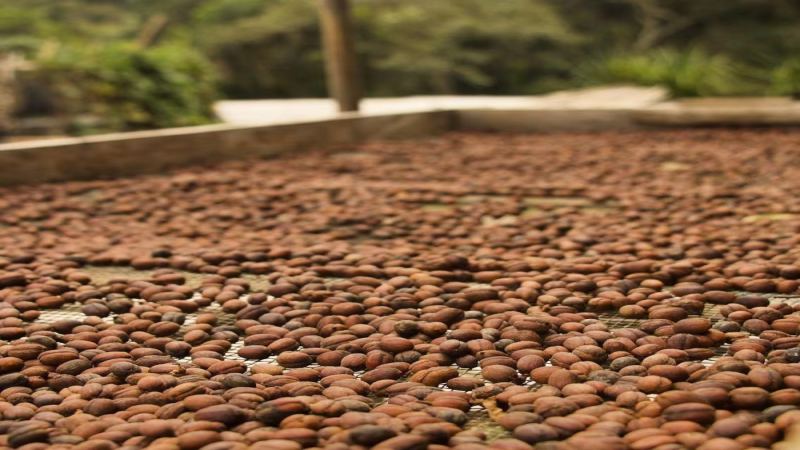
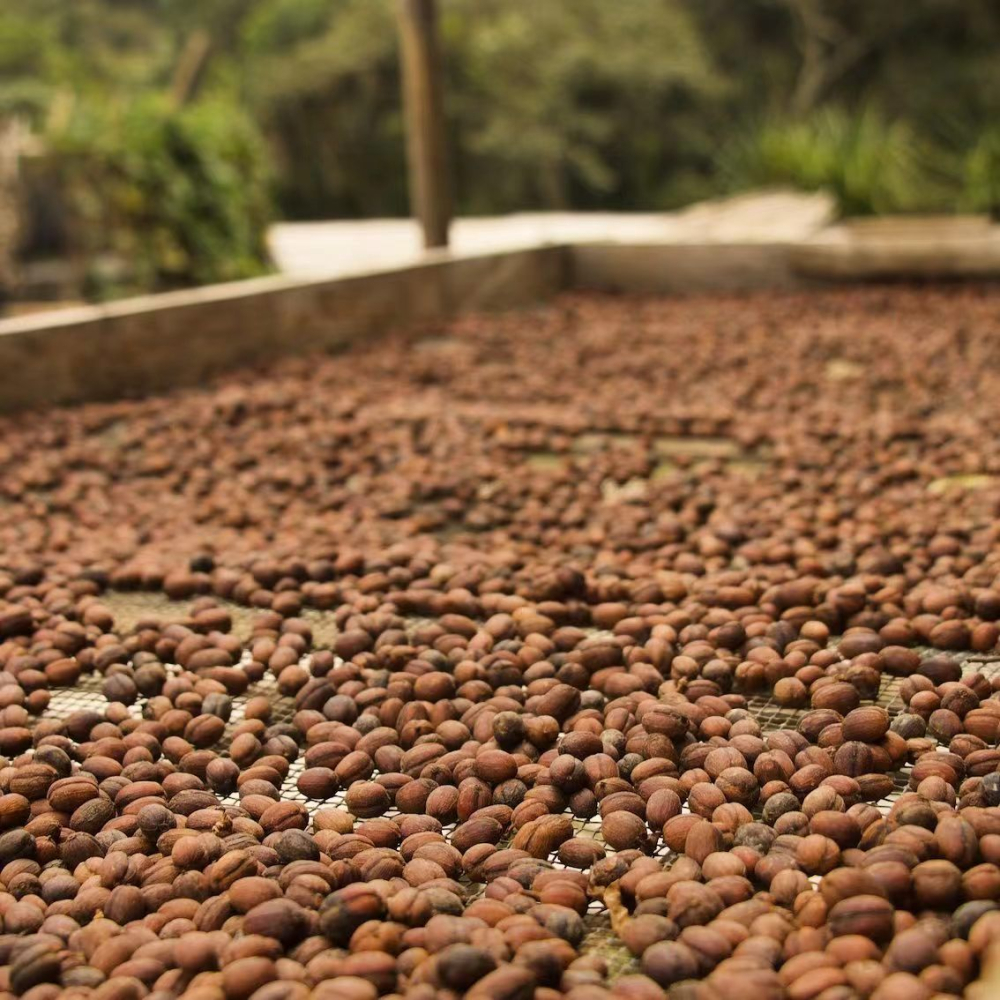
After harvesting, Brazil Queen Farm removes the pulp from the coffee fruit and spreads it out in the yard to dry. The coffee slowly dries in the sun until the humidity reaches 11%. After drying is complete, the coffee is placed in wooden granaries, so the Brazilian coffee beans produced by this estate are more stable in quality.
How to brew Front Street Brazil Queen Farm coffee beans for a great taste?
To showcase the balanced body of Brazil Queen Farm coffee beans, Front Street Coffee (FrontStreet Coffee) uses a KONO dripper, paired with a medium-coarse grind (coarse sugar size / 70% passing rate on the Chinese No. 20 standard sieve) and water at 88–89°C for extraction.
The extraction method is as follows: pour 30 grams of water in the first stage for blooming, with a blooming time of 30 seconds; pour water in the second stage up to about 125 grams, then wait for the coffee liquid to drop; when it has dropped by half, pour the final stage of water up to 225 grams; wait until all the coffee has dripped through before ending the extraction. The total extraction time is generally about 2 minutes 10 seconds.
Front Street - Brazil Queen Farm coffee brewing flavor: the fresh sweetness of sugarcane juice, black tea, soft and smooth fruit sweetness, distinct nutty flavors, balanced and smooth acidity, a faint and clean bitterness, rich chocolate aroma and nutty flavors, a bright and refreshing mouthfeel, and a silky, delicate texture.
The above content is compiled by CoffeeHunters, a coffee news website.


