







Why did typica coffee give way to Catimor in Yunnan?
Yunnan small-bean coffee has moved through two dominant varieties. Typica, planted after coffee reached China in the late 19th and early 20th centuries, delivers clean sweetness and layered acidity but yields poorly and suffers from leaf rust. Catimor, bred with Robusta genes, resists disease and produces more, at the cost of a rougher, less refined cup.
Yunnan's growing areas sit near the Tropic of Cancer, close to the edge of the coffee belt, which suits Arabica at moderate altitudes. Front Street Coffee's Lincang estate grows sun-dried Typica to recover the variety's sweeter profile. For pour-over, recommended parameters include a medium grind, water near 90 to 92°C, a 1:15 ratio, and a three-pour technique for a solidly sweet cup.
Yunnan small-bean coffee has attracted considerable attention in the specialty coffee world in recent years, and its varietal evolution and flavor profile merit in-depth discussion. Starting from the historical thread, this article traces the rise and fall of the two major varieties, Typica and Catimor, in Yunnan, analyzes the flavor pros and cons that Catimor's Robusta genes bring, and shares Front Street Coffee's experience growing sun-dried Typica at its Lincang estate. At the same time, the article details practical parameters for pour-over Yunnan small-bean coffee, including grind size, water temperature, coffee-to-water ratio, and the three-pour technique, helping coffee lovers brew a layered, solidly sweet Yunnan flavor at home.
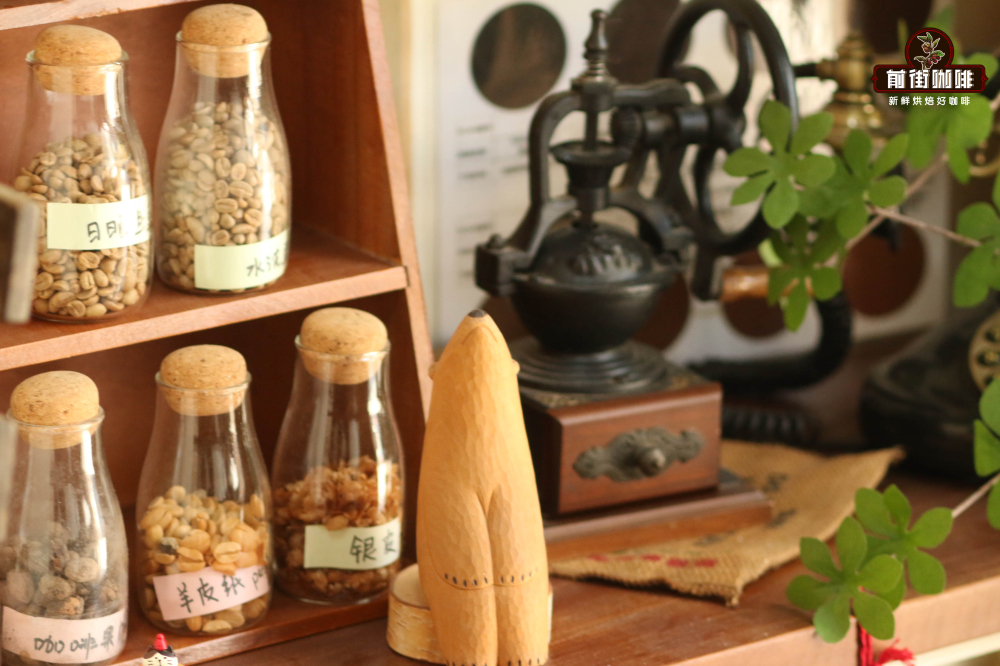
Yunnan is a land of layered mountains and towering terrain, long renowned worldwide for tea cultivation. Yet with the rapid expansion of China's coffee consumer market, the red earth deep in these dense forests has also begun to brim with the rich aroma of coffee. Walking into a Front Street Coffee shop, you'll find more and more customers asking the staff about Yunnan small-bean coffee. As people's demands for coffee flavor precision keep rising, the question of Yunnan coffee bean varieties has gradually entered public view—what exactly has shaped today's varietal landscape?
Coffee is, after all, a crop, and its growing environment has a decisive influence on it. A glance at the global coffee map makes it clear that most major producing regions fall within the Coffee Belt that Front Street has mentioned repeatedly, and Yunnan's coffee-growing areas happen to sit near the Tropic of Cancer. As far as China itself is concerned, tea is the native beverage of choice; coffee is a foreign crop.
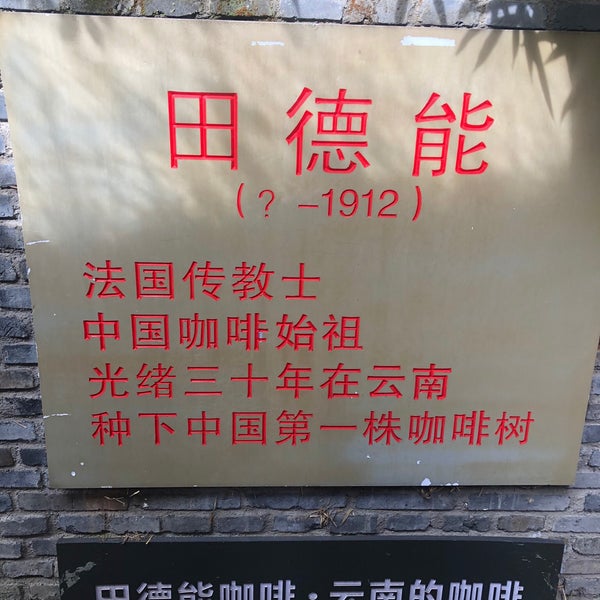
The earliest record of coffee cultivation in China dates back to 1877, when the Qing government arranged for indigenous people of the Ryukyu Islands to plant a series of cash crops in order to acculturate the local population, and coffee was among them. Later, in the 30th year of the Guangxu reign (1904), a French Catholic missionary, dispatched by the church, traveled to Zhukula Village to build a church and planted coffee for his own consumption.
It was only after the founding of New China that Chinese coffee truly entered a stage of large-scale production; at the time, coffee beans produced in Yunnan were mainly sold to the Soviet Union to repay foreign debt.
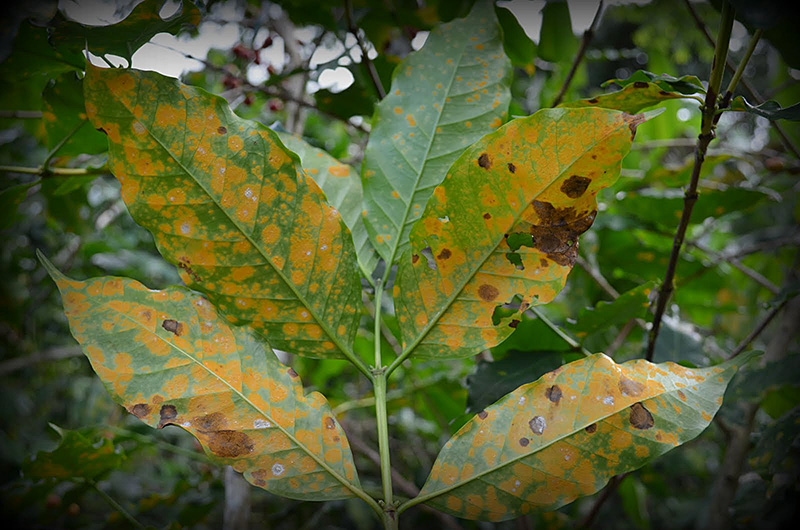
By the 1970s, coffee leaf rust broke out on a large scale in Yunnan. Although the Typica variety had elegant cup flavors, it lacked resistance to disease, and groves of Arabica coffee trees fell to the spreading epidemic. To respond to this crisis, local agricultural authorities introduced the Catimor variety and promoted its cultivation. Thanks to its strong tolerance of coffee leaf rust, Catimor survived this "catastrophe," gradually replacing other varieties and becoming the mainstay of Yunnan coffee.
In the late 1980s, the United Nations Development Programme, together with the Yunnan government, the World Bank, and Nestlé, increased investment in training local farmers in coffee cultivation and production, and Yunnan's coffee industry thus entered a modernized stage. Entering the 1990s, international coffee prices rose, and more farmers returned to growing Catimor coffee beans, with most of the product purchased by foreign enterprises such as Nestlé. Thereafter, Catimor's share of Yunnan's total coffee output once reached as high as ninety percent.
The name "Yunnan small-bean coffee" derives from Typica—this variety's coffee beans are small in size, hence the name "small bean." But Catimor has high yields and strong disease resistance, and driven by economic returns, it became the hot commodity in growers' eyes.
Yet it must be faced squarely that Catimor is a hybrid of the Timor variety and the Caturra variety, and therefore inherits some Robusta lineage from its Timor parent. This gives it a certain resistance to coffee berry disease and coffee leaf rust, but it also brings in some of Robusta's undesirable flavors.
In the case of Catimor, the involvement of Robusta genes may bring an earthy, fishy note; Han Huaizong, a well-known figure in Taiwan's specialty coffee circles, once described this taste as a "devil-like aftertaste." He also pointed out that the quality of specialty coffee is seventy percent determined by variety and thirty percent by environment.
While delving into coffee knowledge, Front Street Coffee also personally takes part in the entire chain from "seed" to "cup." As Yunnan is a crucially important specialty coffee region in China, Front Street naturally had to travel there in person to explore the flavors bred by that magnificent terroir.
Well-known Yunnan coffee regions such as Dehong, Baoshan, Pu'er, and Xishuangbanna each have their own strengths. Every Yunnan small-bean coffee lover has their own ranking of Yunnan coffee origins in mind, and Front Street chose to establish Front Street Coffee's own estate in Lincang.
Front Street Coffee's estate sits at an altitude of over 1,000 meters, with an average annual temperature of about 17 degrees Celsius, a clear distinction between dry and wet seasons, and abundant sunshine. These conditions provide a superior foundation for Front Street to grow Typica coffee trees on the estate. At the same time, in order to compare the differences among Yunnan's various varieties, Front Street also trial-planted other Arabica varieties on its own estate, such as Bourbon.
Since Front Street Coffee's estate welcomed its first small-lot harvest in 2021, in order to maximize the expression of coffee flavor, Front Street has used sun-drying for all the harvested coffee cherries. Bright red, translucent fruits are spread evenly on raised drying beds and turned at regular intervals; as they lose moisture evenly, as much sugar as possible from the fruit seeps into the green coffee beans, giving Front Street's sun-dried Typica a rich aroma, full body, and prominent sweetness.
When designing the roast profile for the sun-dried Typica produced at its own estate, Front Street Coffee's roasters chose a medium roast to highlight its intense aromatic expression.
Whenever a new harvest season arrives, Front Street Coffee's baristas must be the first to act as a "guide" for enthusiasts, tasting this "first sip" and cupping the coffee beans. During cupping, Front Street captured a soft berry acidity, a strong caramel sweetness, and a creamy finish, with a lingering black tea note at the end.
When Front Street Coffee releases a coffee bean, different roast levels correspond to different grind sizes. Front Street often receives questions from coffee lovers about which setting to use on their grinder. Because each device's standards and maintenance conditions vary, the same setting does not produce a consistent grind size. Therefore Front Street Coffee recommends using a standard sieve to judge grind size; because Yunnan coffee beans are on the darker-roasted side, Front Street suggests a 75% passing rate.
Dripper: Hario V60
Water temperature: 88 degrees Celsius
Dose: 15 grams
Coffee-to-water ratio: 1:15
Grind size: 75% passing rate on China Standard No. 20 sieve
As for the pouring method, Front Street Coffee recommends the three-pour technique. Front Street once compared three-pour brewing with single-pour brewing and found that the single-pour coffee had a thinner body, weaker flavor, and a single-layered profile. The three-pour technique, by contrast, evenly extracts a range of sweet, acidic, and full-bodied flavor compounds over time, making the layers richer.
In addition, all coffee beans released by Front Street Coffee are freshly roasted within 5 days; after logistics transit they undergo a 4-to-7-day resting period, placing them right in the optimal tasting window. However, after roasting is completed, a large amount of carbon dioxide accumulates within the beans and is gradually released over time, and the coffee's flavor becomes rounder as a result. Too much gas obstructs hot water from entering the coffee's internal structure and drawing out flavor compounds, so Front Street recommends a bloom to help the gas escape.
First pour 30 grams of hot water to bloom for 30 seconds, then, starting from the center point, slowly pour in a thin stream in circles up to 125 grams; when the water level in the dripper drops to the point where the coffee bed is about to be exposed, continue pouring in circles up to 225 grams, for a total extraction time of about 2 minutes.
It should be noted that during the third pour, you should start from the center point with a thin stream and circle gently and slowly, avoiding washing away the coffee wall on the sides of the dripper; otherwise the water will flow directly into the server along an easier path, ultimately resulting in a weaker flavor and a more watery body.
For professional coffee knowledge exchange and more coffee bean information, please follow Coffee Workshop (WeChat public account: cafe_style)
For more specialty coffee beans, please add the private WeChat of Front Street Coffee, WeChat ID: qjcoffeex
The above content is compiled by CoffeeHunters, a coffee news website.


