







How a Moka Pot Works and How to Use It
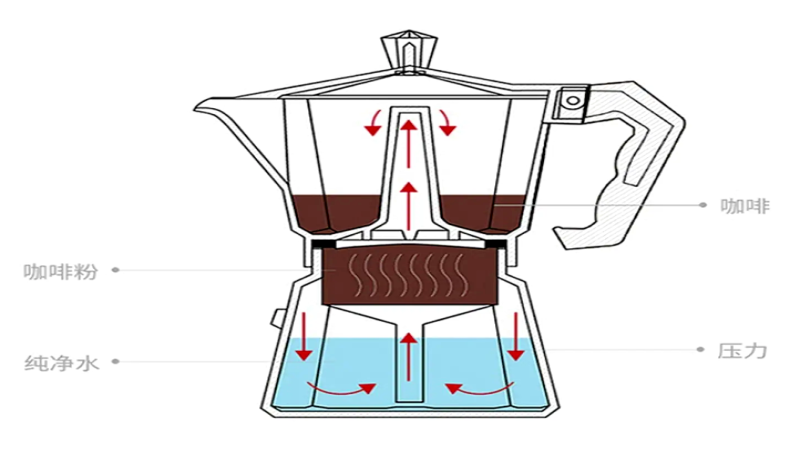
A moka pot is a stovetop brewer with three main parts: a lower chamber for water, a metal filter basket for ground coffee, and an upper chamber that collects the finished brew. When the pot is heated, steam pressure pushes hot water up through the coffee bed and into the top chamber. The Bialetti design from the 1930s made this method popular across Italy and beyond.
To brew, fill the lower chamber with water just below the safety valve, add medium-fine coffee to the basket without tamping, and screw the halves together firmly. Place the pot on medium heat and remove it once the upper chamber fills and the flow turns pale and sputtering. Serve soon after brewing, and rinse the pot with warm water only, avoiding soap to preserve the seasoning.
The moka pot, as a direct-flame espresso device, has become the top choice for many coffee beginners thanks to its affordable price and simple operation. It forces hot water through the coffee grounds using steam pressure, extracting a rich and full-bodied coffee liquid with both acidity and bitterness and a small amount of oils. This article will start with the structure and extraction principle of the moka pot, gradually break down five operating steps, and share the details to note in daily use. In the text, Front Street Coffee uses its own classic Italian blend beans as an example to demonstrate the complete brewing process of a three-cup Bialetti pot, while also giving practical suggestions on grind size, coffee dose control, heating intensity, and other aspects to help enthusiasts consistently produce a cup of rich aromatic coffee.

For more specialty coffee knowledge, please follow: Front Street Coffee (Frontsteet Coffee)
Domestic coffee culture is becoming increasingly popular, and more and more friends who are new to coffee are beginning to purchase various equipment and try different extraction methods. Compared with espresso machines, which are expensive and have a high operating threshold, the moka pot is clearly simpler and easier to use, so it has also become the first introductory equipment for many coffee beginners.
First, let's get to know the moka pot structure and working principle
The moka pot is a direct-flame espresso device. Its earliest design concept was to use the steam pressure generated after water boils to let hot water pass directly through the coffee grounds layer, dissolve out the flavor substances, and push them into the upper chamber, ultimately obtaining a rich coffee liquid. Coffee made with a moka pot has a strong taste, with both sourness and bitterness coexisting, and a small amount of oils on the surface.
The extraction method of the moka pot is similar to the pressurized espresso we commonly see: after the water in the lower chamber is heated to boiling, it produces steam, and the steam continuously accumulates to form pressure, forcing hot water through the coffee grounds, dissolving flavor substances and then flowing together with the coffee liquid into the upper container with force. When brewing coffee with a moka pot, it can generate about 1.2 to 3 atmospheres of pressure. The increase in pressure makes the coffee flavor more concentrated, so the coffee brewed with a moka pot also has a particularly mellow taste.
The detailed operating steps of the moka pot
Before brewing coffee, you need to prepare fresh coffee beans, water, a grinder, a gas stove for heating (or an induction cooker), and the protagonist—the moka pot . Here, Front Street uses its own roasted "Front Street Classic Italian Blend Coffee Beans" for extraction. This is a formula designed specifically for espresso machines and moka pots, composed of Front Street Indonesia Mandheling, Front Street Brazil Cerrado, and Front Street Vietnam coffee. Everyone can buy it directly at the Front Street Taobao store or the Front Street Tmall flagship store.
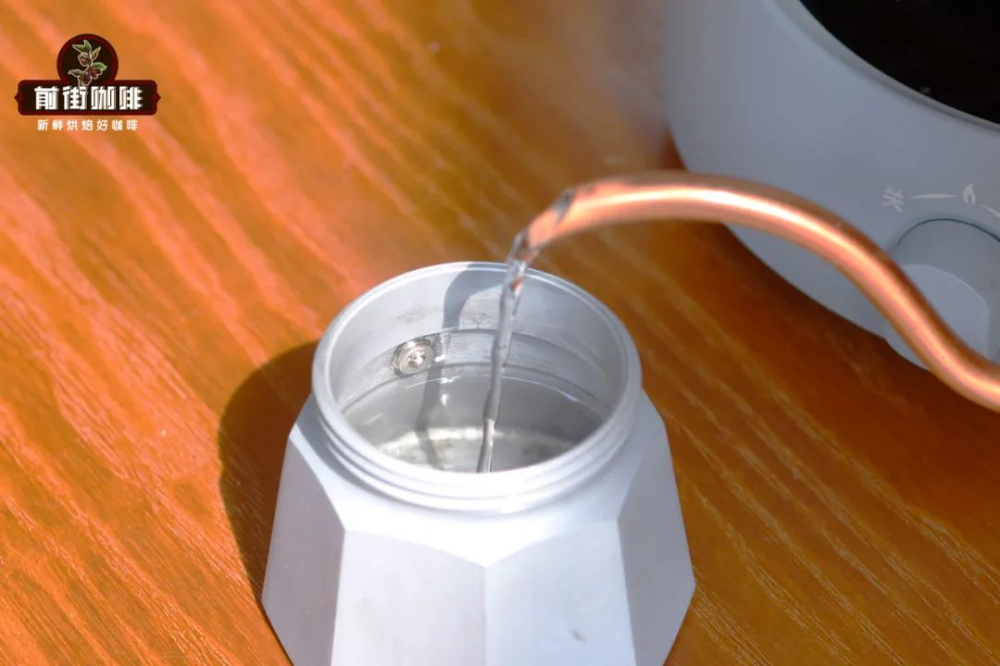
1. First remove the base of the moka pot and pour pure warm water into the lower chamber. This can shorten the brewing time and also avoid the coffee grounds being heated too quickly, which would cause a burnt and bitter flavor.
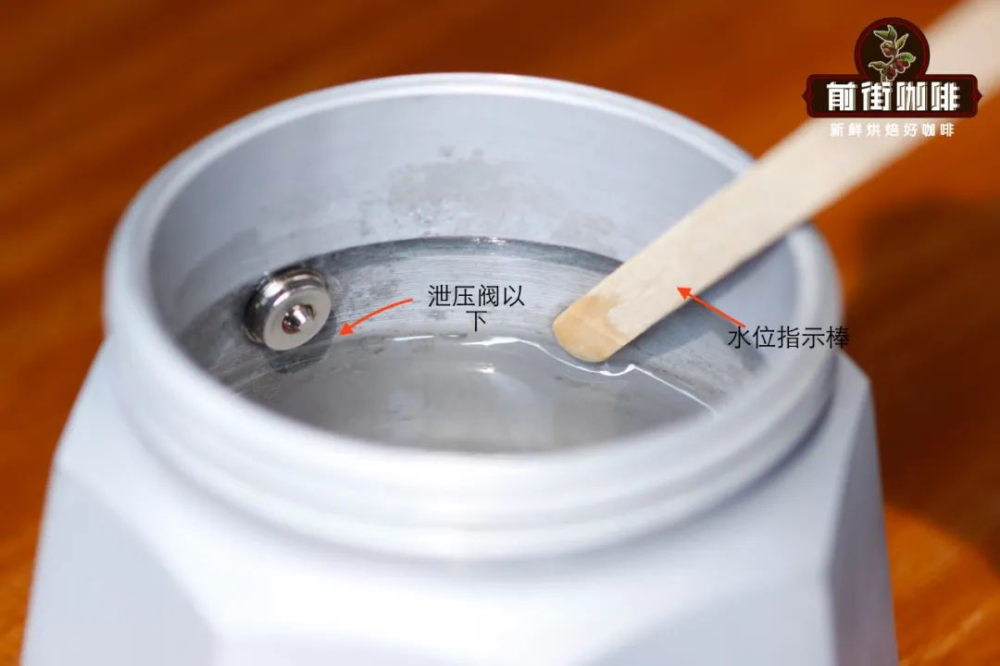
Control the water amount to about 0.5 cm below the pressure relief valve line. The function of the safety valve is to prevent overly fine coffee grounds from causing a blockage in the extraction channel, which would then cause the coffee pot to explode. If the safety valve is submerged in water and the extraction channel happens to be blocked, the consequences of the high-temperature coffee pot exploding would be unimaginable.
2. Weigh the coffee beans and grind them. To extract a rich black coffee, the grind size needs to be much finer than for general pour-over. The Front Street store uses an EK-43s grinder, with a setting of 0.5. The control of the coffee dose depends on the size of the moka pot. Here at Front Street, a three-cup Bialetti classic pot is used, with a dose of 18 g.

3. Pour the ground coffee into the filter basket, fill it to nine-tenths full, smooth it with your finger, and then place it into the base. There is no need to tamp it firmly. An overly compacted coffee layer can easily block the upward flow of water, thereby affecting extraction.
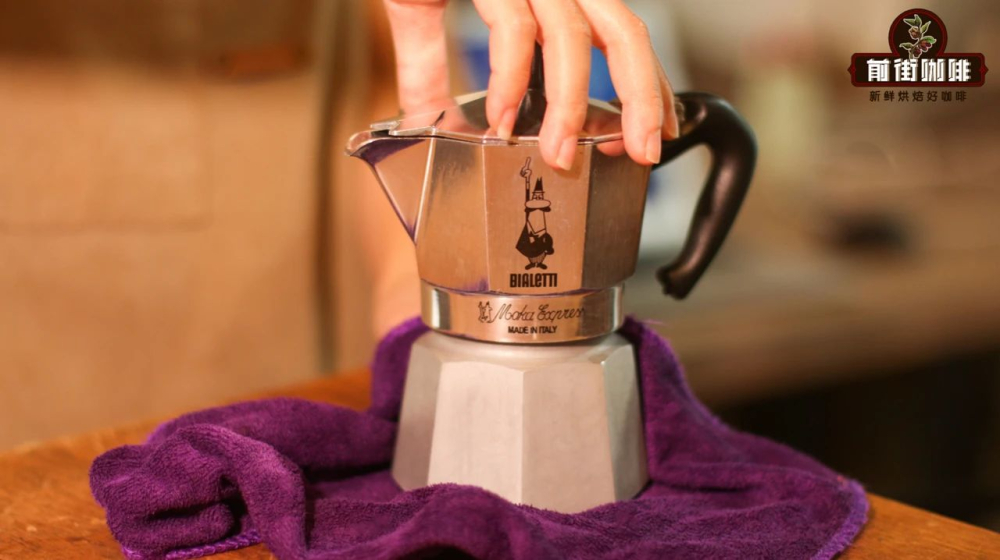
4. Then screw the upper chamber and lower chamber tightly together, wipe the body dry with a towel, and place it on a gas stove or induction cooker to heat. When using an open flame, be careful to control the flame so it does not exceed the base area of the moka pot.
5. Just wait for the moka pot to heat up. When you hear a hissing sound, turn to low heat, and the coffee liquid and oils will slowly flow out. When you see the coffee liquid in the upper chamber is half full, you can turn off the heat source and move the pot to the table, using the residual heat and pressure inside the pot to continue extracting the remaining coffee liquid.

Finally, pour the extracted coffee liquid into a cup and you can taste it directly. On the palate there is a rich whiskey aroma, vanilla, cream, and the sweet-tartness of berries, with the aroma of roasted nuts. Adding a certain proportion of hot water brings out a fresh fruity sweet-tartness, and when paired with milk it has an even more chocolatey sweetness.
Details to note in daily use of the moka pot
The moka pots we commonly see are generally made of metal. When heating at high temperature, try not to touch the pot body; you can use a wet towel to avoid burns. If we hear a humming sound but the upper chamber never overflows with coffee liquid, it is very likely that the spout is blocked. The heat source should be turned off first to avoid excessive internal pressure and bursting, which would create a safety hazard.
If the grind size of the coffee grounds is too coarse, it will lead to insufficient extraction, spattering, and other problems; if it is too fine, it will lead to over-extraction, with a heavy burnt and bitter taste that is difficult to drink. The filter basket needs to be filled and leveled. If there is not enough coffee powder, when the water in the lower chamber enters the middle coffee layer under steam pressure, it cannot perform sufficient extraction, which will then cause large spattering in the upper chamber, and the taste of the coffee will also be hard to describe.
Front Street always disassembles and cleans the moka pot promptly after each use to avoid leaving coffee residue stains, which can easily cause flavor transfer and burnt bitterness. If old coffee stains remain on the filter screen, gasket, or extraction channel, they may cause blockages and affect normal extraction.
Front Street recommends medium-dark roasted beans. Because the moka pot uses pressure extraction, if light-roasted coffee is used, light-roasted beans are harder in texture and usually require a finer grind size to increase the extraction rate. However, fine grinding under high temperature and high pressure can easily make the coffee sour, astringent, and pungent, and it is also relatively difficult to extract the aroma of oils. Therefore, Front Street recommends that everyone use deeper-roasted Italian blend coffee beans as the raw material, which not only makes it easier to drink rich aromatic coffee with oils, but also makes our extraction of coffee flavor more stable.
On the Front Street bean list, there are four Front Street Italian blend coffee beans suitable for moka pot brewing. Moka pot enthusiasts can choose the Italian blend beans that suit their own taste according to their needs. Front Street hopes that every customer who places an order can taste the aroma of coffee at its best flavor period, so it ensures that only beans freshly roasted within 5 days are shipped.
The above content is compiled by CoffeeHunters, a coffee news website.


