







How Did Yunnan Coffee Move From Typica to the Specialty Market?
Yunnan coffee has been grown for more than a century, starting with Typica rather than the Catimor seen widely today. French Catholic missionary Tian Deneng planted Typica near a church in Zhukula Village in 1904, and that arabica small-bean variety became the earliest source of Yunnan arabica. Three waves of development followed, shaped by altitude limits and variety replacement.
The first wave came in the 1960s, when the Yunnan agricultural reclamation system planted coffee to repay loans to the Soviet Union, with state foreign trade purchasing the crop from farms such as Baoshan Lujiang and Dehong Zhefan. Typica rose and fell twice in Yunnan. Front Street Coffee grew Typica from scratch and released Front Street 2013 after eight years as a natural Typica.
Yunnan coffee has been appearing frequently in green bean competitions in recent years, gradually moving from a niche origin to the specialty market. But many people don't know that this land has been growing coffee for over a century, from the original Typica to the Typica and Catimor that are everywhere today, having gone through three waves of ups and downs. The limitations of altitude conditions, the trade-offs of variety replacement, the debate between processing methods and varieties—these are all key to understanding Yunnan coffee. Front Street Coffee chose a long and difficult path: growing Typica from scratch, and after eight years finally delivering the answer known as "Front Street 2013." This article will sort out the historical context of Yunnan coffee and describe in detail the flavor performance of this fully self-produced natural Typica.
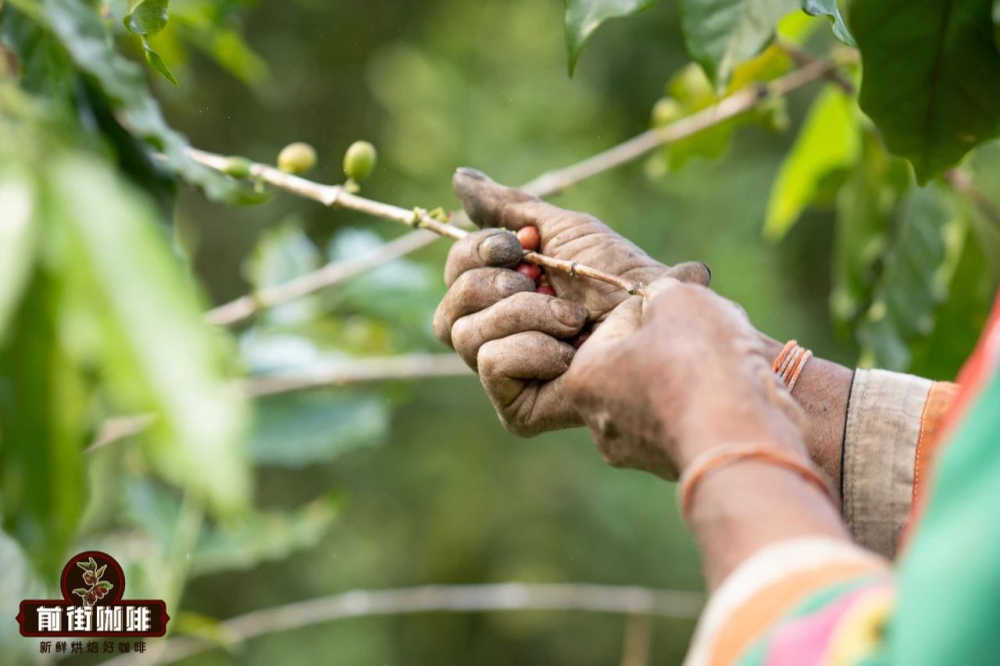
In recent years, green coffee beans from the Yunnan origin have repeatedly achieved good results in domestic and international competitions, and their presence has become increasingly strong. The potential shown by Yunnan arabica coffee makes it impossible to underestimate, and like a dark horse it has gradually entered the specialty coffee market. Today let's talk about the development thread of Yunnan coffee over these years.
The History of Coffee Cultivation in Yunnan
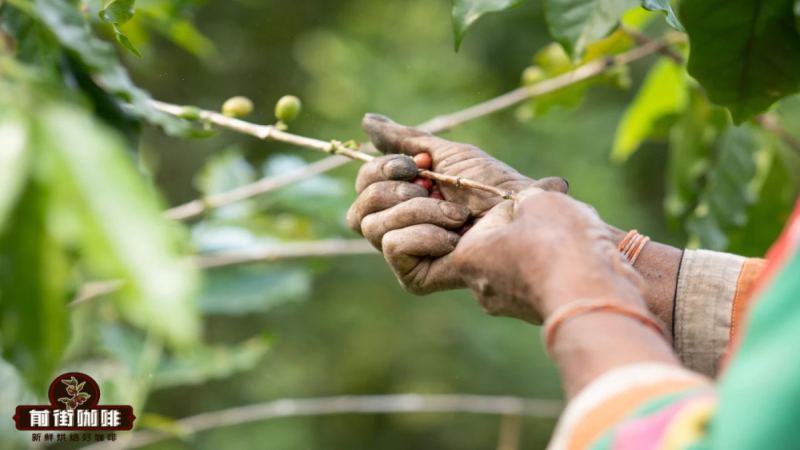
The history of coffee cultivation in Yunnan can be traced back over a hundred years. The first to take root in this land was not the Catimor seen everywhere today, but Typica. This variety experienced two rounds of rise and fall in Yunnan. In 1904, the French Catholic missionary Tian Deneng entered the Dali area of Yunnan via Vietnam to preach, and while building a church in Zhukula Village, he also planted a batch of Typica coffee trees beside it. After that, Yunnan coffee cultivation successively welcomed three waves of development. Typica is exactly what we usually call the arabica small-bean variety, and this is also the earliest source of Yunnan arabica coffee.
The first wave occurred in the 1960s. At that time, in order to repay loans to the Soviet Union, the Yunnan agricultural reclamation system began planting coffee, and the products were uniformly purchased by the state foreign trade department. The planting areas were distributed across several agricultural reclamation farms: Baoshan Lujiang Farm, Xincheng Youth Farm, Dehong Zhefang Farm, Ruili Farm, Wanding Farm, Wenshan Babu Farm, and Tianbao Farm. The varieties planted were locally propagated Typica and Bourbon variants, and the coffee planting area of the entire agricultural reclamation system once reached 50,000 mu. Later, after the loan repayment work ended, the foreign trade department's enthusiasm for purchasing declined, and coupled with the large-scale spread of rust disease, a large number of plants died. To prevent the spread of the disease, they were cut down, and the planting area was once reduced to less than 3,000 mu.
The second wave appeared in the 1980s after reform and opening up. In 1988, Nestlé decided to support Yunnan's coffee industry and introduced Catimor to Yunnan for large-scale planting. It was precisely this development that allowed Catimor to replace Typica's position and become the main variety of Yunnan coffee, accounting for 99% of the province's coffee production. Catimor is a hybrid variety and can also be classified as arabica.
The third wave began after 2000. As China's economy took off, the concept of specialty coffee was also introduced into the country. At the same time, variety selection and cultivation of Yunnan coffee began to move onto a track of scientific development. At present, the process of making Yunnan coffee specialty is still advancing.
Why does Yunnan coffee always emphasize processing methods in recent years?
Although Yunnan is located within the latitude zone suitable for coffee cultivation, its altitude is mostly around 1,000 meters, which happens to be right on the passing line for high-quality arabica cultivation. Not the entire territory of Yunnan is suitable for growing coffee; only the southern regions of Baoshan, Lincang, Simao, and Dehong have the conditions for cultivation. With the rise of the specialty coffee trend, Yunnan as an origin naturally does not want to be absent. But you will notice a phenomenon: when discussing Yunnan coffee, the focus often falls on processing methods rather than varieties, while when talking about other origins, the usual order is origin, variety, and then processing method.
When the concept of specialty coffee was proposed, China did not attach importance to the coffee industry. By the 1980s, driven by Nestlé, Yunnan began large-scale planting of Catimor, which had higher yield and stronger disease resistance. With Nestlé's support, the coffee beans harvested by coffee farmers could all be purchased at reasonable prices and used as raw material for instant coffee. By the time economically developed regions introduced the concept of specialty coffee, Yunnan still mainly followed a planting approach dominated by farmers and with yield as the primary goal, and coffee with high yield usually does not have particularly outstanding quality.
The current situation of Yunnan coffee is this: large areas of Catimor coffee trees already exist, and we all know that this was originally raw bean material supplied to Nestlé, so it is impossible to leap into the ranks of specialty coffee in one step. Therefore, the specialization of Yunnan coffee has split into two paths. One is to use existing beans, imitate Colombia's approach, and change the flavor through new processing methods, so that coffee quality depends on the processing method for its expression. This has led to an interesting phenomenon: some baristas seem quite wary when talking about special processing methods, but after a while, if they recommend Yunnan coffee, most likely they will again recommend Yunnan beans with special processing methods. The other path is to start over, choose suitable plots, plant excellent varieties, adopt scientific cultivation and management, and step by step cultivate high-quality Yunnan coffee.
In 2011, Yunnan coffee once saw a historic high price. Even though international coffee futures repeatedly hit new highs in 2022, they still did not reach the price height of that year. That year many coffee farmers replanted coffee, but prices soon fell into a trough again. This is the law of agriculture.
So even with the rise of specialty coffee, coffee farmers are unwilling to spend five years replacing the existing Catimor varieties. Those still growing coffee are instead more willing to use existing beans for customized processing—if you want natural, they give you natural; if you want anaerobic, they give you anaerobic. It is only a matter of a month. But if taking the traditional route, from variety to washed method and then to determining the flavor, it takes at least five years or more. Moreover, at the moment of planting, who can guarantee that flowering and fruiting five years later will definitely bring good results?
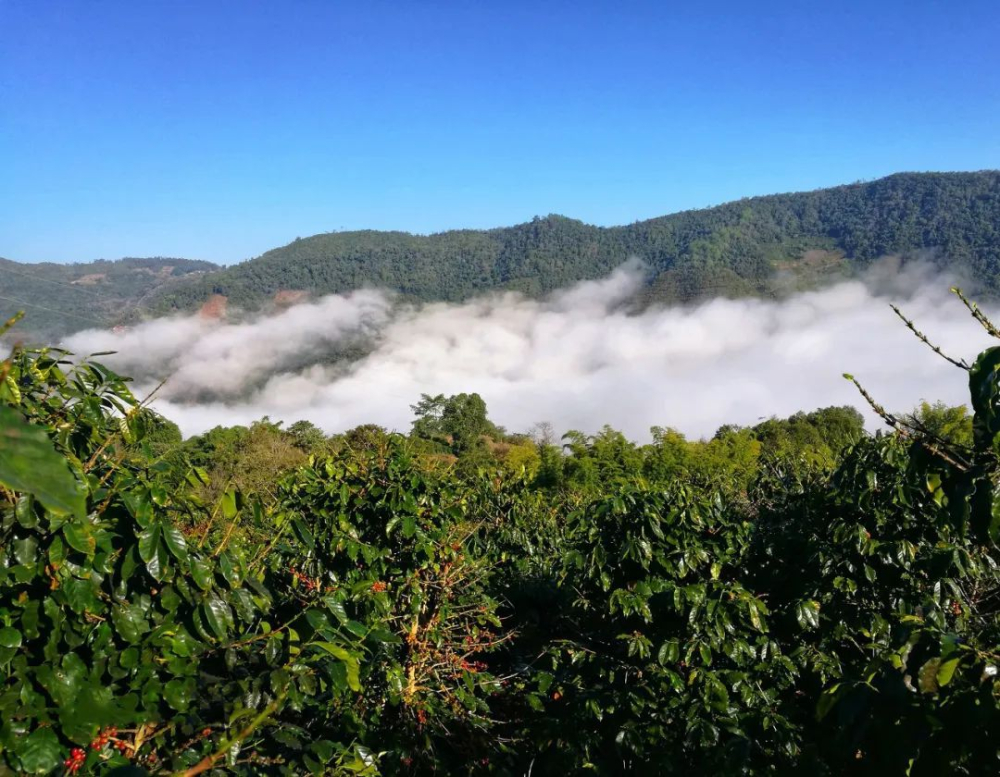
Faced with these two paths, Front Street chose the long latter one.
FrontStreet Coffee's Path of Exploration in Yunnan Cultivation
Many people's impression of FrontStreet Coffee is "a warm little shop that roasts its own coffee." This year is FrontStreet Coffee's eleventh year, but what many people do not know is that Front Street's coffee cultivation actually began half a year earlier than roasting. FrontStreet Coffee's predecessor was called "Dazhen Coffee," a name that came from our desire in 2013 to grow coffee in a place in Guangdong called Dazhen. When we used Catimor to raise seedlings and they grew to 20 centimeters, more than half a year had passed just like that, and only then did we truly understand: the relationship and sequence among variety, altitude, and processing method.
First choose the right variety, plant it at a suitable altitude, and after maturity experiment to find a processing method that can express its unique flavor—this is the only logical chain by which Front Street believes specialty coffee can present a distinct regional flavor.
So we gave up the plan to grow coffee in Guangdong. Because the place where we first roasted coffee was opened on Bao'an Front Street, we changed "Dazhen Coffee" to "FrontStreet Coffee." At Front Street, while roasting coffee, we continued moving forward with the idea of specialty coffee cultivation. We successively visited the Tropical Crops Research Institute, which has in-depth research on coffee cultivation—where the Ministry of Agriculture's coffee germplasm bank is located—and also visited the few coffee farmers growing specialty coffee, clarifying the reasons why Yunnan does not grow mainstream specialty coffee varieties such as Typica and Bourbon. By chance, we found suitable plots in Yunnan's main coffee-producing areas.
Arabica coffee beans have requirements for cultivation altitude and need to be above 1,000 meters; the higher the altitude, the better the flavor. But the altitude of most mountain ranges in Yunnan is just on the passing line, which is a disadvantage for Yunnan coffee. To make up for the insufficiency of altitude, on the premise of having good varieties, more excellent agronomic management must be invested.
Front Street did not buy an existing Catimor estate and directly harvest and process it, but instead bought a patch of mountain land suitable for growing coffee and started from the variety. Even if the land is good, if most discussions of specialty coffee emphasize origin, variety, altitude, and processing method, while when doing Yunnan these points are ignored, it is actually very difficult to achieve specialty flavor. Choosing to grow coffee from scratch was in fact a choice made out of necessity. When planting, we also did not know whether there would be good results after several years, but at least we did all the basic elements of specialty coffee. After all, the conclusion of history chose arabica's Typica, Bourbon, and Geisha.
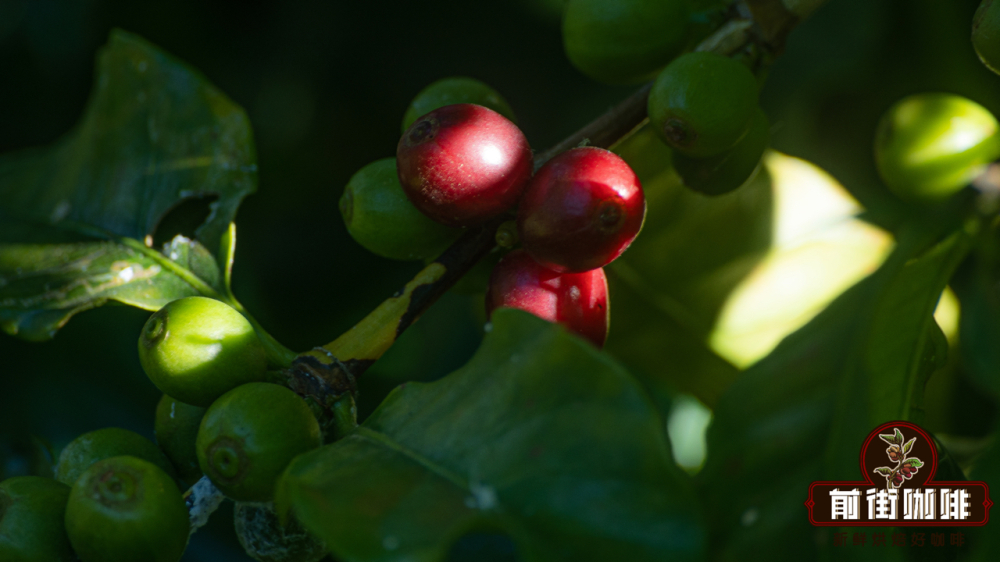
The main Yunnan coffee variety grown by Front Street is Typica, an arabica variety with excellent flavor, and this records this long experiment in Yunnan specialty coffee. Typica has a very low yield, only one-third of Catimor, so its price is higher. At the same time, Typica and Bourbon are both very susceptible to rust disease, which is also one of the biggest reasons farmers are unwilling to plant what they call the old variety, Typica.
Yunnan has no distinction of four seasons, only a dry season and a rainy season, and most coffee-producing areas are similar, which is also the fundamental reason some origins adopt the natural method. Entering June marks the beginning of the rainy season in the producing areas, and the next three to four months will be rainy, which is the most favorable period for growing coffee. Only by planting seedlings at this time, with the nourishment of several months of rain, can they grow a well-developed root system and survive the first dry season lasting half a year.
The time cost of growing coffee from scratch is very high. Coffee takes three to four years from seedling to first fruiting, and then suitable processing methods must be tested and finally reproduced. At the fastest, it takes five years to obtain the first batch of coffee. No one can guarantee producing high-quality specialty coffee all at once, and Front Street firmly believes there is no such easy thing in the world. After multiple rounds of variety selection and breeding, and after fruiting, refinement processing experiments were carried out, and several more years passed.
After 7 years, Front Street finally produced a report card it could show others. This batch had only a small 200 kilograms of Typica coffee beans, using natural processing. To record the journey of these years, this batch of beans was named "Front Street 2013" and sold in the store. And for this cup of coffee, we spent 8 years.
So what is the flavor of this batch of fully self-produced coffee beans from Front Street?
Dripper: V60
Water temperature: 88°C
Dose: 15 grams
Coffee-to-water ratio: 1:15
Grind size: fine granulated sugar coarseness (80% passing rate on China standard No. 20 sieve)
Front Street brewing method: Pulse pouring extraction. Use 30 grams of water for a 30-second bloom, pour in a small stream in circles until 124 grams for the pulse, and when the water level drops and is about to expose the coffee bed, continue pouring until 227 grams and stop pouring. When the water level drops and is about to expose the coffee bed, remove the dripper. (Start timing from the beginning of the bloom.) The extraction time is 2 minutes.
Taste description: Front Street 2013 Yunnan natural Typica coffee also carries a nutty tone. The mouthfeel is more solid than Front Street washed Yunnan coffee, the acidity is slightly lower than Front Street washed Typica Yunnan coffee, but the sweetness is a little greater, the balance is higher, with berry-like acidity mixed with brown sugar and a slight tea sensation.
For professional coffee knowledge exchange and more coffee bean information, please follow Coffee Workshop (WeChat public account: cafe_style)
For more specialty coffee beans, please add the private WeChat of FrontStreet Coffee: WeChat ID: kaixinguoguo0925
The above content is compiled by CoffeeHunters, a coffee news website.


