







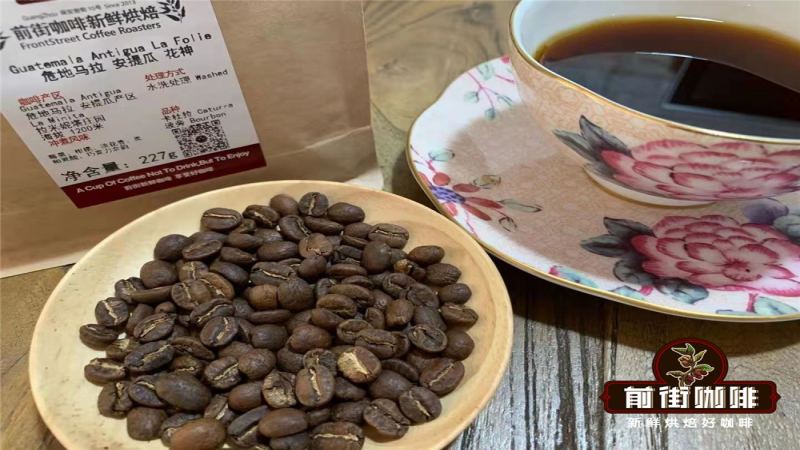
Why Does Central American Coffee From Huehuetenango Taste Distinct?
Huehuetenango is a high-altitude Guatemalan region with non-volcanic terrain, a dry climate and interwoven streams. Its coffee is a Central American coffee that pairs bright fruity acidity with a subtle smokiness, a combination that sets it apart from Ethiopia's Yirgacheffe, which shares the acidity but has a different terroir base.
Guatemala's Strictly Hard Bean grade, grown at high elevation, tends to be plump with balanced acidity. Local mainstream varieties are washed after picking, and that coffee bean process keeps the cup clean while preserving the region's spice and cocoa notes. Guatemalan coffee also sits among the country's eight main producing regions, with Huehuetenango the standout for this flavor profile.
Guatemalan coffee stands out among Central American origins, and Huehuetenango is the star among them. Many friends who are new to coffee easily confuse it with Ethiopia's Yirgacheffe—both have bright acidity, but their terroir foundations are completely different. This article will take you deep into Guatemala's eight major coffee regions, focusing on Huehuetenango's unique environment of high-altitude non-volcanic terrain, dry climate, and interwoven streams. We'll explain how smokiness and fruity acidity can coexist, and introduce the local mainstream varieties and washed processing method in detail. At the same time, Front Street Coffee's bean selection logic, brewing parameters, and bean-resting recommendations will also be presented, helping you fully understand the charm of this bean from origin to cup.
When many people first get into coffee, they confuse Ethiopia's Yirgacheffe with Guatemala's Huehuetenango. Both beans have acidity, so it's normal not to tell them apart at first. Today, Front Street will explain how to distinguish these two coffees. Coffee is essentially a crop, and every origin has its own signature flavor. Ethiopia in Africa is known for bright acidity and floral aromas and is a typical African bean; while Guatemala in Central America, because of its volcanic soil, has a full, rich mouthfeel, often with nutty and chocolate notes, and even a hint of smokiness—making it a representative of Central American coffee.
This smokiness may not be to everyone's taste, but precisely because of it, Guatemalan coffee has a distinct identity among many origins. Compared with other varieties, tasters actually prefer this complex flavor with spicy notes. Guatemalan coffee ranks among the world's top coffees. The country sits on high-altitude volcanic terrain, and volcanic areas are ideal places for growing coffee. The local Strictly Hard Bean coffee is a rare find—plump, charming in flavor, and balanced in acidity. In addition, Guatemala's giant coffee beans also draw a lot of attention.
The reason Front Street created a daily drinking bean series is that we understand coffees from different countries and regions each have their own strengths. To help enthusiasts experience the terroir of different places more systematically, Front Street has prepared 8 daily drinking beans from different countries, including Panama Geisha. The daily drinking beans selected by Front Street are all the most representative coffees of their countries, offering good value and suitable for tasting one by one to find the flavor you prefer.
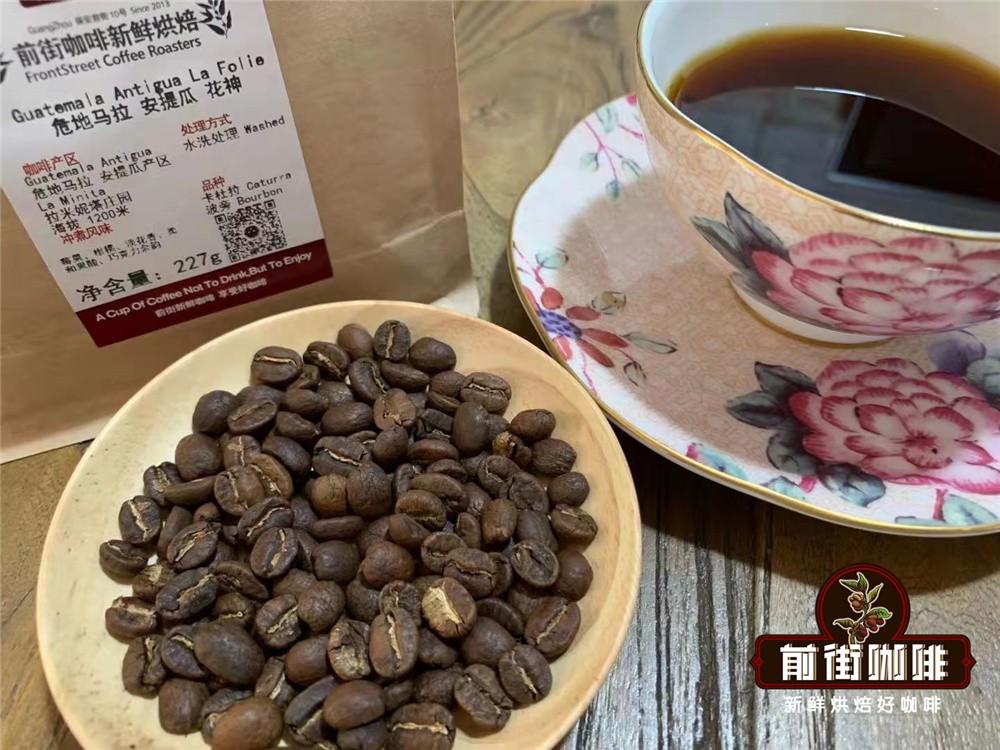
The smokiness of Guatemalan coffee is inseparable from the local volcanic soil. Guatemala is located in the center of North and South America and holds an important geographical position in Central America. Its land area is about 108,899 square kilometers, and its terrain can be divided into highland volcanoes, lowland tropical forests, volcanic sandy coastal plains along the Pacific, and untouched land along the Caribbean coast. The Sierra Madre mountain range of Central America runs east-west through Guatemala, covering about two-thirds of the country, with 34 volcanoes within its borders. The country is dotted with rivers and lakes, broad equatorial forests and plains jungles cover vast areas, and the Pacific and Caribbean coasts still preserve undeveloped volcanic beaches.
Coffee was truly introduced to Guatemala in 1750 by Jesuit priests. By the end of the 19th century, German colonists promoted the development of the local coffee industry. Today, coffee production is mostly concentrated in southern Guatemala. The country has eight major coffee regions, each with its own flavor characteristics, but overall, Guatemalan coffee shows a mild, mellow texture, elegant aroma, and pleasant acidity similar to fruity acidity, making it truly the nobility of coffee. Among them, classic Antigua coffee is deeply admired by coffee connoisseurs around the world.
Guatemalan Coffee Regions
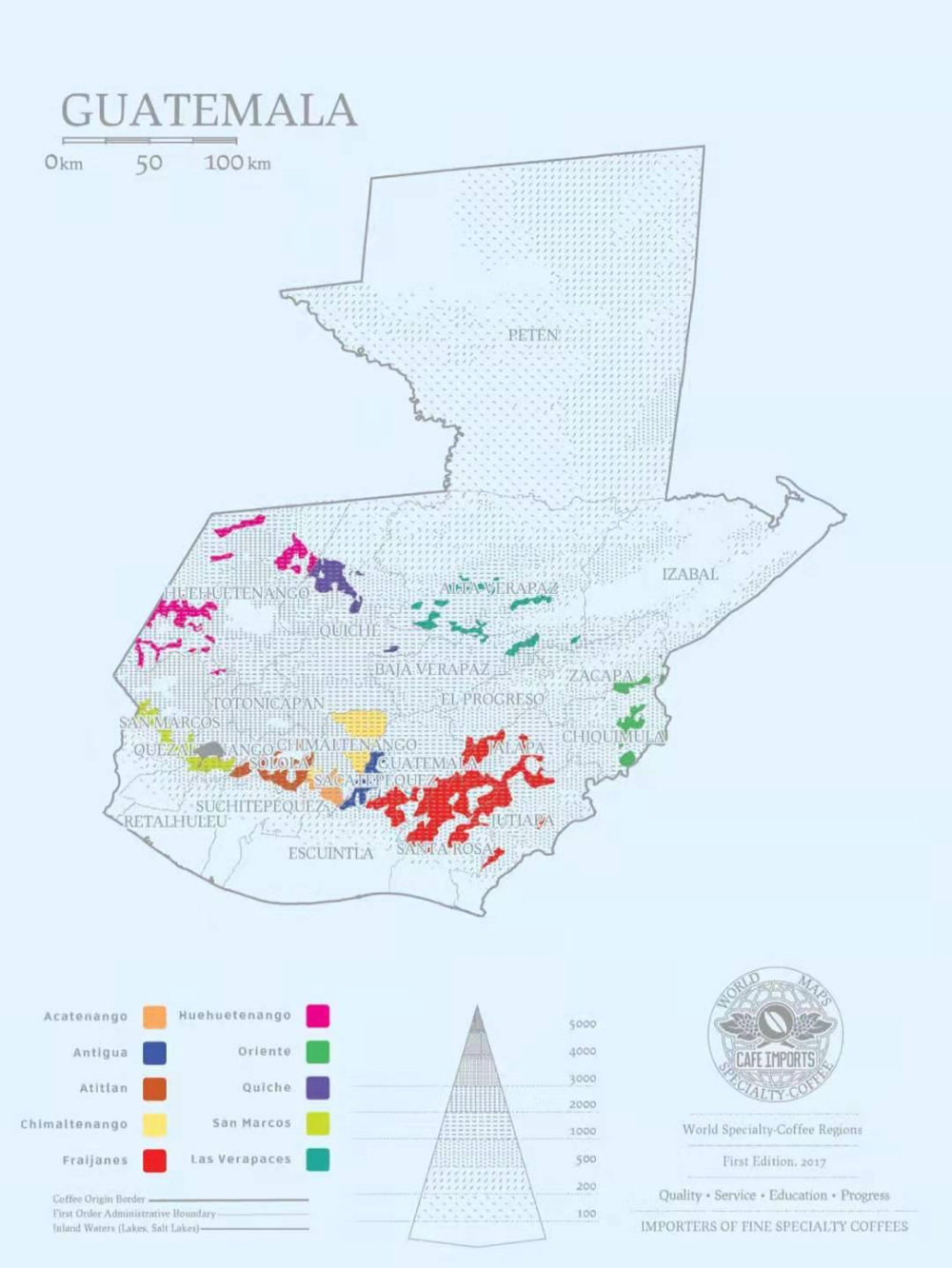
Guatemala has eight coffee regions, all located on highland terrain with a subtropical climate, abundant and stable rainfall, and fertile volcanic ash soil, providing excellent natural conditions for coffee cultivation.
Guatemala's coffee-growing regions include: Antigua, Huehuetenango, Cobán, San Marcos, Atitlán, Acatenango, Fraijanes, and New Oriente.
[Antigua]
The Antigua region is widely recognized as Guatemala's most popular coffee region. The soil here is rich in nutrients, coming from minerals deposited by nearby volcanic eruptions. The still-active Fuego Volcano continuously brings new minerals, keeping the soil fertile. Fertile soil, abundant rain, and stable temperatures together built Antigua coffee's reputation.
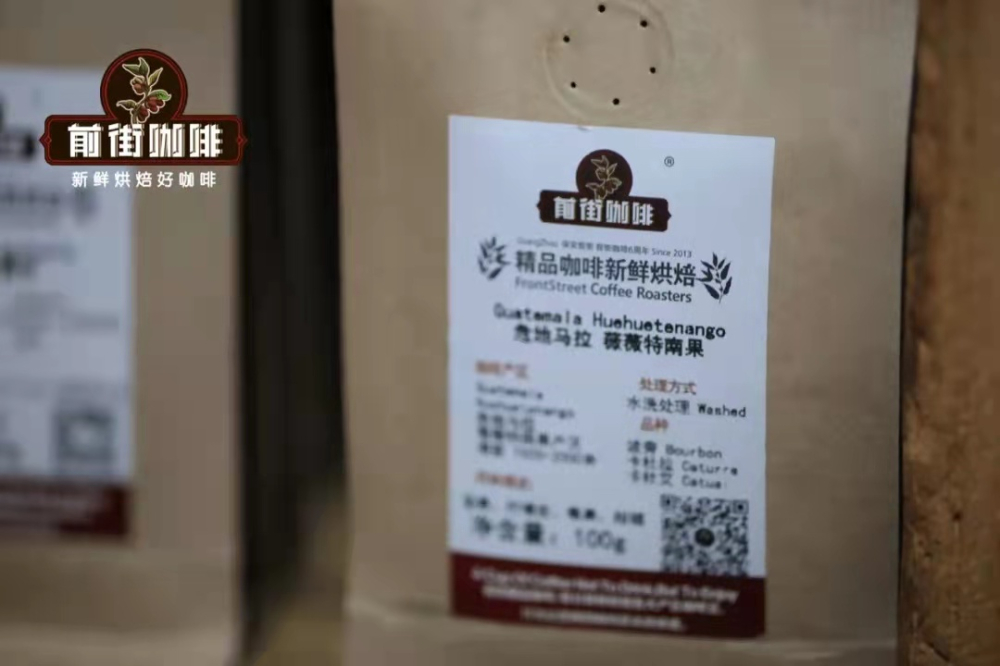
Antigua's charm lies in its balanced, easy-drinking fruity acidity and rich spicy flavor. The beans have a smooth surface, high hardness, and good quality; richness and sweet acidity pair perfectly, and a hint of smoky flavor further highlights its depth and mystery. The smoky note is especially distinctive. On Front Street Coffee's bean list, there is a Flor coffee bean from the Antigua region. Flor coffee beans use washed processing, with varieties such as Caturra and Catuai, and the flavor shows citrus, nuts, and a cocoa finish—refined overall.
[Huehuetenango]
Front Street's daily drinking bean, Huehuetenango coffee, does not have as heavy a smoky note as other regions, but is instead more comfortable, with rich fruitiness. Among Guatemala's three non-volcanic regions, Huehuetenango is the highest in altitude and the driest in climate. Although Guatemala has many highlands, among coffee region names, only Huehuetenango can be called the Huehuetenango Highlands. The coffee flavor of this region is a typical S.H.B. coffee bean, and it can be called the crown of Guatemalan coffee.
Coffee produced in the Huehuetenango Highlands is a typical Strictly Hard Bean; its floral and fruity aroma is slightly weaker, but it has lively, bright fruity acidity, grapefruit-like tartness, berry aroma, and body. It can be called the crown of Guatemalan coffee and is a favorite among acidity lovers. At times it has a lemon or citrus aroma, with a profile similar to Yirgacheffe. Most winning beans in Guatemala's annual coffee competitions come from the Huehuetenango Highlands, and they often win awards in cupping competitions. Front Street also chose Huehuetenango coffee as the representative of Guatemalan coffee.
Huehuetenango is located in Guatemala's most remote northwestern highlands. Its name is quite ancient, derived from Nahuatl, meaning "place of the ancients," and it is one of the country's three major non-volcanic regions.
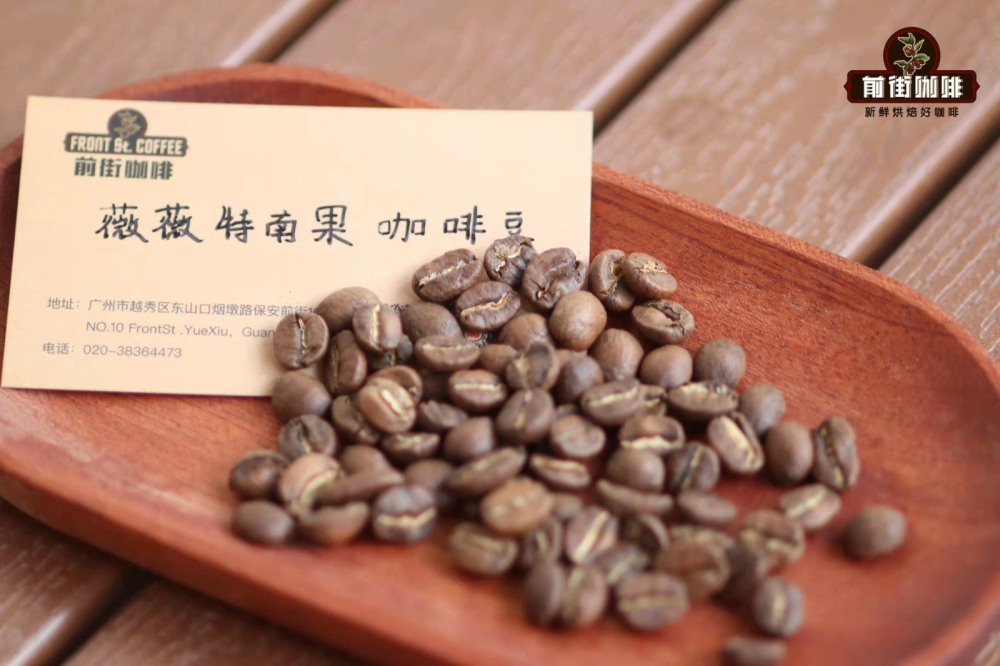
Coffee cultivation in Huehuetenango began in the 19th century, and since then it has continually improved through processing modifications, refining and enhancing overall quality, gradually bringing the coffee to a state of perfection. Some high-quality coffee estates are located in valleys between mountain ranges, and the unique microclimate creates the coffee's distinctive flavor. This region is Guatemala's driest coffee zone and its highest-altitude coffee zone, with coffee grown at 1,800–2,100 meters. At the same time, the warm, moist Caribbean air from the central mountain range makes the area high but not cold, with swirling clouds and mist and changeable climate; it belongs to a volcanic area and has fertile volcanic soil; located at the edge of plate activity, it has many high-mountain basin landforms, and the dry hot air from Mexico's Tehuantepec Plateau protects the region's coffee beans from frost damage. Local people plant coffee trees at nearly 2,000 meters, which can be said to be a heaven-given environment for coffee growth. Although Huehuetenango has a dry climate, streams interweave throughout the region, providing plenty of clean water for irrigation or for supplying washing stations. During the harvest season, washed processing can be carried out directly on the mountain.
[New Oriente]
With abundant rainfall and year-round cloud cover, New Oriente is climatically similar to Cobán, with only slight differences. It was formerly a volcanic area, and the soil contains metamorphic rock. The minerals in the soil are balanced by the large amount of metamorphic rock. Coffee cultivation also differs from general Guatemalan volcanic areas. New Oriente coffee grows in volcanic soil, but there was no volcanic activity during its growing period.
Guatemalan Coffee Bean Varieties
Guatemalan coffee varieties are very diverse, mainly Bourbon, Typica, Catuai, and Caturra, with small amounts of Yellow Bourbon, Geisha, and Pacamara. It is a typical bean blended from American coffee varieties. The Bourbon variety is the source of many modern coffee varieties and was first discovered on Réunion Island. When it was brought to the Americas, its characteristics also changed. The hybrid variety Caturra was first successfully cultivated in Brazil; the tree is shorter and relatively stronger against wind and rain. Catuai is a hybrid of a New World variety and Caturra; the tree is short and stocky, and with proper fertilization the yield is extremely high. Front Street Coffee chose this coffee bean because it can express the regional flavor of Guatemala's region, blending fruity acidity and nuts.
Guatemalan Coffee Bean Processing Method
The processing method for Guatemalan coffee beans is washed processing, of which 45% is specialty grade, a fairly high proportion, with also a small amount of robusta-like large beans.
Washed processing. After harvesting, the screened coffee cherries are put into a depulper to initially remove the skin and pulp. Then the green coffee beans with remaining pulp and mucilage are placed in water for about 24 hours of fermentation. After fermentation, they are placed in a flowing water tank for washing. After washing, the coffee beans are dried in the sun or with a dryer until the moisture content drops to about 12%, then transferred to a warehouse. Finally, the parchment of the green coffee beans is removed and they await sale. This processing method can present a very clean mouthfeel.
Front Street's brewing parameters for Guatemalan coffee:
In order to present elegant floral aromas, tea-like qualities, and fruit aromas, Front Street Coffee shortened the caramelization time after first crack and used a medium roast. When Front Street Coffee brews this bean, in order to maximize the aroma in the bean, it uses a higher water temperature and a finer grind.
The specific brewing parameters used by Front Street are: V60 dripper, water temperature 91°C, water-to-coffee ratio 1:15, coffee dose 15g, medium-fine grind (80% passing through a Chinese No. 20 standard sieve).
Front Street Coffee's staged extraction method: first use 30g of water to fully wet the coffee bed into a "hamburger" shape and bloom for 30s; for the second pour, at 1'00" on the timer, pour water until 125g, then stop and wait for the water level to drop to 2/3 of the coffee bed before pouring the third stage; for the third stage, at 1'40" on the timer, pour water until 225g. After the coffee liquid has fully dripped through, the total extraction time is 1'59". The total brewing time is 2'00". After extraction is complete, gently swirl the coffee, and taste it after the coffee liquid is fully even.
Front Street's coffee brewing recommendations:
To brew a delicious cup of coffee, you still need to pay attention to the freshness of the coffee beans. Front Street has always believed that the freshness of coffee beans has a great relationship with coffee flavor, so all coffee beans shipped by Front Street Coffee are within 5 days of the roast date. Front Street's roasting philosophy is "freshly roasted good coffee," so every customer who places an order receives the freshest coffee when it arrives. Coffee's resting period is about 4-7 days, so when customers receive it, it is exactly at its best flavor.
For friends who need ground coffee, Front Street warmly reminds you: if the coffee beans have already been ground in advance, there is no need to rest them, because during transport the pressure from carbon dioxide inside the package can also make the coffee flavor rounder, so once you receive the ground coffee you can immediately brew a cup and drink it. But ground coffee needs to be brewed promptly, because after ground coffee contacts air it oxidizes relatively quickly; in other words, the coffee flavor disperses faster and the coffee will not taste as good. Therefore, Front Street recommends buying whole beans and grinding fresh just before brewing, so you can better taste the coffee's flavor.
For professional coffee knowledge exchange and more coffee bean information, please follow Coffee Workshop (WeChat public account: cafe_style)
For more specialty coffee beans, please add the private WeChat of Front Street Coffee: qjcoffeex
The above content is compiled by CoffeeHunters, a coffee news website.


