







How Does the Ethiopian Coffee Grading System Work?
Sidamo Honey Coffee comes from one of Ethiopia's two major specialty regions, known for a rich fruity body and citrus sweet aftertaste compared with Yirgacheffe's brighter citric acidity. Ethiopian beans are graded through the Ethiopia Commodity Exchange system, and the article traces Sidamo's geography and the Guji region's rise.
The guide also covers the origin of the name Huakui Coffee and shares brewing parameters and flavor notes for Front Street's 2025 new-crop Huakui. Ethiopia names most coffees by region rather than variety, so the grading system and regional naming work together. A washed Yirgacheffe and Huakui 5.0 remain consistent sellers.
Sidamo is one of Ethiopia's two major specialty coffee regions, equally famous as Yirgacheffe, known for its rich fruity body and citrusy sweet aftertaste. How exactly did Sidamo Honey Coffee come to be? And how are Ethiopian coffee beans graded? This article will start with the geographical environment of the Sidamo region, the rise of the Guji region, and the origin of the name Huakui Coffee, then introduce the coffee grading system of the Ethiopia Commodity Exchange (ECX) in detail, and share the brewing parameters and flavor profile of Front Street's 2025 new-crop Huakui Coffee, giving you a comprehensive understanding of this sought-after specialty coffee from origin to cup.
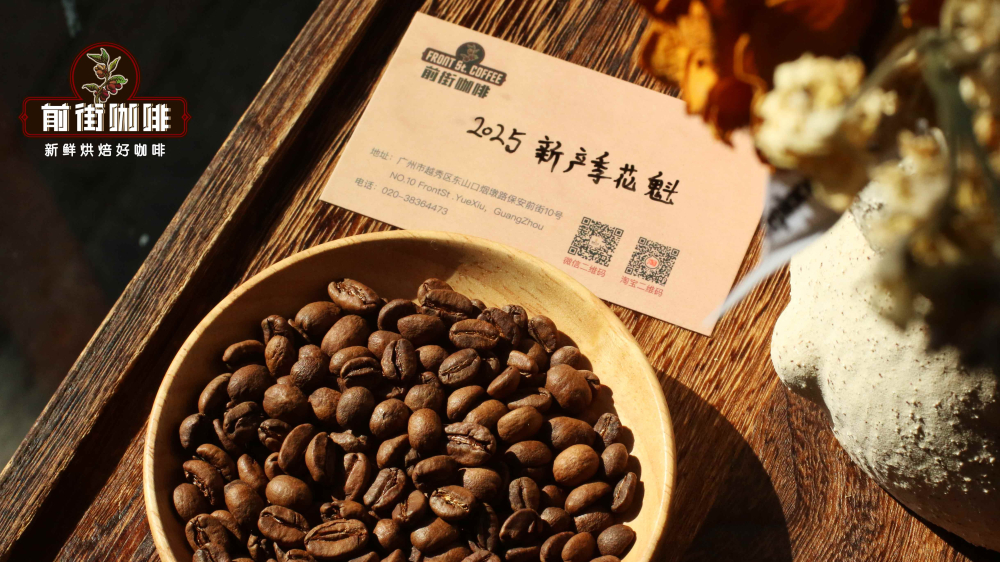
Front Street Huakui Coffee Beans, 2025 New Crop
What exactly is the story behind Huakui Coffee? Anyone with some knowledge of coffee is certainly no stranger to it, but if you are new to coffee, you might be completely confused. Yet mention Yirgacheffe, and many people immediately recognize it as Ethiopian coffee. In fact, Huakui also comes from Ethiopia, and it is a highly sought-after specialty coffee. At Front Street, washed Yirgacheffe coffee and Huakui 5.0 coffee have always been bestsellers.
Front Street's everyday bean, Yirgacheffe coffee, as a representative of Ethiopia as a coffee-producing country, is naturally a household name, just as even people who don't drink coffee have heard of Blue Mountain coffee. Ethiopia is the birthplace of coffee, and many varieties originate here. The floral aroma and fruity acidity of Yirgacheffe coffee are endlessly memorable. However, not everyone can accept this bright acidity. As a genetic treasure trove of coffee, Ethiopia mostly names its coffees by region. Yirgacheffe and Sidamo are Ethiopia's two well-known specialty coffee regions. If you're not quite used to the citric acidity of Yirgacheffe, Front Street suggests trying coffee from Sidamo.
Compared with the Yirgacheffe region, coffee from the Sidamo region has a richer fruity body, less pronounced acidity, and instead carries a citrus-like sweet aftertaste. The flavor differences among Ethiopia's various regions are striking. To let more friends taste the flavors of different Ethiopian regions, Front Street has stocked over a dozen single-origin coffees from Ethiopia alone.
Let's now learn about the Sidamo coffee region together.
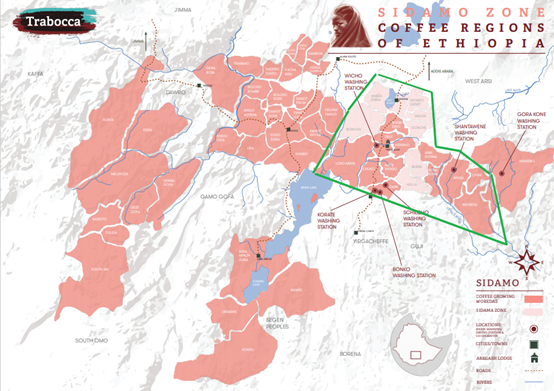
Sidamo's coffee flavors are extremely diverse. Different soil compositions, regional microclimates, and countless native coffee varieties make the coffee produced in each town and area show distinct differences and characteristics. The Sidamo region is located in southern Ethiopia, extending east to the Arsi and Bale administrative zones and west to the Gamogofa administrative zone. Sidamo coffee is cultivated at altitudes between 1400m and 2000m. The local industry is mainly agricultural, and the main coffee-growing areas are distributed around the East African Rift Valley. Sidamo has developed quite rapidly in recent years and is an important coffee export hub. Among them, the most famous coffee-growing areas in the Sidamo region are Guji and West Arsi.
Guji Region
The Guji region was once part of the Sidamo region, but in 2010 it was made an independent new region by the Ethiopia Commodity Exchange (ECX). The Guji region is located southeast of Yirgacheffe, with complex terrain including towering mountains, valleys, and plains. The area's geology features nutrient-rich black soil (Vertisol), with soil depth of nearly two meters and an average altitude above 1800 meters. The significant day-night temperature difference created by these geographical characteristics gives the area all the terroir conditions needed to produce high-quality specialty coffee.
What is Huakui Coffee?
It is often said that a good climate and environment can nurture excellent coffee beans, and what truly made the Guji region famous is Huakui Coffee.
The original name of Huakui coffee beans is Hambella. The name Huakui was given by a domestic green bean trader. This bean comes from Hambella, located in Guji, Ethiopia's largest coffee region, and administratively belongs to Oromia. Hambella borders Yirgacheffe Kochere to the west across a mountain, with a highland about 3200 meters high and 30 kilometers wide separating the two regions. To the southeast and north, it borders Guji's Shakiso, Uraga, and Kercha sub-regions respectively, making it Ethiopia's highest-altitude coffee sub-region.
Currently, the Hambella region has nearly 20 processing plants of various scales. In 2017, Ethiopia's DW Green Bean Company sent their coffee beans to the TOH (the Taste Of Harvest) green bean competition hosted by the African Coffee Association. A natural sun-dried lot from the "Buku Abel" processing plant won the TOH Ethiopia championship with its intense strawberry and creamy aroma. That year, this lot of green beans was introduced into China by Beijing green bean trader Hongshun. In the same year, Li Jianfei used this bean to win second place in the 2017 World Brewers Cup China region. This Ethiopian bean stood out remarkably among many Geisha competition beans, and was therefore given the name "Huakui." (Geisha in Japanese means geisha, while Huakui means the top geisha, indicating the outstanding quality of this bean.)
Subsequently, DW Company added processing plants in Dimtu, the core production area of Hambella, namely "Buku Abel," "Buku Saysay," "Haro Soresa," and "Tirtiro Goye," with an annual coffee output of about 1100 tons. Strictly speaking, among all these estates and processing plants, only the natural sun-dried coffee beans from the "Buku Abel" processing plant can be called "Huakui coffee beans."
Coffee is also a crop, so it is naturally affected by climate and environment, and its flavor varies somewhat each year. To distinguish these differences, names were created: Huakui 2.0, Huakui 3.0, Huakui 3.1, Huakui 4.0, Huakui 5.0, and Huakui 6.0...
Sidamo Coffee Processing Methods
Washed Yirgacheffe coffee, just by the name, is clearly washed processed. In fact, Ethiopian coffee originally used the natural sun-dried processing method, and the washed method was introduced later. Most coffee from the Sidamo region is natural sun-dried processed. Front Street believes that the natural process gives Sidamo coffee beans a rich fruity aroma and a smooth mouthfeel.
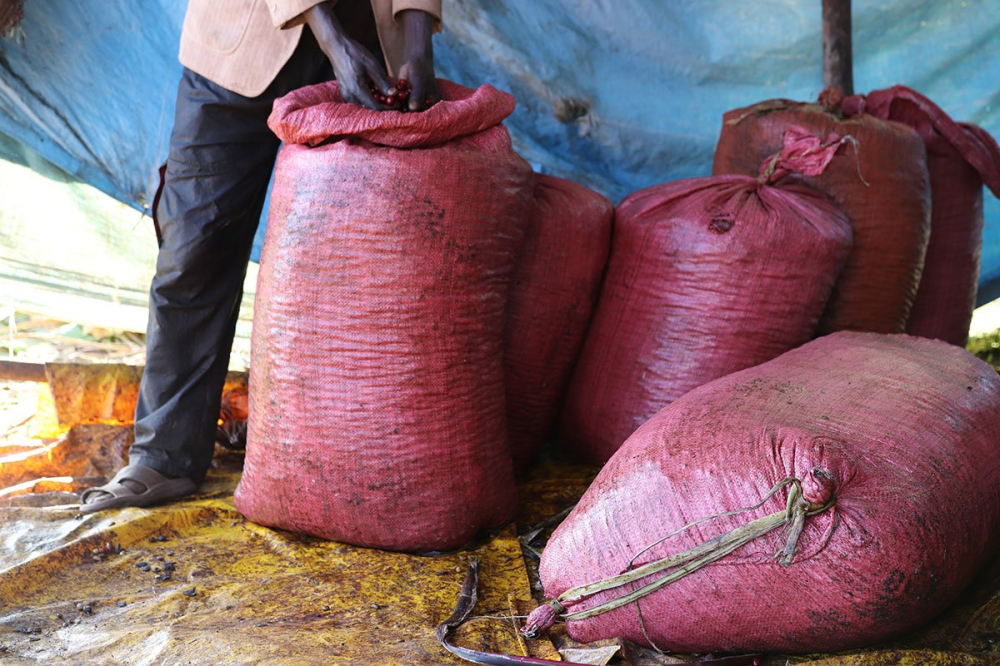
When the coffee harvest season arrives, coffee farmers in the Sidamo region pick only ripe red cherries, placing them one by one into baskets. After picking, the coffee cherries are uniform in size, similar in ripeness, and free of other impurities. During processing, manual sorting is first carried out to remove defective coffee beans as well as unripe or overripe coffee cherries. Then the red coffee cherries are spread flat on raised wooden frames or entire drying racks for sun drying, which prevents the beans from picking up off-flavors from the ground.
During the drying process, they are constantly turned to ensure even drying, allowing the coffee beans to lose moisture evenly; every three to five days, farmers manually sort out defective and moldy beans. After the fruit skin dries and hardens, a hulling machine is used to remove the dry, hard fruit skin. After obtaining the green coffee beans, in pursuit of perfect taste, farmers do one final sorting before sending them to the warehouse and making a final grading. Front Street's 2025 new-crop Huakui coffee is G1 grade, which is the highest grade for Ethiopian green beans.
Before the Ethiopia Commodity Exchange (ECX) appeared, Ethiopia's coffee export grades were set by the CLU department (Cupping and Liquoring Unit) under the Ministry of Agriculture, mainly grading green coffee beans by the number of defective beans contained in 300g. The grading standards are shown in the table below.
Generally, washed processed coffee is G1-G2. Due to processing technology issues at the time, natural sun-dried green beans had a relatively high number of defects, generally G3-G5. With improvements in natural processing technology, today's natural beans can also reach G1-G2 grades. After the ECX (Ethiopia Commodity Exchange) was established in 2008, it used a combined score of physical characteristics and cupping flavor characteristics to grade green coffee beans. The ECX defines all coffee into three types according to processing method, non-washed and washed:
a. Specialty: Few defects, high cupping flavor quality
b. Commercial: Does not reach specialty grade, but higher than the local/domestic consumption grade;
c. Local/Domestic: Coffee with a large number of defective beans (unripe beans), and relatively poor flavor caused by being out of season or poorly stored.
Among these, Specialty and Commercial are for export to the international market. The ECX divides green coffee beans into nine grades according to the total score of physical characteristics and cupping flavor characteristics, with physical characteristics accounting for 40% and cupping quality accounting for 60%.
Physical characteristics (40%):
Washed processed: defect count (20%), appearance size (10%), color (5%), odor (5%)
Non-washed processed: defect count (30%), odor (10%)
Then G1-G3 are cupped again according to SCAA standards, evaluating their flavor attributes in more detail. G1 and G2 scoring no less than 85 are rated Q1; G1, G2, and G3 scoring between 80 and 85 are rated Q2; all G1, G2, and G3 scoring below 80 are rated G3; Q1 and Q2 are classified as specialty grade for export. G4-G9 remain unchanged in their original grading and, together with G3, are classified as commercial grade for export.
Front Street Brewing Suggestions:
How should such an excellent coffee bean be brewed to bring out its delicious flavor? Front Street believes that the freshness of coffee beans is a very important factor. Fresh coffee beans allow you to experience coffee's rich flavors to the greatest extent. Coffee beans shipped by Front Street Coffee (FrontStreet Coffee) are all within 5 days of the roast date, because Front Street deeply understands that the freshness of coffee beans has a great impact on flavor. Front Street's roasting philosophy is "freshly roasted good coffee," so that every customer who places an order receives the freshest coffee when it arrives. The resting period for coffee is about 4-7 days, so by the time the customer receives it, it is at its best flavor.
Of course, some customers need Front Street to help grind the coffee. That's fine too, but Front Street must remind you: if the coffee beans are ground in advance, there is no need for further resting, because during transportation, the pressure from carbon dioxide inside the packaging also rounds out the coffee's flavor, so once you receive the ground coffee, you can brew a cup right away. However, ground coffee needs to be brewed promptly, because after coffee grounds contact air, they oxidize relatively quickly, meaning the coffee's flavor dissipates fairly quickly and the coffee won't taste as good. Therefore, Front Street recommends buying whole beans and grinding fresh before brewing, so you can better taste the coffee's flavor.
Front Street's Brewing Parameters for Huakui Coffee:
To fully extract the rich layering of Huakui coffee beans, Front Street uses a relatively high water temperature and a finer grind for extraction, but to avoid over-extraction caused by high temperature, a faster-flow dripper such as the V60 is used. The V60 dripper has a 60° cone shape. The conical angle allows the coffee grounds to concentrate together and lets the water flow automatically toward the center of the dripper when pouring, ensuring sufficient contact time between water and coffee grounds, thereby extracting suitable coffee liquid. In addition, the ribs on the inner side of the V60 dripper extend from the bottom to the top in a clockwise spiral, leaving enough gap between the filter paper and the dripper, so that water flow is smooth. Combined with the large hole at the bottom, the flow rate is relatively faster than many other drippers.
The specific brewing parameters Front Street uses are: V60 dripper, water temperature 90℃, water-to-coffee ratio 1:15, coffee dose 15g, grind size (80% passing through a Chinese No. 20 standard sieve)
A staged extraction is used, with twice the coffee dose in water for blooming, that is, 30 grams of water for a 30-second bloom. The reason a blooming process is needed is to allow the coffee grounds to release internal carbon dioxide gas, thereby making the later stages of extraction more stable. Pour in a small stream in circles until 125 grams, then pause, continue pouring until 225 grams and stop. After the water in the dripper has dripped through, remove the dripper. Timing starts from the beginning of pouring, and the extraction time is 2'00". Next, pick up the entire cup of coffee and swirl it to mix evenly, then pour it into a cup for tasting.
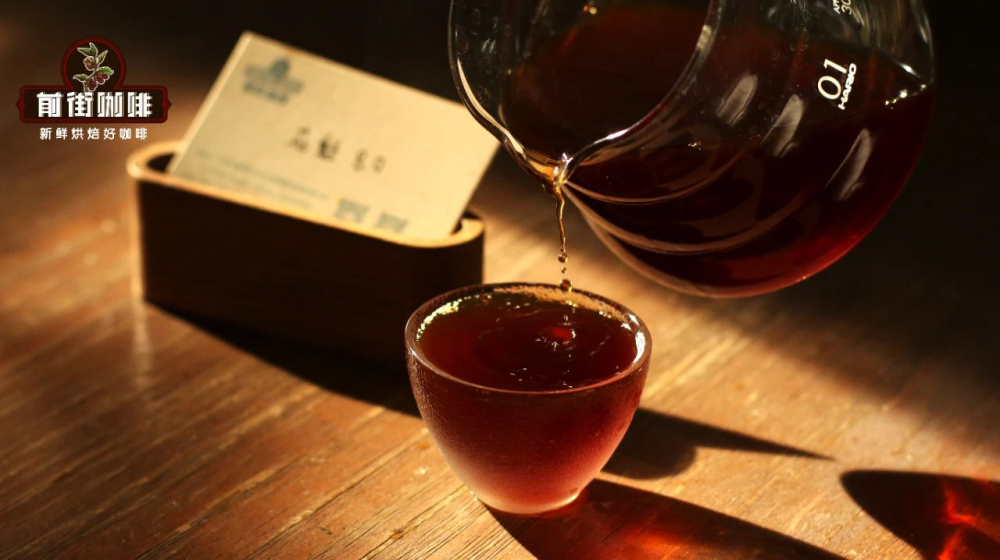
[2025 New-Crop Front Street Natural Sidamo Coffee Flavor ] Floral aroma, sweet-tart notes of berries, citrus, and plum, mango juice, honey, with a sweet black tea finish.
As Front Street just mentioned, the coffee flavors of Ethiopia's various regions are noticeably different. To let more friends taste more of Ethiopia's outstanding flavors, Front Street has stocked over a dozen single-origin coffee beans from Ethiopia alone. Of course, if you want to try flavors from other producing countries, Front Street can satisfy you too, because Front Street also has dozens of single-origin coffees from different regions. Welcome to taste them!
The above content is compiled by CoffeeHunters, a coffee news website.


