







How Should Civet Coffee Be Brewed After Grinding?
Kopi Luwak is among the rarest and most expensive coffees, and its brewing method decides whether the full-bodied flavor comes through. The pour-over approach breaks down into dripper choice, dose, coffee-to-water ratio, grind size, water temperature and a three-stage pour, which together yield a round, rich cup at home.
The beans are cleaned coffee cherries taken from civet feces; Kopi means coffee and Luwak is the civet, a wild animal on Sumatra. During the colonial period Dutch rulers barred locals from roasting plantation cherries, and the beans excreted by wild civets were found to taste unusually good. Fresh grinding and brewing on demand is advised.
Kopi Luwak is one of the rarest and most expensive coffee categories in the world, and its brewing method directly determines whether its full-bodied flavor can be restored as it should be. This article starts with the origin of civet coffee and the reasons behind its flavor, then breaks down in detail the pour-over method after grinding, including dripper selection, coffee dose, coffee-to-water ratio, grind size, water temperature, and three-stage pouring distribution, to help coffee lovers brew a round, rich, and aromatic cup of Kopi Luwak at home. It will also discuss the current situation of civet farming and consumption advice, as well as Front Street Coffee's consistent stance on fresh roasting and grinding and brewing on demand, so that every cup of coffee is not let down.
Kopi Luwak can be called one of the most unique and expensive coffees in the world. If you truly want to taste its original flavor, mastering the correct brewing method is crucial; one wrong move is truly a waste of this rare bean. Nowadays, more and more people are getting to know coffee and improving their quality of life, and are also more willing to brew a cup of coffee by hand at home. Therefore, learning more about brewing knowledge can help avoid wasting good beans for nothing.
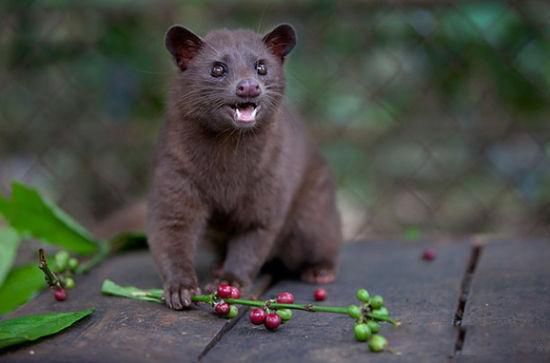
Many people find the name unhygienic when they hear it, but in fact, it really is coffee beans that have been cleaned and taken from civet feces. The civet is an animal on the Indonesian island of Sumatra that can secrete musk. Kopi Luwak is only its common name; its formal name is "Kopi Luwak," meaning civet coffee. In Indonesian, Kopi means coffee, and Luwak refers to the civet, a wild animal. Its origin can be traced back to the Indonesian colonial period—when the Dutch rulers prohibited locals from eating and roasting coffee cherries from the plantations, yet unexpectedly discovered that the beans excreted by wild civets after eating coffee cherries in the plantations had an unusually delicious flavor.
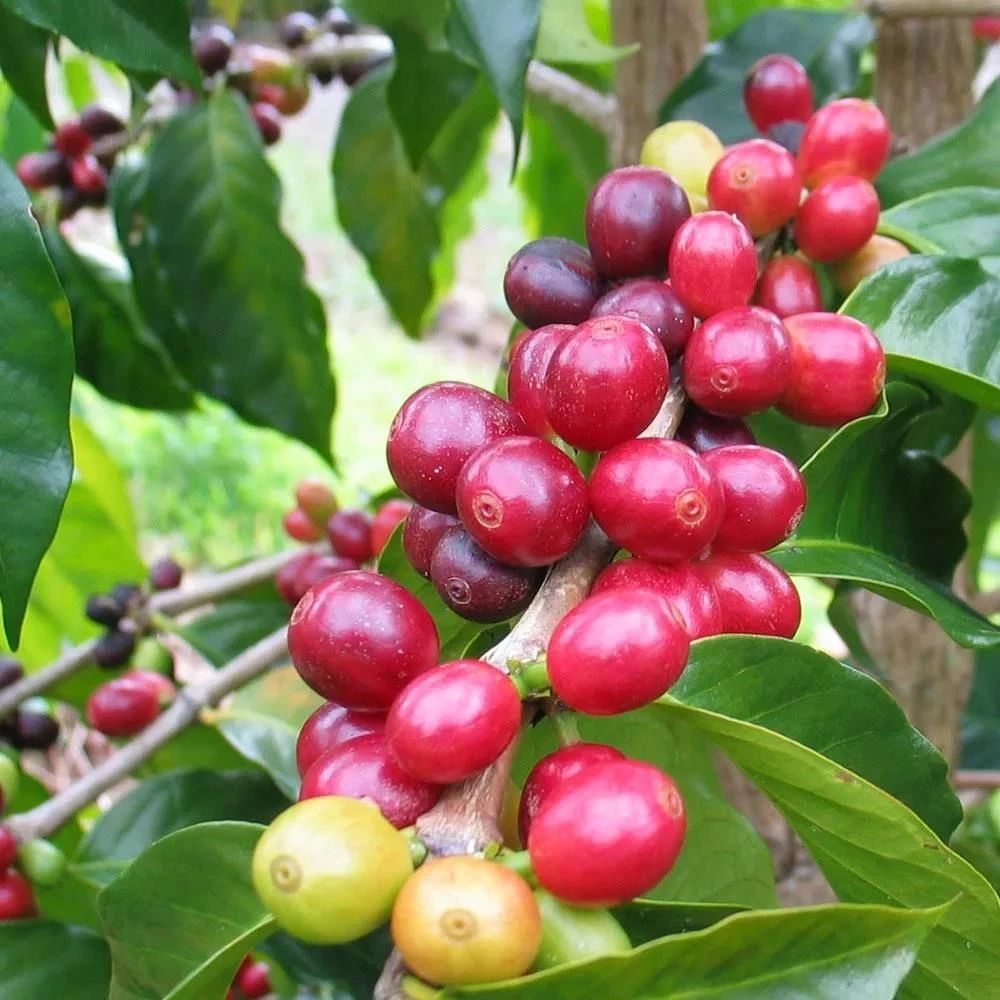
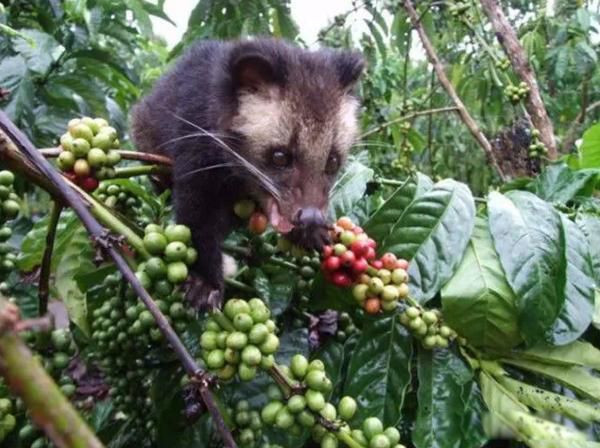
The civet can be called a gourmet connoisseur of the animal kingdom. Ripe, sweet, plump, and juicy coffee cherries are one of their favorite foods. This scarce animal has an extremely keen sense of smell and specifically chooses the most tempting and plumpest cherries on the coffee trees to enjoy. After the coffee cherries pass through the civet's digestive system, only the skin and pulp are broken down and absorbed, while the hard green beans are excreted unchanged. It is precisely this digestive process that gives the coffee beans an astonishing transformation: a unique flavor, an especially rich aroma, and a round, abundant mouthfeel that other coffees find hard to match. The reason is that the civet's digestive tract changes the protein structure in the coffee beans, greatly reducing bitterness while enhancing roundness. In addition, the civet has musk glands near its genital area, which also gives the coffee beans a faint, peculiar aroma.
The formation process of Kopi Luwak beans is like this: after the civet eats the coffee cherries, the beans undergo a unique fermentation environment provided by special bacteria in the intestines. Since the intestines cannot digest the coffee beans, they are eventually excreted. After this gastrointestinal fermentation, the flavor of the coffee beans becomes distinctive, especially thick and aromatic.
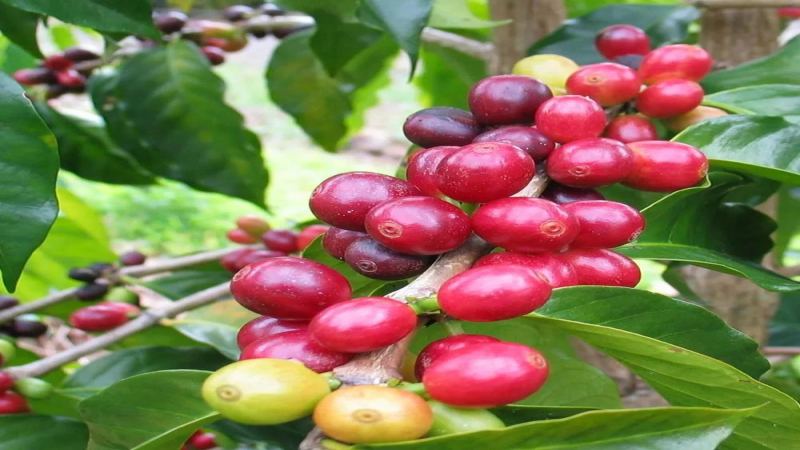
The land of the Indonesian Sumatra archipelago is far from the hustle and bustle, with abundant sunshine year-round, clean air, moderate humidity, and fertile soil. Thanks to its unique geographical conditions and mild climate, Sumatra's ecological environment has been well protected. The island runs northwest to southeast, intersects the equator in its central part, and is made up of two regions: the Barisan Mountains in the west and the swampy areas in the east. The western half is traversed by mountains across the entire island; the towering Barisan Mountains run northwest to southeast, stretching about 1,600 kilometers, with more than 90 volcanoes, and the highest peak, Mount Kerinci, at about 3,800 meters above sea level. East of the mountains are alluvial plains, wide in the south and narrow in the north, with the widest part exceeding 100 kilometers. There are many rivers, mainly the Musi River, Batang Hari River, Indragiri River, and Kampar River, most of which are navigable. The pollution-free primeval forests nurture high-quality Arabica coffee varieties, and the cherries they produce are especially plump and round, with a rich and aromatic coffee taste.
Indonesian coffee generally has earthy and herbal notes, and its body is among the highest of all continents, such as Indonesian Mandheling coffee. Kopi Luwak's earthy, gamey note is even more prominent, and its body is even close to syrup, with a very special aroma as well. After drinking it, a faint mint-like cooling sensation remains in the mouth, an "exclusive experience" that ordinary coffee does not have. After finishing a cup, take a deep breath or hold a sip of cold water, and you can clearly feel a coolness from the mouth to the throat, as if you had just finished a mint throat lozenge.
Although Kopi Luwak has a mellow aroma, civets are now mostly farmed, and the coffee's flavor ultimately depends on the quality of the coffee cherries used for feeding. Coffee cherries vary in quality, but overall, Arabica varieties are superior to Robusta varieties. Front Street does not recommend everyone taste Kopi Luwak—of course, being able to taste real Kopi Luwak is also a nice experience, but the price is quite high. The main reason is that today's Kopi Luwak all comes from farming, which is undoubtedly cruel to civets, who are naturally freedom-loving. Feeding them only coffee beans, and raw, unripe beans at that, causes the civets to excrete coffee beans that are all bloody.
So how should Kopi Luwak be brewed to taste good? Front Street recommends using the pour-over method.
For dripper selection, Front Street uses the Kono Meimon dripper. The biggest feature of this dripper is that the ribs extend from the bottom to the middle, while the upper part has smooth walls, so when the filter paper fits, water cannot "secretly" bypass the coffee grounds and slip away, helping to improve the body of the cup.
The dose Front Street uses is still 15 grams. More coffee grounds is not always better, nor is less always better; the specific amount depends on the dripper size. Front Street uses a 1-2 cup dripper, and 15-20 grams is a more reasonable brewing dose. Exceeding this range will bring certain difficulties to brewing.
For the coffee-to-water ratio, Front Street recommends 1:15. Although some suggest using 1:13 or even a smaller ratio, Front Street has explained in previous articles that there is no necessary connection between concentration and body, and that too strong a cup can make people uncomfortable. Therefore, a 1:15 coffee-to-water ratio can very well showcase Kopi Luwak's full-bodied mouthfeel and special aroma.
For grind size, Front Street adjusts to a 75% pass rate on a No. 20 sieve. The grind size for brewing Kopi Luwak should be slightly coarser than for light-roast beans, because Kopi Luwak is dark roasted, with a looser structure that absorbs water and releases substances more easily. If it is ground to the fineness of light-roast beans, it is easy to brew out scorched bitterness; if ground coarser, the coffee becomes thin and tasteless, with a mouthfeel as thin as water.
For water temperature, Front Street recommends 88°C. For the same reason as with grind size, too high a temperature tends to produce scorched bitterness, while too low a temperature makes the coffee seem flat and brings out an unpleasant sourness.
The brewing uses three-stage pouring. Dividing it into three stages better presents Kopi Luwak's full-bodied mouthfeel and caramel sweetness. The specific water distribution is: the first stage, bloom with 30 milliliters of water, wetting all the coffee grounds, allowing them to degas, and laying a foundation for the subsequent extraction of flavor substances; the second stage, pour 100 milliliters; the final stage, pour 95 milliliters to enhance sweetness. The overall cup shows a substantial, full-bodied mouthfeel, along with caramel sweetness and chocolate and nutty flavors.
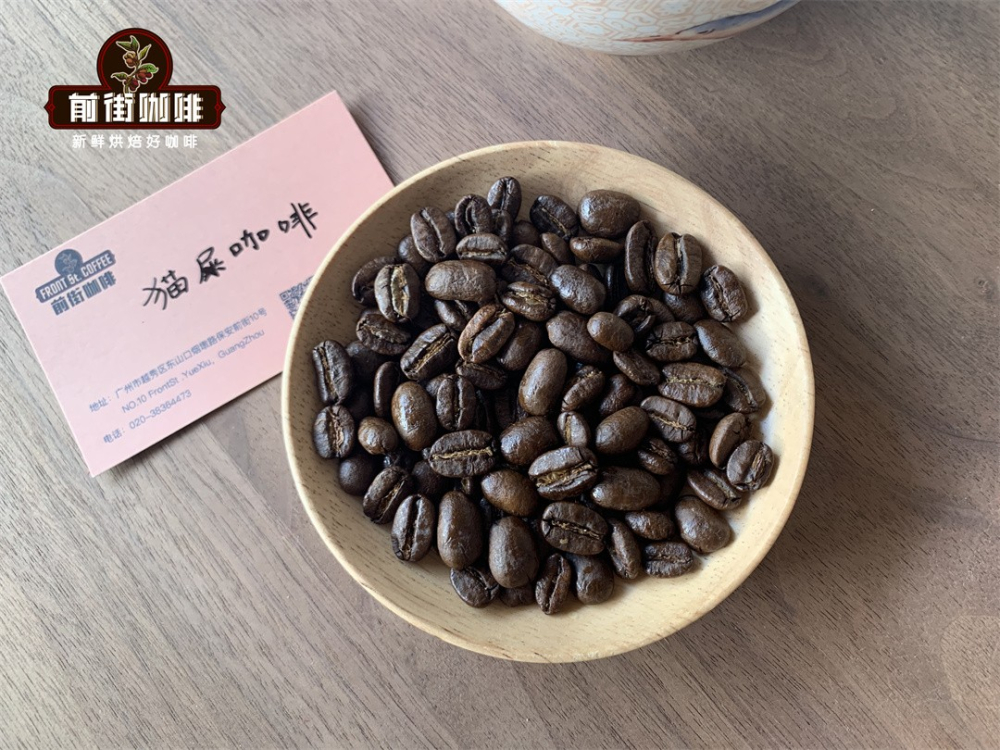
Kopi Luwak flavor description: herbal, nutty, smooth mouthfeel, full-bodied.
Front Street brewing suggestions:
Regarding coffee brewing, Front Street has always believed that the freshness of coffee beans greatly affects the flavor, so the coffee beans shipped by Front Street Coffee (FrontStreet Coffee) are all within 5 days of roasting. Front Street's roasting principle is "freshly roasted good coffee," so that every customer who places an order can receive the freshest possible state when the coffee arrives. The resting period for coffee is about 4-7 days, so when customers receive it, it is exactly at its best flavor.
For friends who need ground coffee, Front Street warmly reminds you: once coffee beans are ground in advance, they no longer need to rest, because the pressure produced by carbon dioxide inside the package during transportation can also make the coffee flavor rounder, so you can brew a cup and enjoy it immediately upon receiving the ground coffee. However, ground coffee needs to be brewed as soon as possible, because after contact with air it oxidizes quickly, the flavor dissipates faster, and the quality declines accordingly. Therefore, Front Street recommends buying whole beans and grinding and brewing on demand, so that you can better taste the coffee's flavor.
Kopi Luwak is also coffee. The effects of coffee are no different, and there is no need to insist on drinking Kopi Luwak. In fact, the world's coffee varieties are so rich, and Front Street Coffee (FrontStreet Coffee) alone has nearly fifty kinds of coffee beans from different producing regions, such as Panama Geisha coffee, Colombia's anaerobically processed Flower Moonlight and Rose Valley coffee with floral and fruity aromas, and Ethiopia, the birthplace of coffee, with its bright floral and fruity washed Yirgacheffe coffee, sun-dried Red Cherry coffee, and so on—all worth trying. If you really are not sure what flavor you like, you might start with Front Street's everyday beans. Front Street's everyday beans are all representative coffees from their respective producing countries, with very high value for money, and are very suitable as an entry-level choice for everyone to find their own flavor preferences.
For professional coffee knowledge exchange and more coffee bean information, please follow Coffee Workshop (WeChat public account: cafe_style)
For more specialty coffee beans, please add the private WeChat of Front Street Coffee (FrontStreet Coffee), WeChat ID: qjcoffeex
The above content is compiled by CoffeeHunters, a coffee news website.


