







How do coffee beans grow on coffee trees in Kenya?
Coffee beans grow on coffee trees, not on the ground, and in Kenya those trees sit between 1,400 and 2,000 meters above sea level. Kenyan washed coffee goes through a K72-hour cyclic fermentation that produces bright, clean acidity with a full body, while the natural process, though rare because of high costs and losses, brings solid sweetness and wild fruity aromas.
The country grows roughly two harvests a year, with the main season from October to January and a secondary fly crop from April to June. Nearly 700,000 smallholder families farm plots averaging under one hectare, and varieties such as SL28, SL34, Ruiru 11 and Batian shape how coffee beans grow and taste across Nyeri, Kirinyaga and Muranga.
Kenya, as a representative producing country of African specialty coffee, presents distinctly different flavor directions in its washed and natural processing methods. Washed Kenyan coffee is renowned for its K72-hour cyclic fermentation process, shaping a bright and clean acidity with a full body; natural Kenyan coffee, due to high costs and significant losses, is relatively rare, yet it brings solid sweetness and wild fruity aromas. This article will systematically compare the differences between these two processing methods from the perspectives of regional terroir, processing techniques, variety characteristics, and brewing parameters, and include information cards for two comparative bean varieties recommended by Front Street Coffee, helping enthusiasts understand the purchasing and brewing logic of Kenyan coffee.
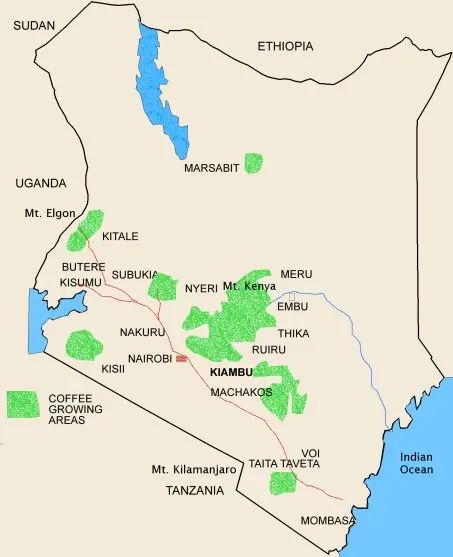
Overview
Capital: Nairobi
Port: Mombasa
Growers: Nearly 700,000 smallholder farming families
Cultivation area: Smallholders (average less than 1 hectare), estates (average 30-40 hectares, with some reaching hundreds of hectares)
Cultivation altitude: 1400-2000+
Cultivated varieties: SL28/SL34, Ruiru 11, Batian, K7
Harvest season: Main season October-January, secondary season April-June (fly crop)
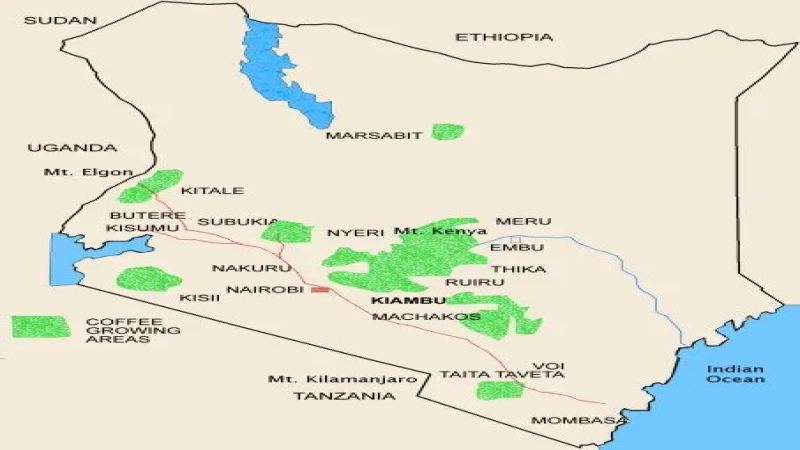
Cultivation regions: Central Nyeri, Muranga, Kirinyaga, Meru, Embu, Kiambu, and Thika, as well as western Kericho and Kisii
The 47 counties within Kenya each produce coffee with significantly different styles. Coffee trees are mainly distributed between 1400 and 2000 meters above sea level, with two harvests per year. The core cultivation belt includes Ruiri, Thika, Kirinyaga, Mt. Kenya West, Nyeri, Kiambu, and Muranga, mostly located on the slopes of Mount Kenya and the Aberdare Range. For example, coffee from the Embu region is known for its balance, accompanied by citrus fruits, chocolate, apples, and acidity; the Nyeri region displays flavors of white grapes, juiciness, grapefruit, and small tomatoes, with abundant fruitiness and caramel-like sweetness.
Coffee styles vary across different counties. Kenyan coffee trees are mostly planted at altitudes of 1400 to 2000 meters, with two harvests per year. The growing regions cover Ruiri, Thika, Kirinyaga, Mt. Kenya West, Nyeri, Kiambu, and Muranga, primarily on the slopes of Mount Kenya and the Aberdare Range. For instance, coffee from the Thika Plateau region stands out for its balance, featuring citrus fruits, chocolate, apples, and plum-like acidity; the Nyeri region presents flavors of white grapes, juiciness, grapefruit, and small tomatoes, full of fruitiness and sweet as caramel. Kenyan Washed Beans
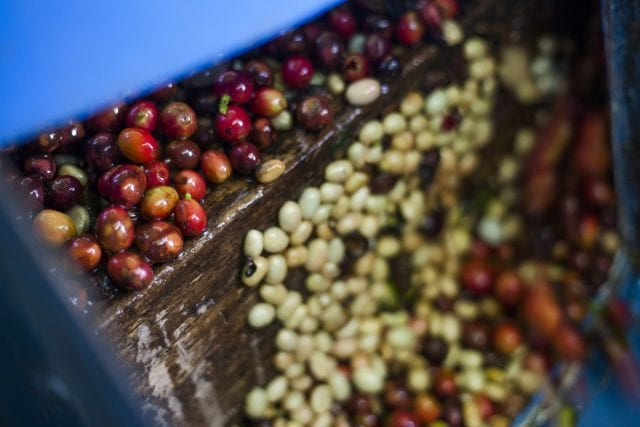
The Kenyan-style washing process employs a cyclic flow of repeated fermentation and rinsing. On the day of harvest, the best coffee cherries are selected, depulped, and fermented for 24 hours, then rinsed with clean river water; next, they are fermented again in clean water for 24 hours and washed, repeating this cycle three times for a total duration of 72 hours, hence the name Kenyan-style 72-hour fermentation washed processing method, abbreviated as K72. This processing method allows the coffee beans to undergo extended fermentation at low temperatures, thereby developing brighter, cleaner, and fuller flavor layers.
I couldn't wait to brew a cup of Front Street Kenyan Honey Processing Station Asali to drink. The rich tomato aroma and berry fragrance are striking, with a large sweet-sour amplitude, a refreshingly sweet aftertaste, and a hint of blackcurrant lingering. This coffee starts with acidity and ends with sweetness, making it one of my favorite coffees~ Kenyan Natural Beans
Next, let's look at traditionally natural-processed Kenyan coffee. Natural Kenyan coffee is relatively uncommon on the market, possibly because the quality of Kenyan-style washed coffee is extremely high, and due to the loss rate and high labor costs of natural processing, natural Kenyan coffee is generally only found in special customized plans by some green bean merchants. This bean is processed using the natural method, and during the refined natural process, it adds solidity and sweetness to the already rich and variably acidic Bourbon coffee. This natural batch is limited in quantity and is a coffee entirely dependent on natural climate conditions.
The variety of this coffee is Missionary Bourbon. French missionaries brought the Bourbon variety to Kenya for cultivation around 1892-1893. This native Bourbon variety is called French Mission Varietal, and during cultivation, it avoided scientific improvements, preserving the most original flavor of Bourbon.
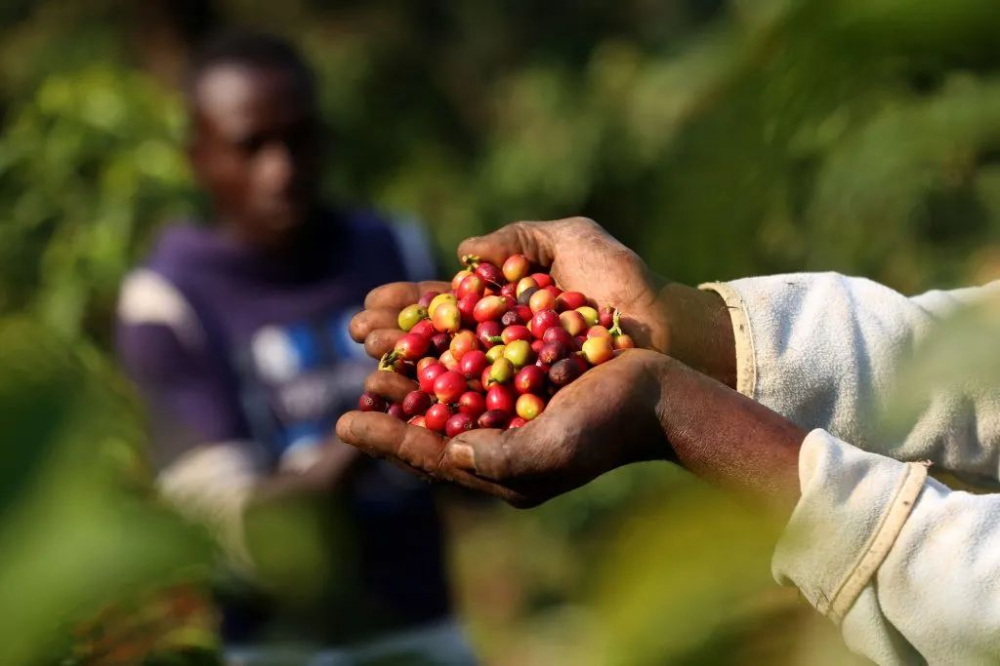
This coffee has not been graded according to Kenyan standards, probably due to it being a micro-batch, but its defect rate is relatively high, and the bean appearance is not very appealing. The flaws of the traditional natural method detract from this coffee's appearance, so how does it taste? Let's give it a try~
Surprisingly, this coffee has a very good flavor! The dry aroma has notes of natural fermentation, dried fruits, and vanilla. Sipping reveals caramel, vanilla, mixed fruits, a solid juice-like mouthfeel, and an aftertaste of berries, rich jackfruit, and coffee floral notes. The overall performance is like Africa's wild old-school style, suitable for sipping slowly in small mouthfuls, with complex aromas that are hard to let go of~ Appendix Below are the information cards for the two comparative coffee beans used in the above text. Interested friends can click the links to view detailed introductions, roasting, and brewing suggestions~
[Kenya Hania Estate French Mission Bourbon Natural]
Country: Kenya
Region: Thika
Processing Station: Chania Estates
Altitude: 1,525 meters
Variety: French Mission Bourbon
Processing Method: Natural Processing ************************************************
[Kenya Asali AA TOP Refined 72-hour Washed]
Country: Kenya
Region: Thika Processing Station: Asali Honey Processing Station
Altitude: 1550~1750 meters
Soil: Volcanic soil Grade: AA TOP
Variety: SL-28, SL-34
Processing Method: 72-hour Washed
Kenya's signature flavor is rich acidity and aroma, especially in light-roasted washed Kenyan coffee, which often carries the acidity and aroma of tomatoes and berries; if roasted too light, it will exhibit grassy notes and astringency, so roasting and brewing Kenyan coffee well is not simple. Correctly roasted and brewed Kenyan coffee will reveal honey-like aromas in the wet fragrance, with complex and varied floral notes. Whether natural or washed, the brewing water temperature for Kenyan coffee should not be too low, generally controlled at 91~93°C for optimal results.
The above content is compiled by CoffeeHunters, a coffee news website.


