







Why Does Americano Taste Sour or Bitter?
Americano that tastes sour usually points to under-extraction, while a harsh, americano coffee taste bitter points to over-extraction, and grind size is often the cause. Espresso needs particles finer than fine salt, far finer than pour-over. If the grind is too coarse, water passes through the coffee bed quickly and the shot turns sour and weak. If it is too fine, flow slows and the shot turns bitter.
Grinder dials have no universal standard, so adjust by watching flow rate and taste. If the shot is americano sour, grind finer; if bitter, grind coarser, moving in small steps within your dial range. Then fine-tune the coffee-to-water ratio and extraction time to match how the beans actually perform. Front Street Classic Espresso Blend suits home Americano, latte, and cafe-style espresso.
For espresso, a tiny deviation in grind size can make the shot bitter or weak, and there is no universal standard for the dial on a grinder, which leaves many beginners confused. This article starts with why espresso grinding is much finer than pour-over, then explains step by step how to judge whether the grind is suitable by flow rate and taste, how to lock in a range that suits you within different dial intervals, and how to flexibly adjust the coffee-to-water ratio and extraction time based on how the beans actually perform. It also recommends Front Street Classic Espresso Blend coffee beans, suitable for recreating cafe-style espresso, Americano, and latte at home.
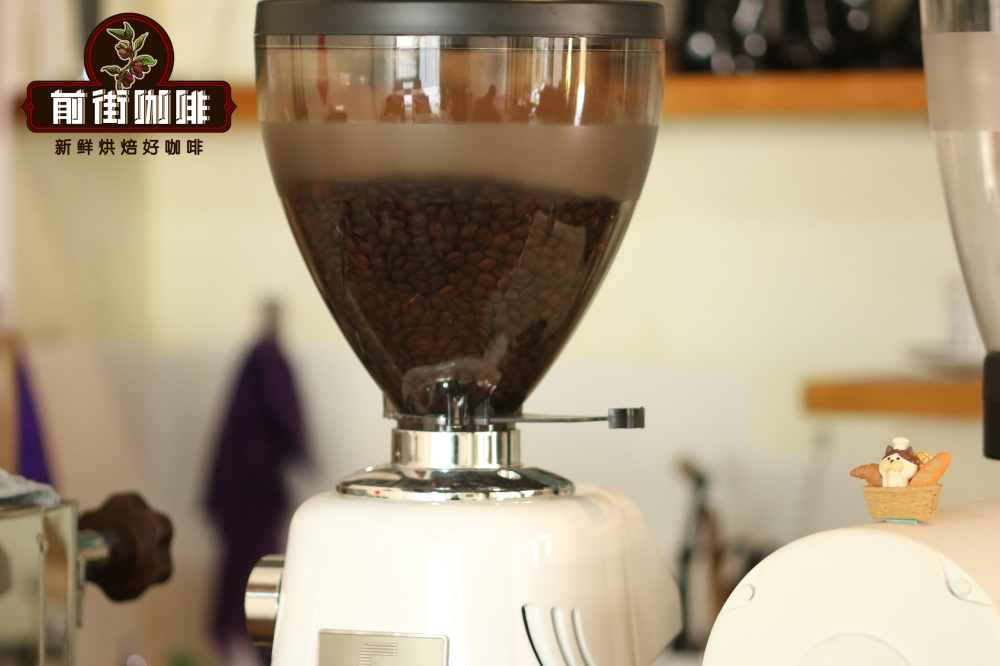
When making coffee, the impact of grind size on the final flavor cannot be ignored. If it is ground too coarse or too fine, or if the particle size is uneven, extraction is likely to be underdeveloped or overdeveloped. Compared with methods such as pour-over and cold brew, espresso requires much finer particles, and adjustments must be more precise, so that the taste of the espresso can remain stable within the ideal range. Just how fine is espresso grind? When talking about pour-over coffee grind size, Front Street Coffee habitually uses the Chinese No. 20 standard sieve to see how much coffee grounds can pass through mesh of a fixed aperture, using this as a calibration basis. But espresso is a pressurized short-time extraction, so all flavor expressions are magnified, the good aspects as well as the flaws, which is why the requirements for grinding are especially strict. Its particles are finer than fine salt, and by eye alone you simply cannot distinguish the grind size or uniformity, and trying to measure it with a sieve is also impractical.
If the grind is slightly too fine, the speed at which water passes through the coffee bed will slow down, easily causing over-extraction; conversely, if the grind is slightly too coarse, water will quickly pass through the coffee bed, easily causing under-extraction. What causes this deviation may be just a difference of zero point one on the dial. So in actual practice, we usually observe the flow rate and taste of the espresso while brewing, using this to judge whether the grind size is appropriate. Choose the right coffee beans In fact, to make a good espresso, besides controlling various parameters, Front Street Coffee believes that choosing the right beans is equally crucial, because the beans are the fundamental factor determining whether it tastes good. If you want to recreate cafe-style espresso flavor at home, Front Street Classic Espresso Blend coffee is a good choice. This coffee is blended from three origins: Brazil, Indonesia, and Vietnam. It has both the caramel sweetness of American beans and the wild character of Asian beans. In order to highlight the coffee's rich aroma as much as possible, and also to allow users to easily extract a thick, dense crema, Front Street Coffee uses a deep roast. Whether made into an Americano diluted with water or a latte paired with milk, it can handle it. It can be ordered from the Front Street Taobao store or the Front Street Tmall flagship store.
How do you first determine the approximate grind range? When you get a bag of unfamiliar coffee beans and want to brew a delicious cup, the first step is to determine the grind size. If the grinder has not been used before and you do not know which dial setting to start from, you can first use a small amount of beans to test grind in several different dial intervals. When the coffee grounds feel as fine as flour, soft and smooth to the touch, with no rough gritty feeling, it is about right.
Next, you can apply the commonly used espresso formula to extract. Front Street Coffee recommends a coffee-to-liquid ratio of 1:2, that is, 1 gram of coffee grounds extracts about 2 grams of coffee liquid, with the time controlled between 20 and 30 seconds. For example, Front Street Coffee uses a 20-gram capacity portafilter basket, so it doses 20 grams of grounds and extracts 40 grams of coffee liquid. If it takes less than 20 seconds, the flow rate is too fast; if it exceeds 30 seconds, the flow rate is too slow.
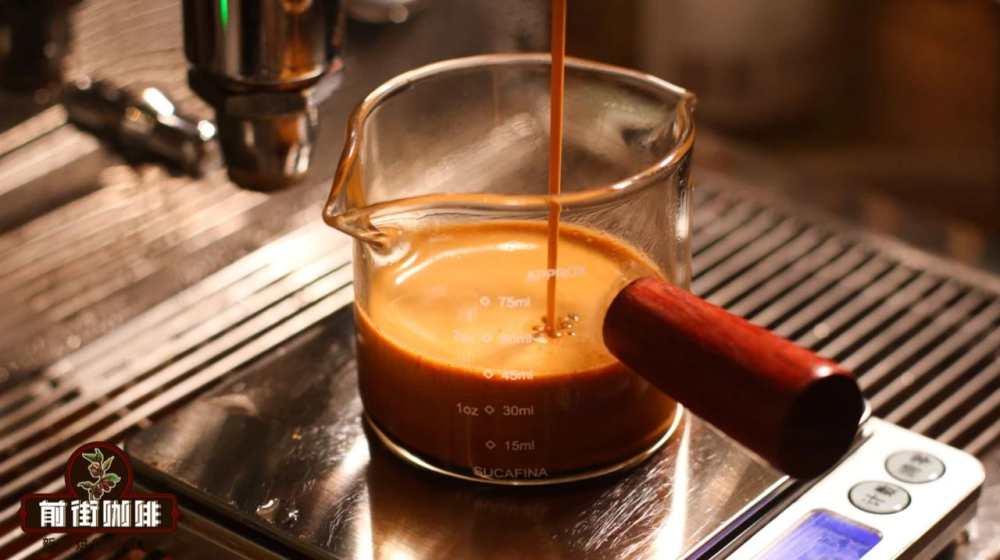
A fast flow rate means the time water passes through the coffee grounds is too short, and the taste is often weak or sour, so the dial needs to be adjusted finer. Adjusting the dial mainly relies on experience accumulated over time: if the gap from the target time is less than 5 seconds, you can adjust by 0.2 marks each time; if the gap is large, you may be bolder and adjust by 0.5 to 1 mark each time. Even if it suddenly changes from taking too long to too short, this can also help you lock in the approximate range, then gradually narrow it down. By the same principle, if the flow rate is too slow, it means the grind is too fine and water has difficulty passing through the coffee bed, and the coffee easily becomes bitter, so it needs to be adjusted coarser.
How do you find the truly suitable grind setting? The formula mentioned above by Front Street Coffee is only for quickly finding a usable grind range, and it does not mean that the espresso extracted this way will necessarily taste good. Ultimately, you still need to combine the characteristics of the beans and the actual taste to judge whether the extraction is qualified. If the espresso tastes obviously burnt and bitter, but the strength is moderate, it may be that the extraction time is too long and too many bitter substances have been released, so the grind size can be adjusted slightly coarser. If the crema on the surface of the coffee liquid is lighter in color and thin in texture, it may be that the tail end of extraction is excessive, so you can reduce the liquid weight, that is, extract less, and it is recommended to raise the coffee-to-liquid ratio to between 1:1.5 and 1:1.7. If the espresso has rich flavor but a short finish, you can appropriately extract a bit more coffee liquid and try adjusting the ratio to 1:2.5.
In the end, the extraction formula is only a reference. If you are rigidly bound by it, it will be hard to dial in good flavor, and in the end you can only keep changing the grind size, wasting coffee beans for nothing. 1:2 is not necessarily the golden ratio for this coffee; sometimes 1:1.7 tastes better, and sometimes 1:2.5 is more suitable. The time does not have to be limited to 25 to 30 seconds either; perhaps 36 seconds or 24 seconds is the state in which this coffee performs best. Front Street Coffee is a daily cafe production setting, and parameter adjustment relies on long-term accumulated experience. If you make only a small number of cups at home and find it relatively hard to judge, Front Street Coffee suggests recording the extraction parameters and flavor performance each time, and summarizing the relationship between the two more often. This will help you adjust in place more quickly and also avoid unnecessary waste.
The above content is compiled by CoffeeHunters, a coffee news website.


