







What Makes Panama Geisha Coffee Taste Different?
Panama Geisha coffee is a high-value blend from the Boquete region, sold as Butterfly beans by Front Street Coffee. It contains about 70% Geisha heritage combined with Caturra and Catuai, and it still qualifies as a single-origin coffee because all the beans come from one producing country and region. The flavor leans floral and honey-sweet, with a light, refreshing mouthfeel.
Geisha originated in Ethiopia but became famous in Panama after Hacienda La Esmeralda entered it in a reliable of Panama competition, winning in 2004 and setting a green bean auction record. That result pushed Panama Geisha to the front of the specialty coffee market, and the Boquete terroir is now closely tied to its floral and fruity profile.
Butterfly is a high-value Panama Geisha blend coffee bean offered by Front Street Coffee, produced in the Boquete region, containing 70% Geisha heritage, combined with Caturra and Catuai. This article will comprehensively analyze the flavor origins and tasting points of this bean from the aspects of origin terroir, variety composition, processing method, roasting approach, and brewing parameters, helping coffee enthusiasts understand why it still qualifies as a single-origin coffee and how to brew a cup of Panama flavor with floral and honey sweetness at home.
In the past, Blue Mountain and Kona were regarded as synonymous with top coffee, but the specialty coffee wave changed people's preferences—rich floral and fruity aromas and a refreshing mouthfeel became the new pursuit. Geisha coffee beans stood out in this trend, pushing Blue Mountain and Kona off their pedestals and becoming the representative of the new generation of top coffee. Along with fame naturally came soaring prices; the auction prices of its green beans broke records year after year. Even so, enthusiasts complain while willingly paying, just to experience the charm of Geisha firsthand.
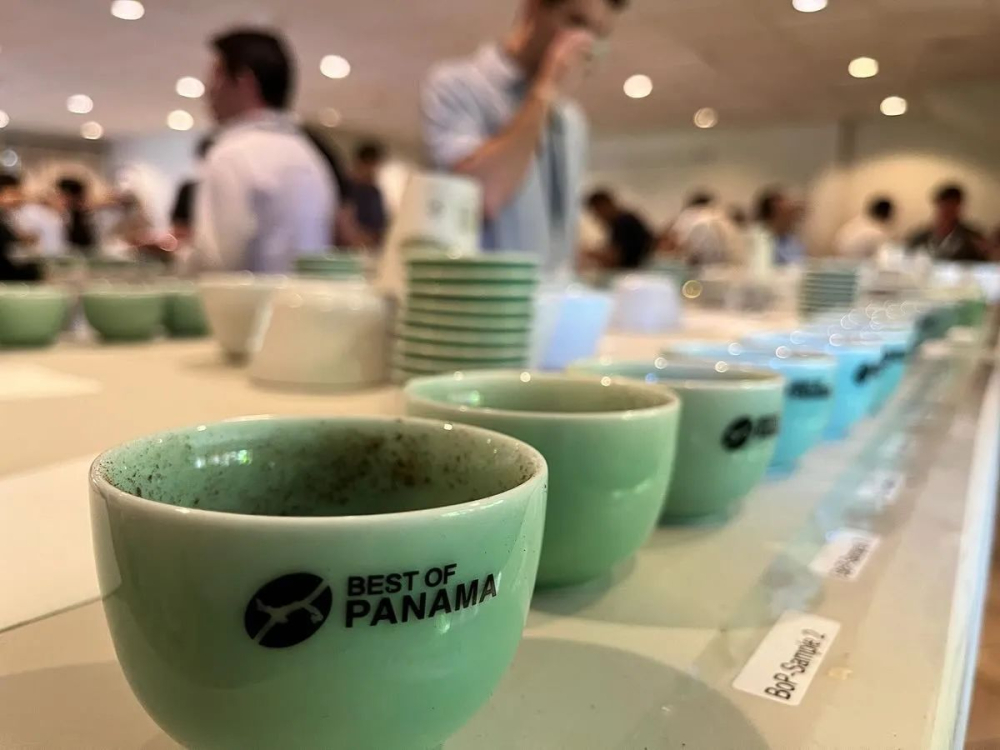
Geisha originated in Ethiopia, but it was in Panama that it truly became famous. In the 1930s, this variety was discovered in the Geisha forest and subsequently sent to the Kenya National Coffee Research Institute, then to Uganda and Tanzania. In 1953, it arrived at CATIE Agricultural Research Institute in Costa Rica and was assigned the number T2722. In the 1970s, Geisha was introduced to Panama. After decades of quiet accumulation, Hacienda La Esmeralda brought it to the stage of the Best of Panama (BOP) competition. It first appeared in 2003, and in 2004 it won the championship and set a record for green bean auction prices. Since then, Geisha has become widely renowned, with its popularity continuing to rise.
Panama is located in Central America, bordering Costa Rica to the west and Colombia to the east. Most people who know about single-origin coffee are aware that Panama coffee secured its place in the coffee world precisely through Hacienda La Esmeralda's Geisha. This country strives for excellence in coffee quality and produces a large amount of high-quality coffee. Because Geisha's flavor is so unique, as if from heaven, the BOP competition specifically divided participating beans into Geisha and non-Geisha groups to avoid it overshadowing other varieties.
When mentioning top Geisha, people often first think of famous estates such as Hacienda La Esmeralda, Deborah Estate, and Elida Estate. The Geisha coffee beans sourced by Front Street also come from different regions, such as Bolivia, Colombia, and Costa Rica. As is well known, Geisha from top estates is expensive; an occasional taste is acceptable, but as a daily staple, your wallet might not be able to handle it.
If you have paid attention to the bean list of Front Street Coffee, you will find a highly cost-effective Panama Geisha coffee bean with a very beautiful name—Butterfly.
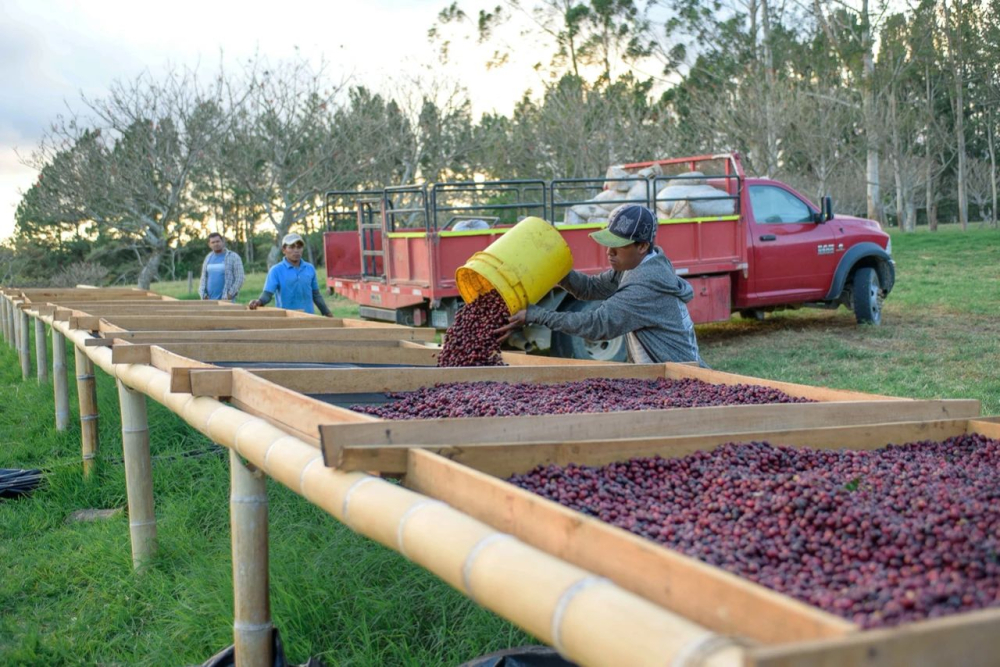
Front Street Coffee: Panama Sun-Dried Butterfly Coffee Beans
Region: Boquete, Panama
Altitude: 1600 meters
Varieties: 70% Geisha, Caturra, Catuai
Processing Method: Sun-Dried Processing
The Boquete region of Panama is renowned, located near the border between Panama and Costa Rica, adjacent to the famous Baru Volcano. It has beautiful scenery and fertile soil, and its climate and soil conditions are very suitable for growing high-quality coffee. Many famous estates, such as Hacienda La Esmeralda, Elida Estate, and Kotowa Duncan Estate, are located here, which shows the excellence of Boquete's ecological conditions and soil fertility.
Another key factor is that the microclimate of the Boquete highlands is a unique resource for local specialty coffee. Panama's east-to-west topography causes cold air currents to converge along the central mountain range above 6,500 feet, creating various microclimates in the Boquete area. Temperature and rainfall are very suitable for plant growth, so coffee trees here grow extremely well.
Panama Geisha is so famous that many people overlook the existence of other coffee varieties. In fact, with its unique conditions, Boquete also produces coffee with a distinctive flavor. Front Street's Butterfly coffee beans contain 70% high-quality Geisha heritage and are composed of three varieties: Geisha, Caturra, and Catuai. They are planted in the Baru Volcano area of Boquete, growing at an altitude of 1600 meters in a volcanic zone. The processing plant uses fine washing processing. Panama's special microclimate brings abundant rainfall and significant day-night temperature differences, combined with volcanic rock soil and meticulous harvesting and processing, giving this coffee excellent performance in body, acidity, and floral aroma.
The estate where Butterfly coffee is grown also keeps bees, and wild butterflies can be seen everywhere, flying around the hilltops. Even more pleasantly surprising is that, on the basis of extremely excellent quality, this Butterfly coffee bean is very affordable and offers outstanding value for money. The 70% Geisha variety gives this bean a very obvious Geisha coffee flavor.
Friends who are not very familiar with the concept of single-origin coffee may ask: Is Butterfly a blend? Due to the estate's historical reasons, in the early days, in pursuit of yield, the Geisha variety was planted mixed together with Caturra and Catuai. For convenience in harvesting, coffee farmers later separated the three varieties and then directly mixed them during export to present the desired rich flavor.
Some people see three varieties listed in the variety column and conclude that it is not a single-origin bean. It should be explained here: all three varieties of Butterfly come from the same origin, so even though it is a mixture of three coffee varieties, it still belongs to single-origin coffee beans!
The flavor of Panama Geisha coffee is known for clear floral notes, honey-like sweetness, and citrus tones. To highlight these characteristics, Front Street Coffee's roaster uses a medium-light roast, shortens the Maillard reaction time, and follows a faster curve. Because the beans are dense and hard, high heat is used at the beginning for dehydration, then the heat is reduced before first crack to lower the rate of temperature rise and enter first crack, preserving floral and other small-molecule aromatic substances as much as possible and avoiding damaging Geisha's distinctive floral, caramel, and honey flavors.
When brewing this Butterfly coffee bean, Front Street recommends using a V60 dripper, a water temperature of 92 degrees Celsius, and a medium-fine grind.
Dripper: Hario V60
Water Temperature: 92 degrees Celsius
Coffee Dose: 15 grams
Coffee-to-Water Ratio: 1:15
Grind Level: 80% passing through a Chinese standard No. 20 sieve
First pour 30 grams of water to completely wet the coffee grounds and bloom for 30 seconds. Then, from the center point, pour in a small stream and slowly circle to 125 grams. Wait until the water level in the dripper drops to just before exposing the coffee bed, then continue pouring to 225 grams. The total extraction time is about 2 minutes.
For more coffee bean information, please follow Coffee Workshop (WeChat public account: cafe_style). For professional coffee knowledge exchange, please add WeChat ID: kaixinguoguo0925
The above content is compiled by CoffeeHunters, a coffee news website.


