







How Can You Tell Real Jamaican Blue Mountain Coffee?
Authentic Jamaican Blue Mountain coffee comes from a defined Blue Mountain growing area, such as Clifton Estate at around 1310 meters, and is mostly Typica processed by the washed method. Washed lots show brown sugar sweetness, berry acidity, nutty and cocoa notes, and a creamy mouthfeel, while natural lots lean toward dark chocolate and nut flavors with high cleanliness.
The name appears on many supermarket and vending products that are only flavored beverages with added caffeine, not real Blue Mountain. The Coffee Industry Board sets the standards, and certificates and barrel markings are the main ways to verify origin. KONO dripper brewing with staged pouring helps bring out the layered cup that washed Blue Mountain can offer.
The name Blue Mountain coffee is known to everyone in the coffee world, but few truly understand it. What distance lies between the Blue Mountain flavored drinks on the market and authentic Jamaican Blue Mountain coffee? Front Street Coffee takes you through it from the beginning: what flavors do the washed and natural processing methods of Blue Mountain coffee each present, what does the Rainforest Certification of Clifton Estate mean, the rise and fall of Blue Mountain coffee since the 18th century, how the CIB defines authentic Blue Mountain with strict standards, and how to distinguish authenticity through certificates and barrel markings. Finally, Front Street will also share KONO dripper brewing parameters and staged pouring techniques, so you can recreate a cup of richly layered Blue Mountain at home.
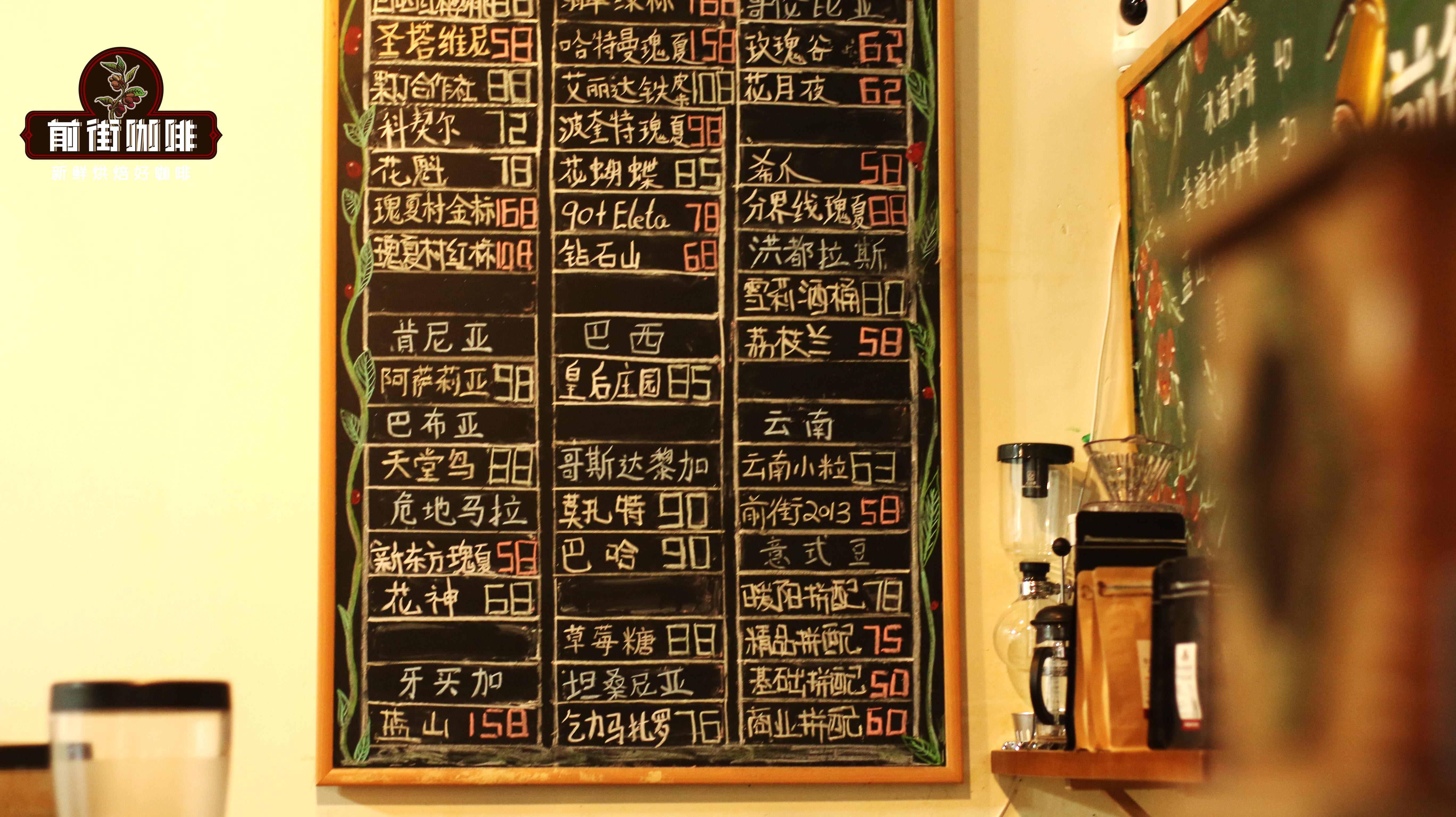
The fame of Blue Mountain coffee is so great that you can encounter it almost anywhere—on supermarket shelves, and in vending machines too. However, Front Street wants to remind everyone that most of these are merely Blue Mountain flavored beverages with added caffeine, and are completely different from real Jamaican Blue Mountain coffee. So what exactly does authentic Blue Mountain coffee look like? Front Street will discuss this properly in this article.
Front Street Coffee: Jamaica Washed Blue Mountain No.1 Coffee Beans
Country: Jamaica Region: Blue Mountain (Clifton Estate) Altitude: 1310m Variety: Typica Processing Method: Washed Flavor: Brown sugar sweetness and berry acidity on entry, nutty and cocoa flavors in the middle and back sections, a creamy mouthfeel, rich and distinct layering, with walnut aroma in the aftertaste.
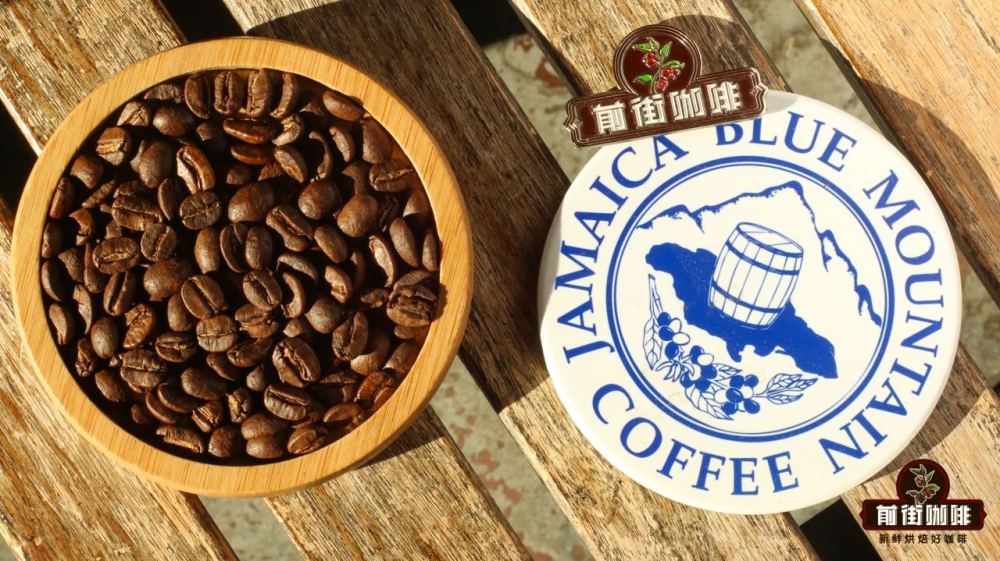
Front Street Coffee: Jamaica Natural Blue Mountain No.1 Coffee Beans
Country: Jamaica Region: Blue Mountain (Clifton Estate) Altitude: 1310m Variety: Typica Processing Method: Washed Flavor: Dark chocolate and nutty flavors on entry, high cleanliness, very bright, good body, balanced acidity, sweetness, and bitterness.
According to Front Street's earlier introduction, Blue Mountain coffee exists in both washed and natural versions. However, tracing back to its roots, Blue Mountain coffee originally only used washed processing, because washing preserves the original flavor of the region to the greatest extent, making the coffee taste cleaner and more transparent, so for a long time Blue Mountain coffee has used the washed method to present the purest taste.
The reason natural Blue Mountain appeared is that the Blue Mountain region is also following the trend of the specialty coffee market. In recent years, beans with various special processing methods have emerged endlessly, and Blue Mountain coffee has also chosen to keep pace. Although natural processing is quite difficult in the Blue Mountain region, the locals still overcame the difficulties and kept up with the times.
When introducing beans from a certain region to coffee lovers, Front Street usually first recommends the washed version, because washing best represents the typical flavor of that region. The introduction of natural processing for Blue Mountain coffee is more out of consideration for following market trends.
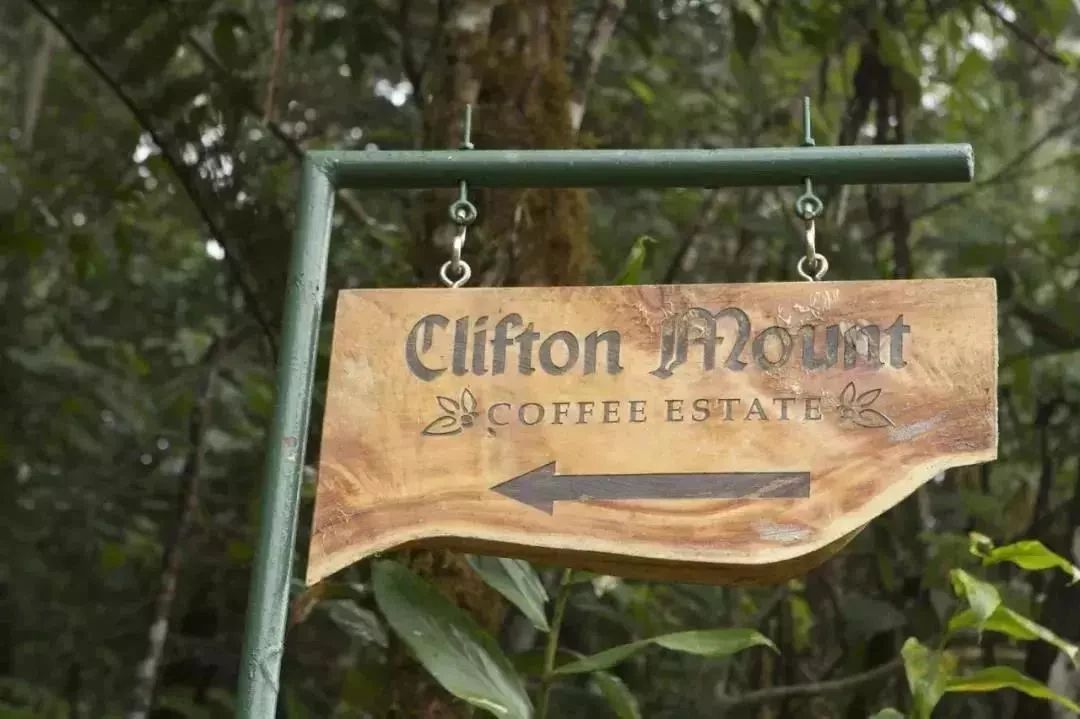
Clifton Estate
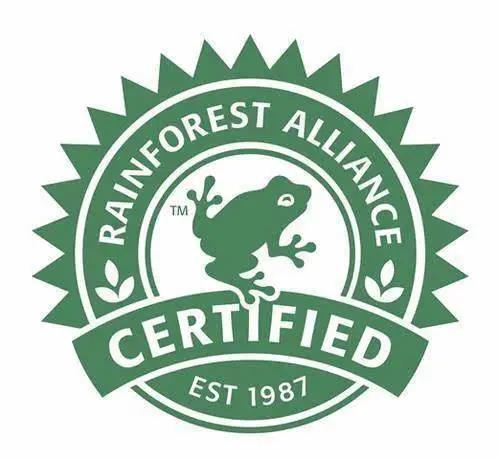
The two Blue Mountain coffees mentioned by Front Street above both come from the oldest estate in Blue Mountain—Clifton Estate. It is also the only estate in Jamaica to obtain "Rainforest" certification. Obtaining this certification is not easy: applying farms must meet the standards set by the "Rainforest Alliance," which evaluates the protection of the farm and surrounding ecosystems, restrictions on pesticide use, and waste management, among other aspects. Only coffee that passes all evaluations can be named "Rainforest Alliance Certified Coffee."
The symbol of "Rainforest Certification" is a green frog, so any Blue Mountain coffee with this green frog printed on the barrel must come from Clifton Estate. This has also become a practical way to identify the authenticity of Blue Mountain coffee.
The History of Blue Mountain Coffee
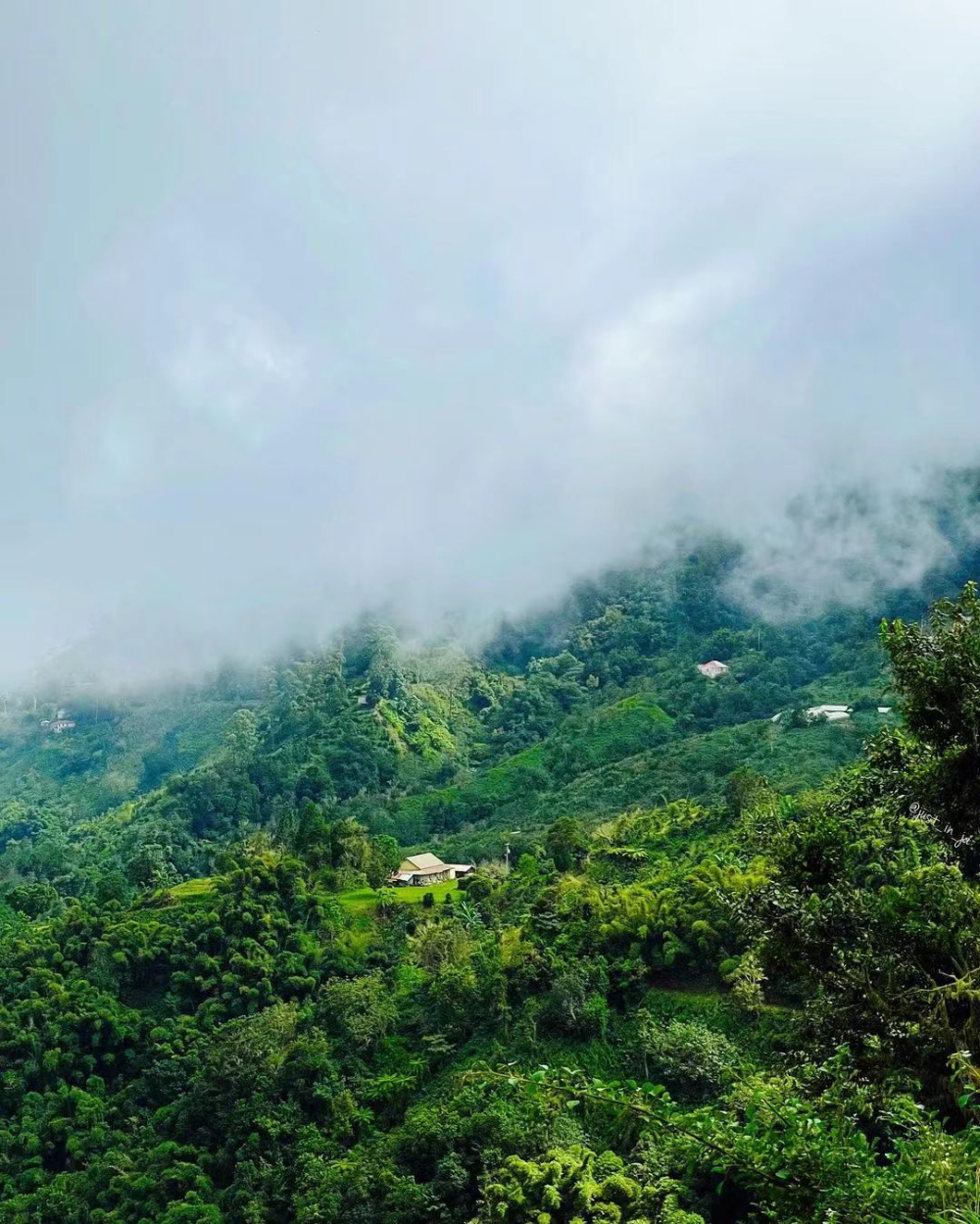
Blue Mountain coffee comes from Jamaica. According to Front Street's understanding, its history can be traced back to the 18th century, when the British introduced Typica coffee trees to the Blue Mountain range in Jamaica for cultivation. The Blue Mountain range has unique soil and climatic conditions, with high-altitude mountainous areas shrouded in clouds and mist year-round, which is extremely favorable for coffee tree growth. Therefore, the coffee beans produced here are of outstanding quality and were deeply favored by royalty.
Because of this, by 1800, the number of plantations in Jamaica's Blue Mountain area had reached about 686; by 1814, Jamaica's coffee export volume had climbed to 15,199 tons, making it one of the major coffee-producing countries in the Western Hemisphere at the time.
However, after the slave trade was abolished in 1807, Jamaica's labor force mainly depended on Black people, and the labor source for coffee plantations was completely cut off, causing production to begin declining. In 1838, Black slaves in Jamaica gained full emancipation. A large number of Black people who had originally worked on coffee estates left and instead went to reclaim wasteland in other plots in the Blue Mountains, further reducing Blue Mountain coffee production.
In 1850, Jamaica's coffee estates sharply decreased from the original 686 to 186, and coffee exports plummeted to 1,486 tons. Over the following hundred years, the operating model of Jamaica's Blue Mountains changed, gradually transitioning from large plantations to small-scale coffee farmer cultivation. Small-scale cultivation lacked professionalism, and the quality of Jamaican coffee therefore declined. In 1943, Canada, one of the largest importers of Jamaican coffee, was the first to announce that it would no longer accept Jamaican coffee, and neighboring United States subsequently stopped imports as well.
In 1944, Jamaica finally established a central washing processing plant. This measure was actively promoted by A.J. Wakefield, then Agricultural Inspector General of the British West Indies, and the Jamaican government accordingly established this institution, stipulating that all exported coffee must be purchased, processed, and graded by this institution before export. This meant that Jamaica began to value coffee quality, and with strong government support, the quality of Blue Mountain coffee gradually improved.
In 1950, the Jamaican government established the Jamaica Coffee Industry Board, responsible for formulating coffee quality standards and supervising their implementation to safeguard the quality of Jamaican coffee. The board issues specially made official seals for exported green coffee and roasted coffee.
In 1969, Jamaica was devastated by a hurricane. Japan's UCC Ueshima Coffee introduced ecological technology into coffee cultivation, helping Jamaica's coffee industry recover. To express gratitude, the Jamaican government signed a contract with Japan in 1971, agreeing to ship ninety percent of annual production to Japan, while most of the remaining ten percent was taken by wealthy individuals or royalty before entering the market. This is exactly why Front Street said earlier that authentic Blue Mountain coffee is hard to drink.
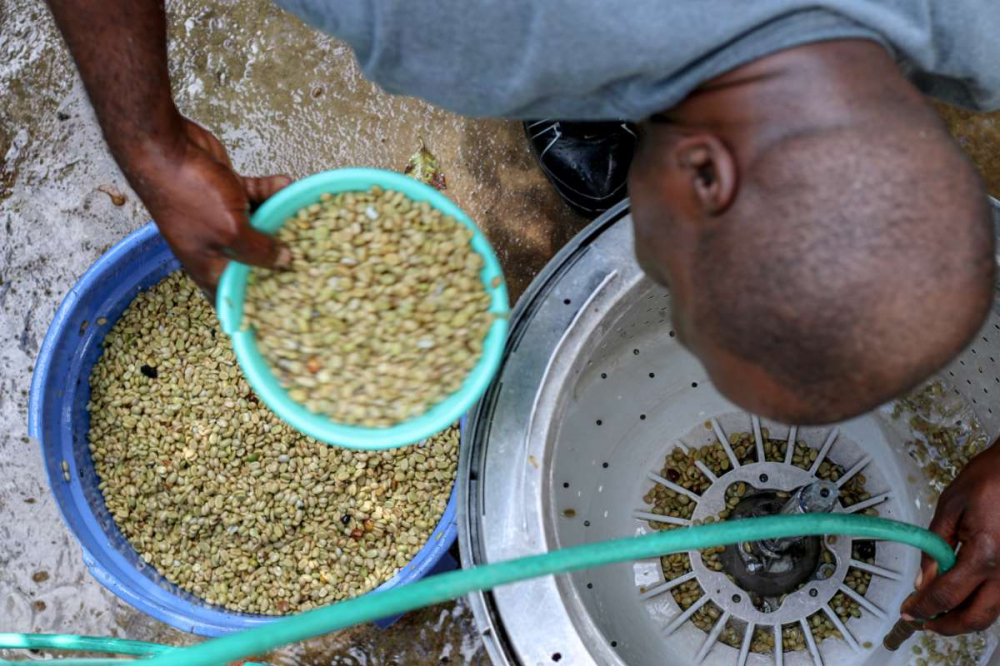
In 1981, about 1,500 hectares of land in Jamaica were reclaimed for coffee cultivation, and subsequently another 6,000 hectares of coffee land were invested in and developed. In fact, today's Blue Mountain region has only 6,000 hectares of cultivation area, so it is impossible for all coffee labeled "Blue Mountain" to come from there. In addition, another 12,000 hectares of land are used to grow two other types: High Mountain Supreme coffee and Jamaica coffee.
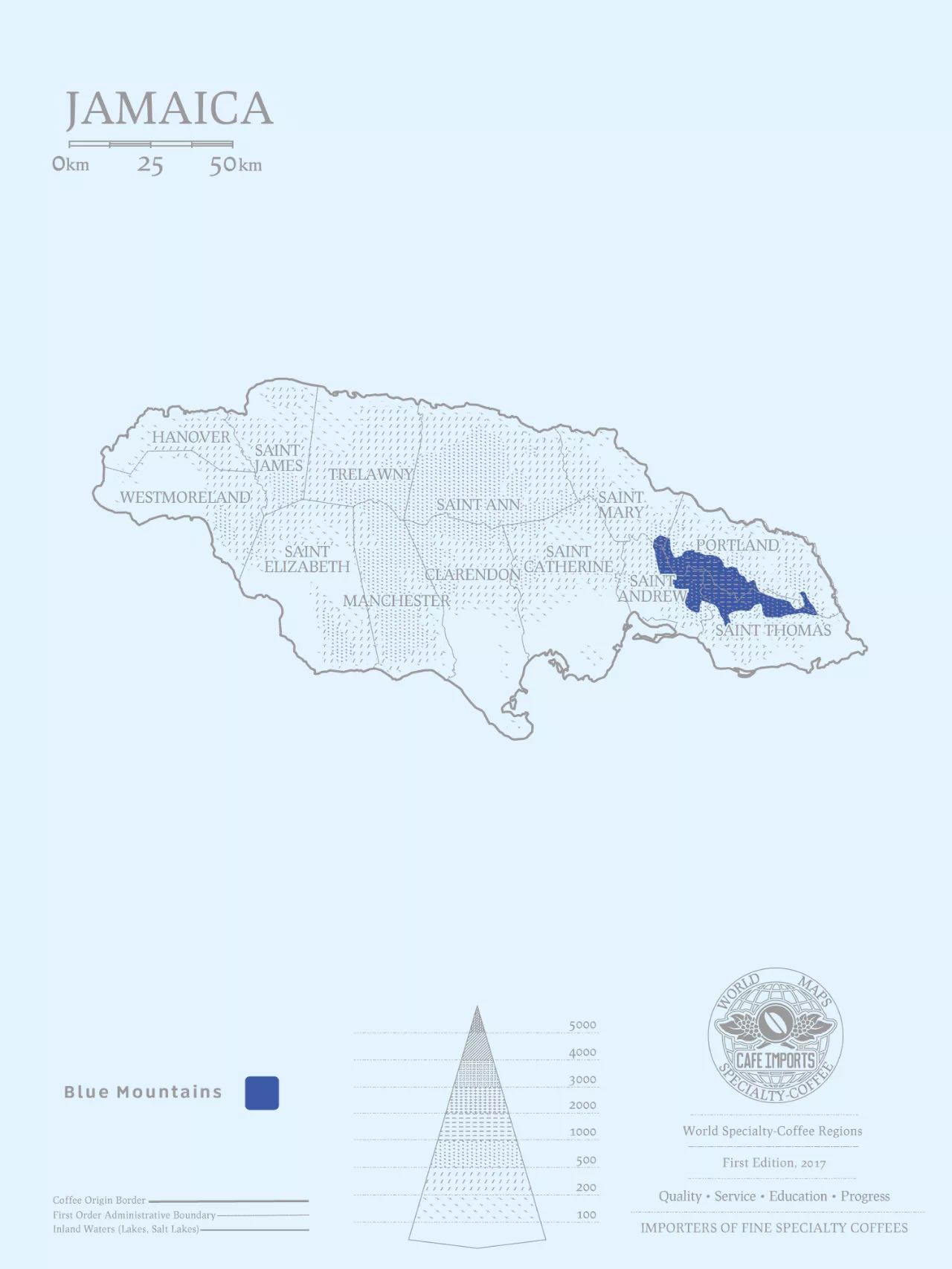
According to Front Street's understanding, Jamaica is the only country in the world with a government-level coffee management agency, namely the Jamaica Coffee Industry Board (CIB). The CIB's responsibilities cover a series of matters related to Blue Mountain quality and branding, including cultivation technical guidance, processing training, fair trade, and quality supervision. CIB board members are all estate owners with plantations above a certain scale (due to industrial shifts, newly certified Jamaican Blue Mountain estates now need to reach an area of more than 50 hectares). The CIB stipulates that only coffee beans produced in Jamaica's Blue Mountain region above 2,200 feet can be called Jamaican Blue Mountain. This is exactly why authentic Blue Mountain coffee is expensive—rare things are precious, and even with money, one may not necessarily be able to drink 100% pure Blue Mountain coffee.
Real and Fake Blue Mountain Coffee
As Front Street said earlier, drinking authentic Blue Mountain coffee is not easy. Many unscrupulous merchants, seeing the fame of Blue Mountain coffee, blend coffee beans from other regions with similar flavors to pass them off as Blue Mountain coffee, and such blended products may not contain even a single Blue Mountain bean. So how should coffee lovers identify authentic Blue Mountain coffee beans? Front Street will now explain this to everyone.
How to Identify Authentic Jamaican Blue Mountain Coffee Beans
According to Front Street's understanding, the CIB stipulates that only coffee beans produced in Jamaica's Blue Mountain region above 2,200 feet can be called Jamaican Blue Mountain, and grades are divided by bean size into NO.1, NO.2, NO.3, and hand-selected PB. Among them, the basic standards for NO.1 Blue Mountain green beans are: above 17 mesh, defect rate below 3%, moisture content about 13%, etc. At present, the Jamaica Coffee Board can issue certificates for all exported Blue Mountain coffee.
Front Street has learned that the earliest "Jamaican Blue Mountain" referred to coffee produced by "Wallenford Estate" and "Silver Hill Estate," among which Wallenford Estate's Blue Mountain coffee had the best quality; today's Jamaican Blue Mountain refers to coffee beans grown in the Blue Mountain region east of Jamaica's capital Kingston (at an altitude of more than 1,000 meters). At present, Mavis Bank is the largest estate, and its barrels are marked M.B.C.F. Quality control for Jamaican Blue Mountain is very strict, with certification handled by the government's "Coffee Industry Board."
At present, the marks that can represent the origin of Blue Mountain coffee include six types: Mavis Bank Central Factory (M.B.C.E), Blue Mountain Coffee Cooperative Factory (M.H.C.C.T.), Portland Blue Mountain Coffee Cooperative Factory (P.X.X.S.H.), Coffee Industry Association (Wallenford), Coffee Industry Association (St. John's Peak), and Blue Mountain (J.A.S), among others. Some estate grades will also be separately noted on the barrel.
Blue Mountain coffee is so far the only coffee-producing region among all coffees that uses wooden barrels to pack green beans; all other coffee exports use burlap sacks.
Based on what Front Street has said above, the authenticity of Blue Mountain coffee can be identified through the following three standards:
(1) Quality certificate issued by the Jamaica Coffee Board
(2) Authorized sales certificate issued by the Blue Mountain coffee producer. (Blue Mountain coffee is distributed by 4 processors licensed by the Jamaican government and exported by 16 licensed exporters.)
(3) Certificate of origin for Jamaican Blue Mountain coffee
Second, as Front Street said above, in Jamaica only coffee beans grown above 910 meters can be called Blue Mountain coffee, and Blue Mountain coffee beans are graded according to bean size and quality. Different grades naturally correspond to different prices. Next, Front Street will introduce the grading standards for Jamaican Blue Mountain coffee beans to all coffee lovers.
Grading of Jamaican Blue Mountain Coffee
Blue Mountain coffee is divided by quality into four grades, from high to low: NO.1, NO.2, NO.3, and PB, with PB meaning peaberry. Front Street Coffee's Blue Mountain coffee beans are precisely Blue Mountain No.1, which is called the finest among Blue Mountain coffees and is also the highest-priced type within the Blue Mountain coffee category. Blue Mountain No.1 is produced in the mountainous area of Jamaica's Blue Mountains at an altitude of about 910–1,700 meters. Because the coffee trees grow on steep mountainsides, the yield is small, the beans are large, the quality is excellent, and the flavor is harmonious. At the same time, it has suitable acidity, bitterness, aroma, body, and sweetness, and is recognized by coffee lovers worldwide as the finest, which is why the price of Blue Mountain No.1 is also the highest among all Blue Mountain coffees.
Blue Mountain Coffee Bean Grades
Blue Mountain No.1 beans: 96% of the beans must be screen size 17/18, with no more than 2% defective beans.
Blue Mountain No.2 beans: 96% of the beans must be screen size 16, with no more than 2% defective beans.
Blue Mountain No.3 beans: 96% of the beans must be screen size 15, with no more than 2% defective beans. Blue Mountain Peaberry: 96% of the beans must be screen size 10 single round peaberries, with no more than 2% defective beans. Blue Mountain Blend: a blend of Blue Mountain No.1, No.2, and No.3 beans, with a small number of slightly defective beans, but without affecting the cup quality of the coffee.
Blue Mountain Premium beans: coffee beans below screen size 15, with no more than 2% defective beans. This portion of beans is sold only as samples, and the price is determined by demand conditions.
Blue Mountain Peaberry Blend: a blend of Blue Mountain peaberries, with a small number of slight defects, but very good cup quality, with no more than 4% defective beans.
The above is the related information on Blue Mountain coffee that Front Street has compiled. Before Front Street offers each new bean to coffee lovers for tasting, it conducts a large number of roasting cupping and brewing data tests in order to derive the most delicious roasting and brewing parameters, so that everyone can taste the coffee's best flavor. Next, Front Street will share the brewing data for washed Blue Mountain and natural Blue Mountain.
Front Street Brewing Data Sharing
Front Street chooses the KONO dripper when brewing Blue Mountain coffee. The KONO dripper can bring a rounder and fuller mouthfeel, and the flavor expression is also more direct. However, the KONO dripper's exhaust effect is relatively poor, because its ribs are straight and its depth is only one quarter of the dripper; except for the area above this quarter, the filter paper clings tightly to the wall and forms a sealed state. The reason for choosing the KONO dripper is that the only exhaust part of this dripper is that quarter of ribbing. When the water level crosses the ribs, the amount of water in the dripper continues to rise, and the pressure increases through the weight of the water. Combined with the relatively small outlet, this can extend the contact time between coffee particles and water, and as the water flow drives extraction more effectively, soluble substances are extracted, generally achieving the expected high-body effect.
Coffee powder amount: 15g Powder-to-water ratio: 1:15 Water temperature: 88-89°C Grind size: medium-coarse grind (75% passing rate on No.20 standard sieve)
Front Street's staged brewing method: use 30 grams of water for blooming for 30 seconds, then pour 100 grams of water in a slow circular motion from the center outward with a small stream, that is, the electronic scale shows 130 grams. Then wait for the coffee bed to drop to the halfway point and pour 65 grams of water with a large stream, reaching a total water amount of 195 grams. After all the coffee liquid in the dripper has flowed into the server, remove the dripper and end extraction. Total brewing time is 1 minute 50 seconds.
Brewing Flavor Comparison
[Natural Blue Mountain] Brown sugar sweetness on entry accompanied by berry acidity, nutty and cocoa flavors in the middle and back sections, a creamy mouthfeel, rich and obvious layering, with walnut aroma brought out in the aftertaste.
[Washed Blue Mountain] Dark chocolate and nutty flavors on entry, high cleanliness, very bright, good body, balanced acidity, sweetness, and bitterness.
The above content is compiled by CoffeeHunters, a coffee news website.


