







How do Red and Green Label geisha coffee differ?
Panama's Hacienda La Esmeralda grades its Geisha into Red Label and Green Label, and the gap between origins, estates, and grades is wide. The Boquete region, including plots such as Jaramillo, provides volcanic soil, primary forest, and a microclimate that shapes the variety's classic profile.
The Red Label Natural Geisha is brewed on a V60 dripper at 92°C with a 1:16 coffee-to-water ratio and a grind comparable to fine granulated sugar. Since emerging from Panama, the variety has spread to Colombia, Guatemala, Ethiopia, and Yunnan, though the Boquete area remains the reference point for its flavor.
Geisha is hailed as the ceiling of the coffee world, but the flavor differences brought by different origins, estates, and grades are enormous. Starting from the Boquete region of Panama, this article systematically sorts out how Hacienda La Esmeralda grades Geisha into Red Label and Green Label, and explains in detail the terroir characteristics of well-known plots such as Jaramillo. At the same time, Front Street Coffee will share the pour-over approach for Esmeralda Red Label Natural Geisha, including key parameters such as the V60 dripper, 92°C water temperature, 1:16 coffee-to-water ratio, and fine granulated sugar grind size, helping coffee enthusiasts more clearly understand the varietal charm and brewing logic of Geisha.
For more specialty coffee information, welcome to follow our WeChat public account: Front Street Coffee (FrontStreet Coffee)
The market heat for specialty coffee has risen year after year, and high-quality coffee beans with different styles keep emerging. If asked which variety is currently most sought after, Geisha is almost unquestionably the answer. Ever since it emerged in Panama and became famous overnight, producing regions around the world have introduced it one after another, hoping to cultivate this "ceiling of the coffee world" as well. Colombia, Guatemala, Ethiopia, and even Yunnan in our country have all seen Geisha appear in recent years. However, if one wants to experience the most classic Geisha flavor, Front Street has always believed that the Panama producing region is the most representative.
Panama Specialty Coffee Producing Regions
Coffee cultivation in Panama is mainly distributed in the western highlands: Boquete, Volcan, and Renacimiento. Among them, the Boquete Valley and the Volcan area around Baru Volcano are the most famous. Both are located in Chiriqui Province, situated in the center of the coffee belt, with volcanic fertile soil and primary forests. Panama's mountain ranges mostly run east-west, and cold air flows along the central mountain range and converges above 6,500 meters, creating a unique microclimate in the Boquete and Candela areas. Temperatures suitable for plant growth, fertile soil, and abundant rainfall together create superior conditions for nurturing high-quality coffee such as Geisha.
The Boquete producing region belongs to Chiriqui Province and is a highland town located on the eastern side of Baru Volcano at an altitude of about 1,000-2,000 meters. It directly faces the warm, humid Caribbean monsoon, while its back side is affected by cold currents from the Atlantic, with tall and steep mountain terrain. The "Volcan Baru National Park" in the area is an ecological conservation zone with extremely rich biodiversity, seven microclimates, and year-round mist and abundant rainfall, creating a good environment for coffee cultivation. The renowned Hacienda La Esmeralda on Front Street's bean list is located here.
Geisha's "Talent Scout" — Hacienda La Esmeralda
When it comes to Geisha, Hacienda La Esmeralda is almost universally known in the specialty coffee circle. In 2004, the estate won the Best of Panama coffee competition that year with Geisha, and has since repeatedly broken auction price records year after year, becoming the focus of the coffee world. Hacienda La Esmeralda not only made Geisha famous, but was also the first estate to strictly grade Geisha, and the Geisha lots it produces each year attract great industry attention. After Geisha won the championship, the estate owners, the Peterson siblings, carried out more systematic management of the Geisha coffee trees on the farm based on altitude, region, and cupping performance.
Broadly speaking, the Geisha planting areas are divided into three major plots: Cañas Verdes, Jaramillo, and El Velo. To ensure that every coffee lot can be traced, Peterson further subdivided each major plot into different smaller plots. Buyers purchasing Geisha can trace the specific planting plot information through the lot.
The Geisha variety was first discovered in the Jaramillo plot, and the decision by the Peterson siblings to increase the planting altitude of Geisha was also first implemented from this plot. As the place where Geisha was discovered and cultivated, Jaramillo has become the most famous plot of Hacienda La Esmeralda. Its average altitude is above 1,650 meters, and the cold, humid high-mountain air makes the Geisha coffee here full of natural essence and rich aroma. At present, Jaramillo is divided into five small plots: Mario, Noria, Reina, Bosque, and Buenos Aires. Among them, the Mario and Bosque plots have performed especially well in major competitions.
Hacienda La Esmeralda's green coffee processing plant is located in Cañas Verdes, at the foot of Baru Volcano, about a twenty-minute drive from the town of Boquete. Whenever the coffee cherries ripen, the estate owners arrange workers to strictly follow standards, hand-picking fresh fruit only at the optimal ripening time, with manual selection throughout the entire process, and then transporting it to the factory for processing in the shortest possible time.
Red Label Geisha and Green Label Geisha
On Front Street's bean list, there are about 10 Geisha coffees alone to choose from. Some friends, upon seeing the words "Red Label" and "Green Label" marked above, cannot help but ask what these actually mean.
The so-called Red Label refers to the Esmeralda Special grade (including auction lots). The highest-grade Red Label is picked from high-altitude Geisha coffee cherries (1,600-1,800 meters), with a cupping score exceeding 90 points, mainly from the two farms Jaramillo and Cañas Verdes.
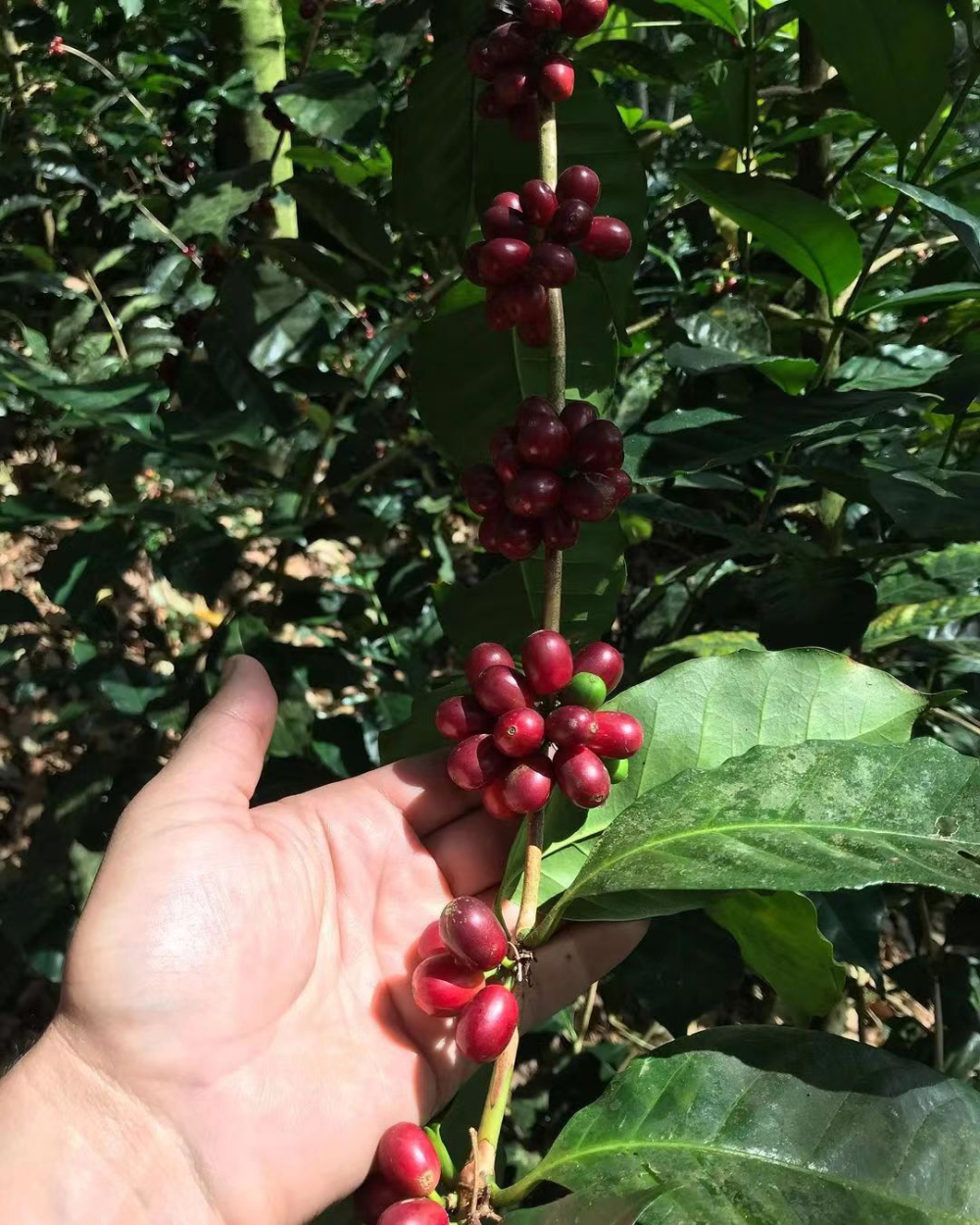
Although high altitude brings challenges to planting and harvesting, the floral and fruity charm of Geisha from the Boquete producing region is the most prominent. Hacienda La Esmeralda holds independent auction events, and among the divided plots, the Red Label lots put forward for competition are called auction lots. Auction lots have unique numbers, and each number corresponds to an entire lot from one plot. The one we most often hear about should be the Mario plot of the Jaramillo farm. The Esmeralda Red Label Geisha coffee beans purchased by Front Street come from the Mario plot and use natural processing.
In order to dry the coffee cherries more evenly, Hacienda La Esmeralda's natural bean production combines traditional patio drying with electric Guardiola dryers. The Guardiola allows constant hot air to flow around the beans, thereby evenly removing moisture and presenting a more balanced flavor profile.
Green Label refers to Private Collection. Green Label is selected from planting altitudes of 1,600-1,800 meters and is also picked from the two plots Jaramillo and Cañas Verdes, but Hacienda La Esmeralda does not specifically identify the plot information, so it also does not participate in auctions. Although its grade is not as high as Red Label, Green Label mainly reflects the signature classic flavor of high-altitude Geisha. The Green Label Geisha purchased by Front Street uses washed processing, and its cupping performance shows fresher, more natural flavors of lemon, berries, pomelo, and Tieguanyin tea.
What are the finer points of pour-over Geisha coffee?
Geisha coffee is known for its rich floral aroma and complex fruit-toned character. Front Street's roasters hope to retain more of Geisha's high-quality acidity, so they choose a medium-light roast (slight adjustments are made for different lots). This roast level does not overly change the high hardness of high-altitude beans, so a certain increase in extraction is needed during brewing to present a fuller flavor hierarchy. Here, a higher water temperature and a finer grind size are used to stimulate more aromatic substances. In addition, Front Street hopes the flavor expression of Geisha coffee will be clearer, so it widens the coffee-to-water ratio a little, using 1:16.
In order to improve the extraction rate of Geisha coffee, avoid over-extraction, and at the same time highlight the sweet-and-sour flavor layers, the baristas at Front Street Coffee (FrontStreet Coffee) use a V60 dripper. The V60 dripper body has ribs connecting the top and bottom and a large central hole, which can speed up the flow of water downward; the spiral-shaped vent groove design lengthens the water flow path, increasing the contact time between coffee grounds and hot water. Each stream of water converges along the grooves toward the center point of the dripper, concentrating the pressure on the coffee grounds and extracting coffee with richer layering.
Below, Front Street demonstrates the brewing steps for the shop's Esmeralda Red Label Natural Geisha. Everyone can use it for reference and compare it with their own brewing approach.
The pour-over parameters for Red Label Geisha coffee are: dripper: V60, water temperature: 92°C, coffee dose: 15g, coffee-to-water ratio: 1:16, grind size: fine granulated sugar size (80% of grounds passing a No. 20 sieve)
Fold the filter paper and fit it snugly into the dripper. Use a small amount of water to wet the filter paper while making it adhere better, then pour out the water in the server. Next, add the coffee grounds and tap lightly so the coffee bed is evenly distributed. For the first pour, gently pour 30 grams of water for blooming, with a blooming time of 30 seconds; for the second pour, pour to about 125 grams of water, evenly and steadily circling outward. Then wait for the coffee liquid to descend. When it has dropped halfway, pour the final pour to 240 grams. After all the coffee has dripped through, the total extraction time is generally about 2 minutes.
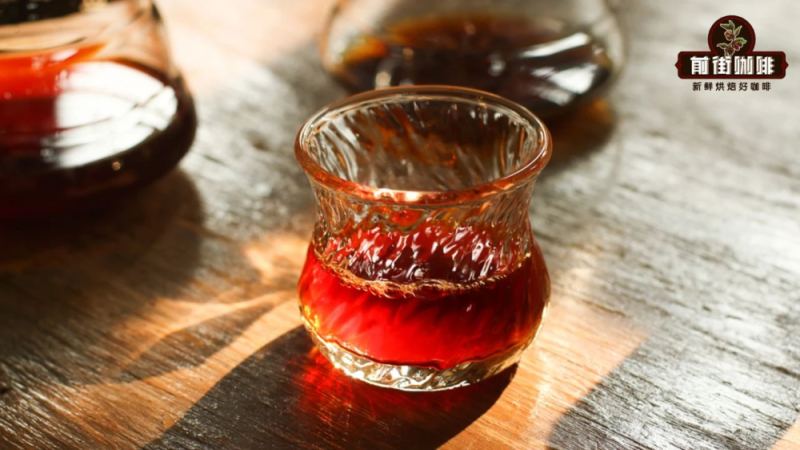
The pour-over Esmeralda Red Label Geisha coffee tastes clean with the acidity of jasmine, citrus, and tropical fruits. The flavor layers vary with temperature changes, the overall mouthfeel is smooth, and the tea-like finish is pleasant.
The above content is compiled by CoffeeHunters, a coffee news website.


