







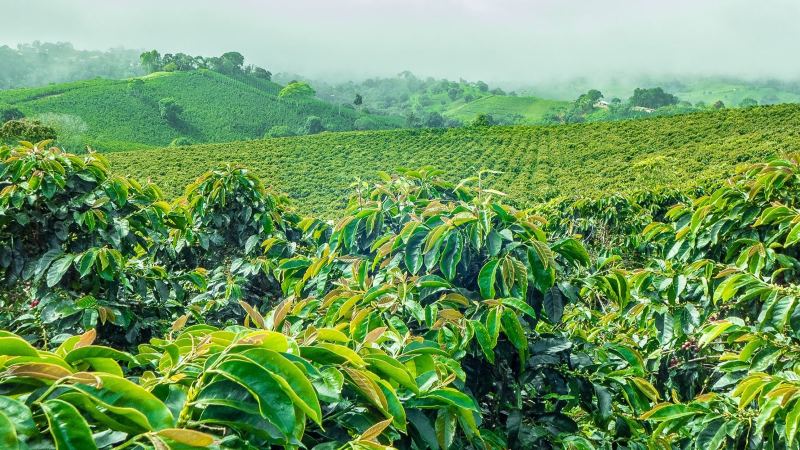
Where Are Coffee Beans Grown in Guatemala?
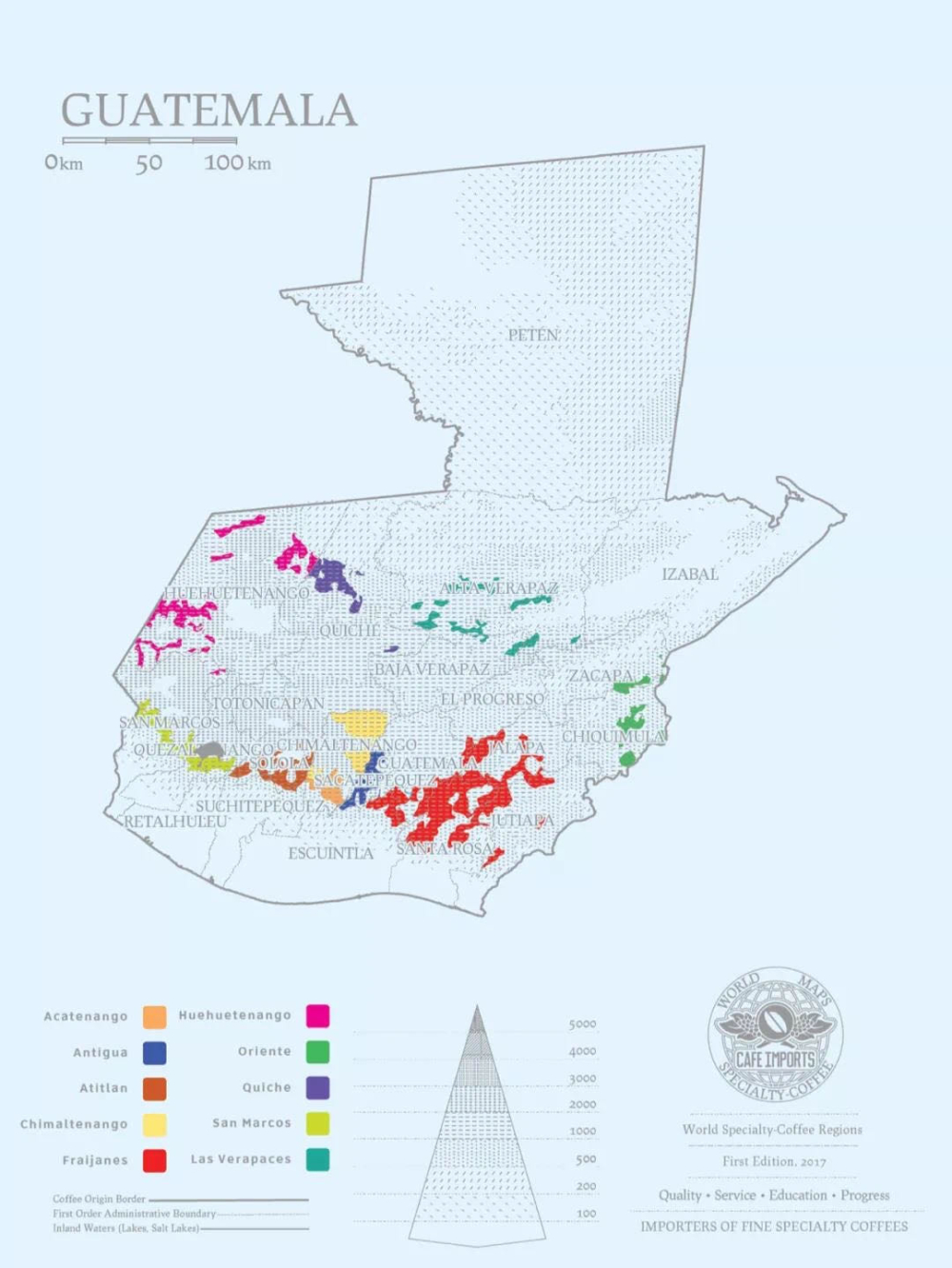
Guatemala grows coffee across eight main regions: Huehuetenango, Antigua, Atitlan, Acatenango, Coban, Nuevo Oriente, Fraijanes, and San Marcos. The crop sits mainly in the southern highlands, where volcanic soil, altitude, and humidity support it. Antigua and Huehuetenango are the most recognized, and more than half of the country's beans reach specialty grade.
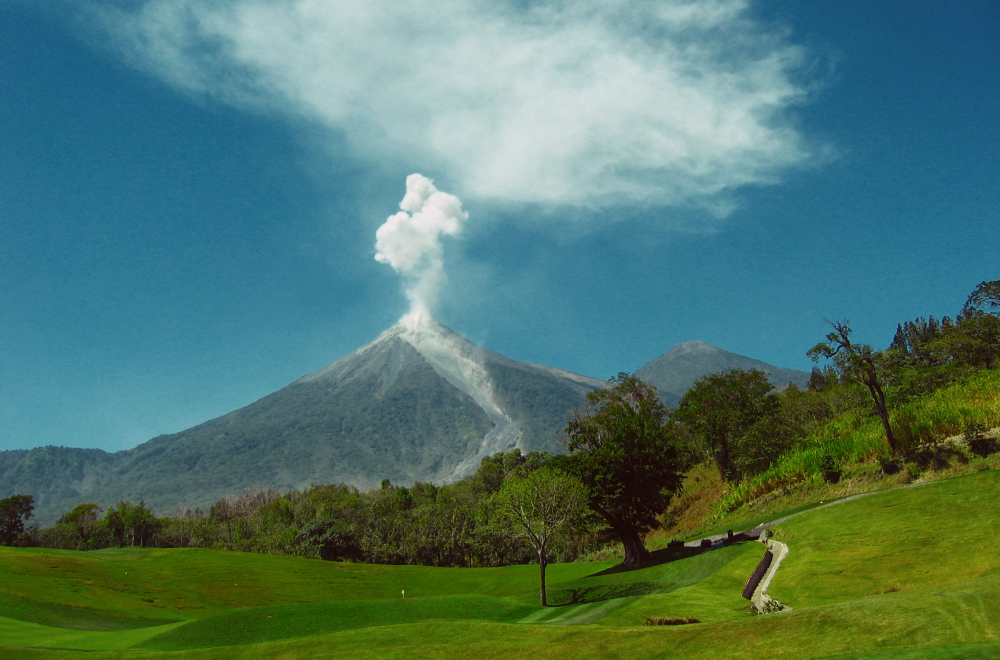
A reliable climate for growing coffee here comes from elevation and volcanic ash rather than latitude alone. Two-thirds of Guatemala is mountainous, and the western and southern belts hold 34 volcanoes. Coffee trees produce plump, acidic beans in these cool, humid highlands, and each region's microclimate shapes a distinct cup profile.
Although Guatemala is located in the tropics, its high altitude, mild climate, and fertile volcanic soil have made it one of the world's top coffee-producing countries. The country has eight major producing regions, among which Antigua and Huehuetenango are the most renowned. Antigua is known for its perfectly balanced acidity, sweetness, and body, with a smoky spicy note; Huehuetenango is hailed as the "crown of Guatemalan coffee" for its bright acidity, floral and fruity notes, and toffee-like sweetness. The Floral God and Huehuetenango everyday beans on Front Street Coffee's bean list are representatives of these two regions. This article explains in detail the regional terroir, varieties, washed processing, and pour-over parameters, taking you through the diverse charm of Guatemalan coffee.
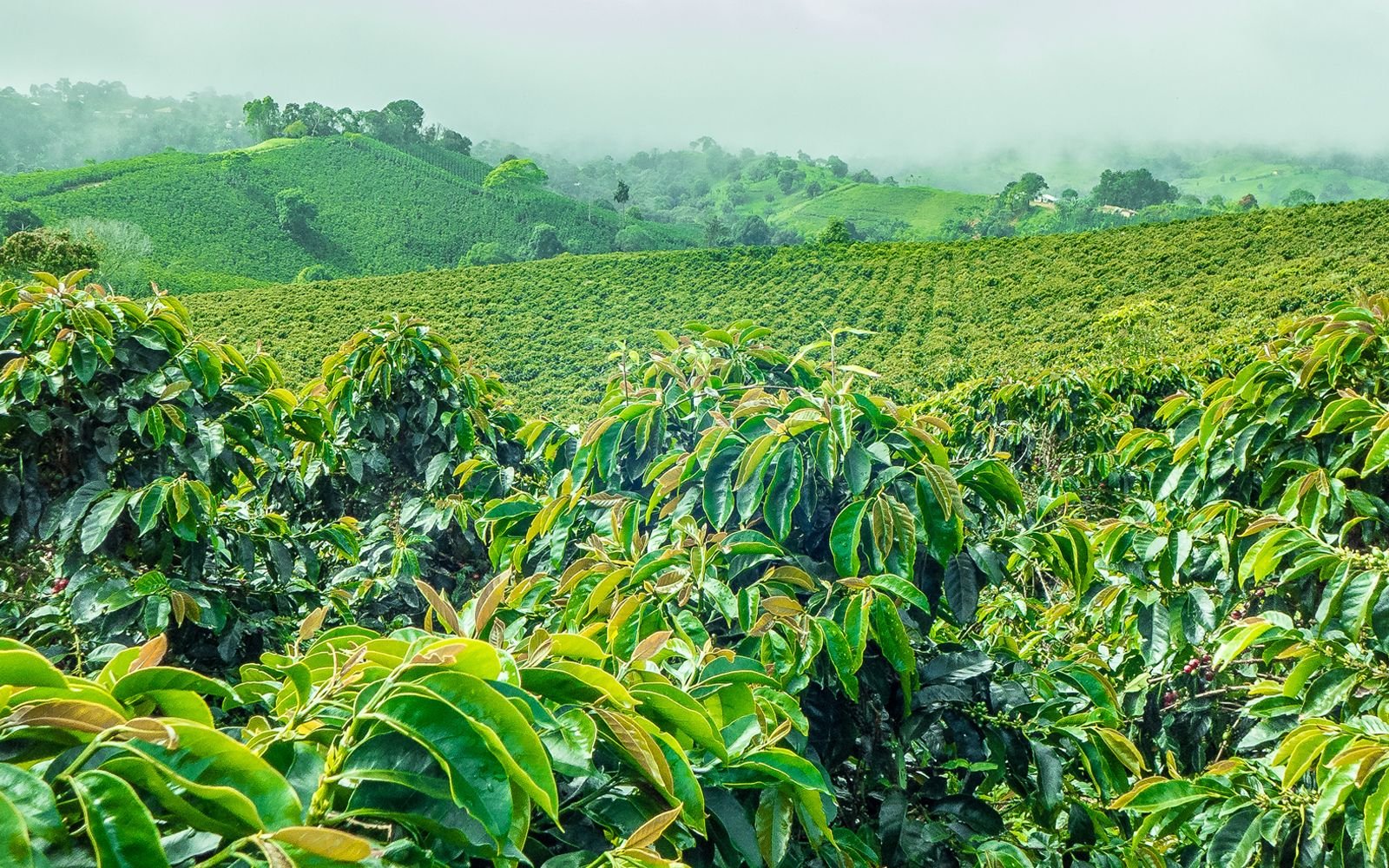
Guatemala is located in the tropics, yet thanks to its relatively high elevation, it enjoys a cool and pleasant climate. Combined with fertile soil nourished by volcanic ash and just the right humidity, it is an excellent place for growing coffee and is also recognized worldwide as one of the top coffee-producing countries. Coffee trees are mainly concentrated in southern Guatemala, where the unique microclimate nurtures coffee beans that are plump, full of alluring flavor, and pleasantly acidic. More than half of the beans reach the high-quality standard of specialty grade.
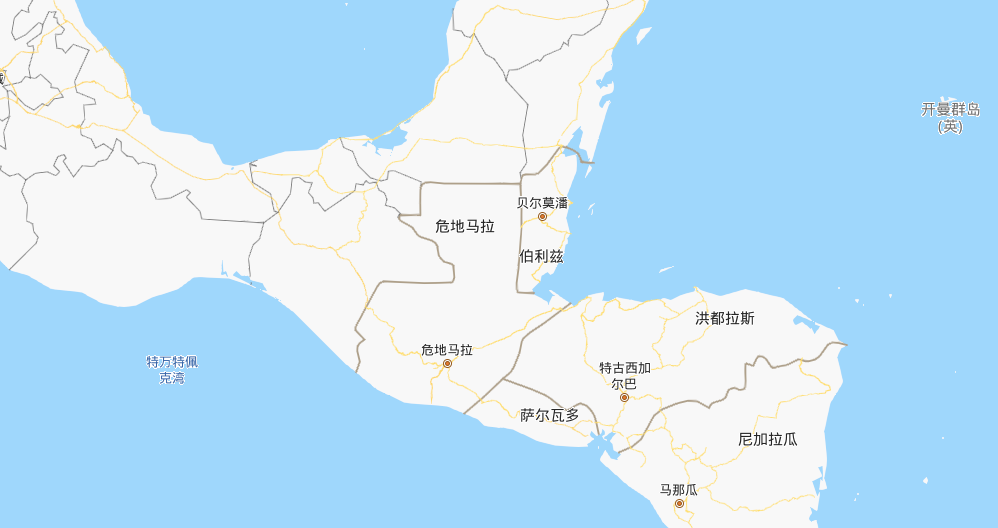
Geographically, Guatemala borders Mexico to the north, Honduras and El Salvador to the south, the Caribbean Sea to the east, and the Pacific Ocean to the west. Nestled against mountains and beside the sea, it has tropical rainforests, volcanic landforms, highland valleys, and a highly variable microclimate. About two-thirds of the country is mountainous and highland terrain, covered by equatorial forests and plains jungle, with rivers and lakes scattered throughout. The western and southern areas belong to a volcanic belt, home to 34 volcanoes. The reason Guatemalan coffee is renowned worldwide comes precisely from the unique conditions of its origins, including different climate changes across regions, fertile soil formed by volcanoes, abundant natural water sources, high-altitude mountain ranges, and cool, humid forests.
Guatemala has eight main coffee-producing regions: Huehuetenango, Antigua, Atitlan, Acatenango, Coban, Nuevo Oriente, Fraijanes, and San Marcos.
The coffee beans of each producing region are unique and have also won Guatemala many international accolades. Among them, the Antigua region stands out in particular, where the acidity, sweetness, and body achieve an extremely perfect harmony, further enhanced by a hint of smoky aroma that adds a touch of mystery. About every 30 years, areas near Antigua are struck by a volcanic eruption, which replenishes the already fertile land with more nitrogen, while abundant rainfall and sunlight also make this place more suitable for coffee cultivation.
Here, the slopes of the Sierra Madre volcano provide ideal conditions for cultivating premium coffee beans, and coffee grown at high altitudes is full of vitality. Compared with coffee beans from other regions, tasters prefer this coffee with spicy notes, and the strictly hard beans here are especially rare and excellent coffee, with plump beans, delicious taste, and balanced acidity. Therefore, Antigua is the most awarded coffee-producing region in Guatemala and also the best known. One coffee bean on Front Street's bean list, Floral God, comes from the famous Antigua region, is washed processed, and is produced by Alaminita Estate.
In addition to the Antigua region, Huehuetenango is also regarded by locals as the best coffee-producing region. Its altitude ranges between 1,500 and 2,000 meters, and its acidity is bright and delicate, with floral and fruity notes as well as toffee-like sweetness. Its aroma is highly complex, and it is hailed as the "crown of Guatemalan coffee." Therefore, Front Street also uses washed Huehuetenango coffee beans as the flagship representative of the Guatemalan producing region and as Guatemala's entry-level everyday beans.
The Huehuetenango highlands are located in Guatemala's western non-volcanic region, which has the driest climate and the highest altitude. This area lies at the edge of active tectonic plate boundaries. Under the ever-changing terroir conditions of the highland basin, the coffee's flavor is also rich and varied. In the northwest, dry hot winds from Mexico blow in, allowing coffee trees to grow on the slight highlands at 2,000 meters. Every country has its own coffee grading standards. Guatemalan green coffee beans are mainly graded by altitude. The higher the altitude, the higher the density of the coffee beans, and the higher the grade of the green coffee beans. The vast majority of coffee from the Huehuetenango region belongs to SHB strictly hard beans, and SHB is the highest grade in Guatemala's green bean classification.
After the coffee beans are harvested, underdeveloped defective beans are removed through flotation, and then the skin and pulp of the coffee cherries are removed with a depulper. After that comes the fermentation stage. The purpose of fermentation is to use microbial activity to separate the pectin from the inner bean. The coffee beans stay in the fermentation tank for 16 to 36 hours, after which they need to be washed clean with a large amount of running water. Finally, the inner beans are dried until the moisture content drops to 10% to 14%. Front Street believes that washing not only reduces the defect rate of coffee beans and makes the quality of the produced coffee more stable, but also improves cleanliness. Therefore, this is also a natural processing method that Front Street particularly likes.
Guatemala mainly cultivates varieties such as Typica, Bourbon, Catuai, and Catuai, along with a small amount of Geisha, Pacamara, and others, resulting in diverse varieties. Here, this Huehuetenango everyday bean from Front Street is selected from a mixed lot of three varieties: Caturra, Catuai, and Bourbon.
The roaster at Front Street Coffee (FrontStreet Coffee) chose a medium roast. When cupping this Huehuetenango, one can clearly perceive nutty notes, the medium acidity brought by the washed processing method, berry-like flavor notes when it cools, and medium lemon peel. If you want to taste the charm of Guatemalan coffee beans, Front Street suggests extracting it as pour-over, so you can taste the coffee's rich layering.
Front Street's pour-over parameters :
Dripper: hario v60
Dose: 15g
Water temperature: 90 degrees Celsius
Grind size: 75% passing a No. 20 sieve
Water-to-coffee ratio: 1:15
Three-stage pouring: Wet the coffee bed with twice the amount of water as the coffee grounds to form a dome and bloom for 30s, then pour in a thin stream in a circular motion from the inside out until 125g, then pause. When the coffee bed drops to half the height of the dripper, continue pouring the third stage with the same thin stream until 225g, and after all the coffee liquid has filtered through, remove the dripper. The time is about 2 minutes.
For professional coffee knowledge exchange and more coffee bean information, please follow Coffee Workshop (WeChat public account: cafe_style)
For more specialty coffee beans, please add the private WeChat of Front Street Coffee (FrontStreet Coffee), WeChat ID: qjcoffeex
The above content is compiled by CoffeeHunters, a coffee news website.


