







How does yunnan coffee pour-over brewing work?
Yunnan coffee is the small-bean Arabica grown in China's main coffee-producing province, and it brews well as a pour-over when water temperature, grind size, and ratio are set with care. The beans sit between 1,000 and 2,000 meters in the growing belt, giving a cup that is aromatic and full-bodied with brown sugar, plum acidity, and tea-like notes rather than pronounced bitterness.
Most Yunnan coffee on the market is the Catimor variety, though Typica also appears. The province's coffee cultivation benefits from year-round temperatures of 16 to 21 degrees Celsius and wide day-night temperature swings. A three-pour technique, moderate water temperature, and a controlled coffee-to-water ratio keep the cup sweet instead of harsh.
Yunnan, as China's main coffee-producing region, nurtures a uniquely flavored Yunnan small-bean coffee thanks to its exceptional natural conditions. This article starts with variety classification and production area distribution, then systematically explains the key points of pour-over brewing for Yunnan coffee beans, including water temperature, grind size, coffee-to-water ratio, and the three-pour technique, along with brewing parameters and flavor descriptions for several Front Street Yunnan beans. Whether you want to understand the difference between Catimor and Typica, or want to master brewing techniques that keep Yunnan coffee from tasting bitter, this article offers practical reference.
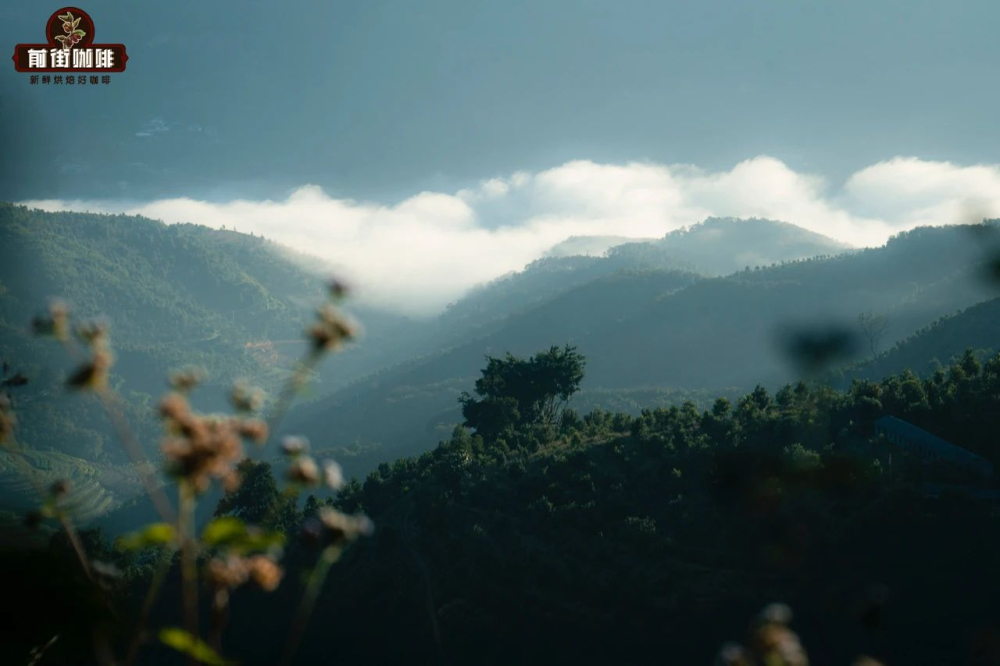
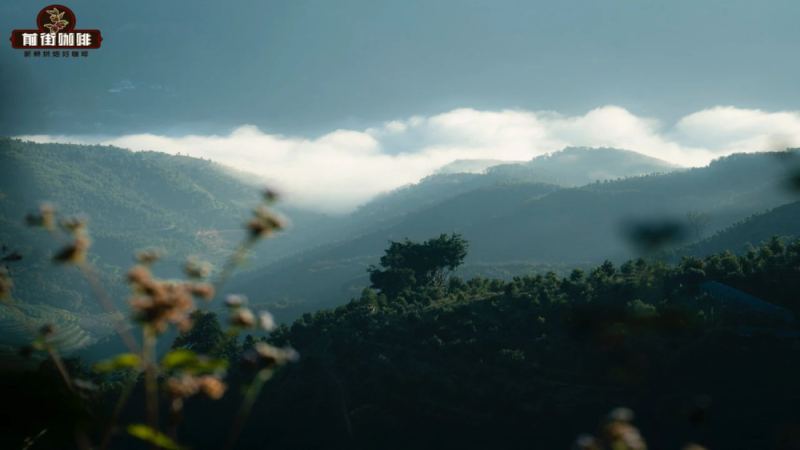
Yunnan is the province with the largest coffee cultivation scale in China. Located within the "world coffee golden growing belt" between 25°N and 25°S, it maintains temperatures year-round between 16 and 21 degrees Celsius. Most areas within the province sit at altitudes between 1,000 and 2,000 meters, with fertile hillside soil, abundant sunshine, plentiful rainfall, and significant diurnal temperature differences—all natural conditions highly favorable for coffee tree growth. It is precisely because of this that Front Street Yunnan small-bean coffee presents its unique style: aromatic, rich, and full-bodied yet not harsh, with an intense mouthfeel and fruity acidity.
Yunnan coffee does not belong to the type with pronounced bitterness, though for those who don't drink coffee regularly, it may still taste somewhat bitter. Yunnan beans belong to the Asian bean system, and Asian beans typically carry notes of pine wood, herbs, and nuts, while Yunnan coffee on this basis incorporates local specialty flavors such as brown sugar, plum acidity, and tea-like notes.
To brew an ideal cup of coffee, Front Street first grasps the basic information about the bean—such as its origin, flavor characteristics, and variety classification—then formulates a roasting plan accordingly, followed by cupping and brewing tests.
Currently, the Yunnan coffee circulating in the market is predominantly the Catimor variety. Yunnan coffee is called small-bean coffee, and small-bean is actually another name for Arabica coffee, used to distinguish it from the medium-bean Robusta grown in Hainan. Arabica has a clean flavor with fruit-like acidity and a pleasant mouthfeel. Currently, 99% of Yunnan's planted area is Catimor, a variety hybridized from Arabica and Robusta, carrying about one-quarter Robusta genes, but still classified as Arabica because it is a tetraploid capable of self-pollination. After mixing in Robusta genes, the plant is more robust and yields higher than pure Arabica, though its flavor falls short. The remaining 1% includes Typica, Bourbon, and a small amount of experimental plots of Caturra, Geisha, and Yirgacheffe native varieties.
The coffee seedlings selected by the FrontStreet Coffee estate are of the Typica variety, and its newly sprouted copper-colored leaves are its identifying feature. Typica has extremely low yields—only one-third that of Catimor—which is why its price is higher. At the same time, both Typica and Bourbon are susceptible to coffee leaf rust, which is one reason farmers are reluctant to grow Arabica.
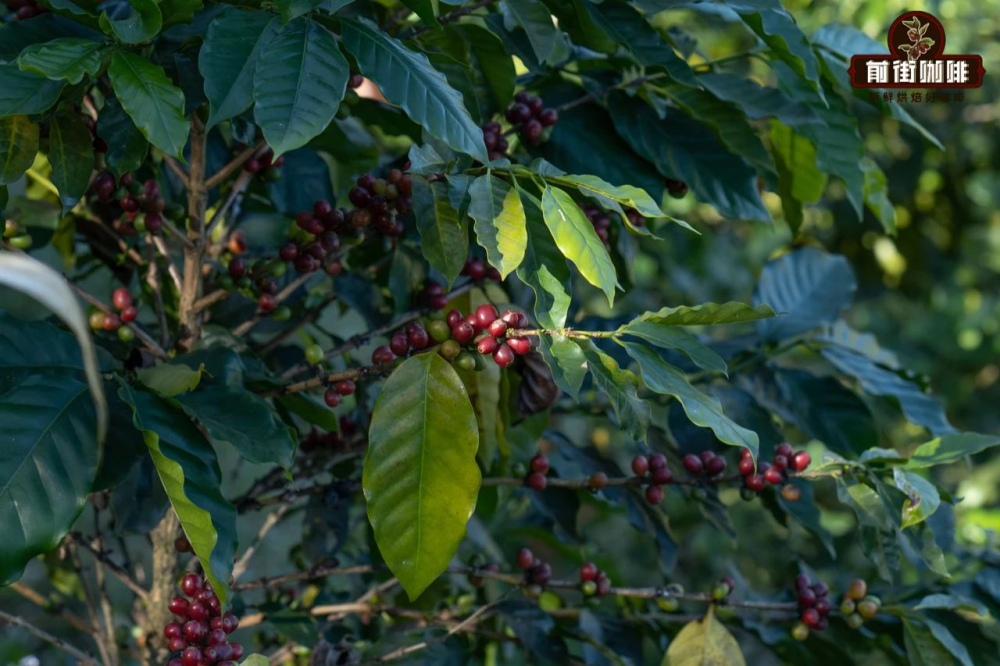
Catimor combines the Arabica and Robusta varieties. Robusta possesses good resistance to leaf rust and rich oils, with high yields and easy cultivation. After hybridizing with Arabica's Typica, Catimor inherited about 25% Robusta genes, gaining improved leaf rust resistance and retaining oil content, while also carrying some of the rich flavors of the Typica native variety. This is why most Yunnan estates began planting Catimor on a large scale, while the cultivation range of Typica gradually shrank.
Main Yunnan Coffee Growing Regions
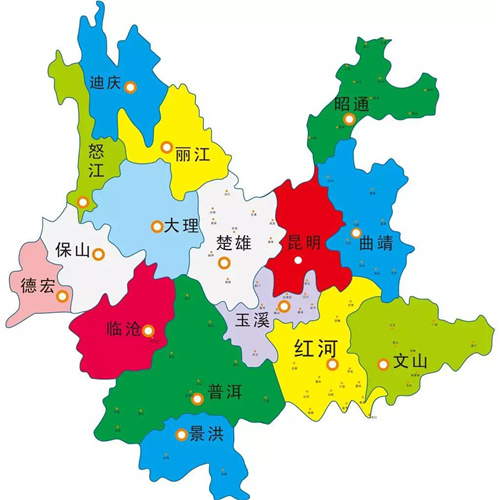
Yunnan's coffee growing areas are concentrated in the southwestern part of the province, covering four major production regions: Baoshan, Dehong, Pu'er, and Lincang. The two Front Street Yunnan coffee beans on Front Street's daily bean list come from Baoshan and Lincang respectively.
Pu'er: Pu'er coffee has a century-long history, with cultivation beginning in the late 19th century and industrialization starting in 1988. Currently, the city's coffee planting area reaches 767,000 mu, making it the largest coffee production region in mainland China by planting area, highest yield, and best quality, as well as a coffee trade distribution center.
Lincang: Located in southwestern Yunnan Province, with the Tropic of Cancer running through its southern part, it borders Pu'er to the east, Dali to the north, Baoshan to the west, and Myanmar to the southwest. It is named for its proximity to the Lancang River and is a brilliant pearl on the southwestern frontier of the motherland. Lincang's year-round average temperature ranges between 16.8°C and 17.2°C, with distinct dry and wet seasons and abundant sunshine.
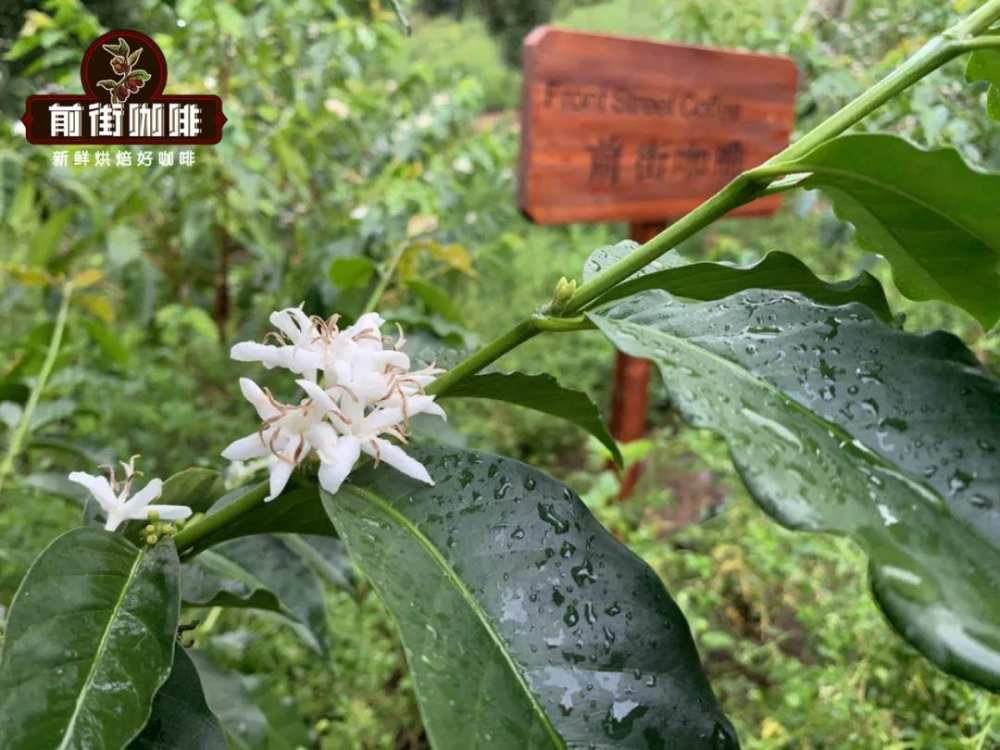
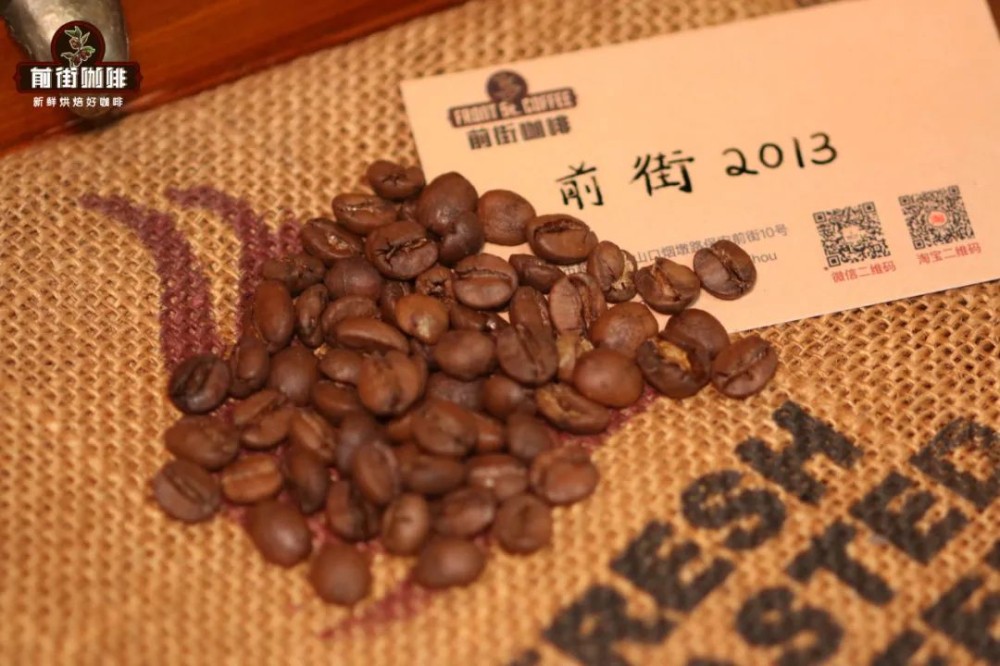
FrontStreet Coffee established its own estate in the Lincang production region of Yunnan, planting the oldest Arabica variety—Typica. In 2021, FrontStreet Coffee produced its first self-grown coffee bean—Front Street 2013 Sun-Dried Typica Coffee.
Baoshan: Baoshan has an average temperature of 21.5°C, with a maximum of 40.4°C, and essentially no frost year-round, making it widely recognized as the best small-bean coffee production area. The small-bean coffee cultivated here is renowned both domestically and internationally for being rich yet not bitter, aromatic yet not harsh, with small and uniform beans, a rich and mellow aroma, and fruity notes. Yunnan Baoshan small-bean coffee has a long cultivation history and can be considered a national geographical indication product. FrontStreet Coffee's Yunnan coffee growing estate is also located here.
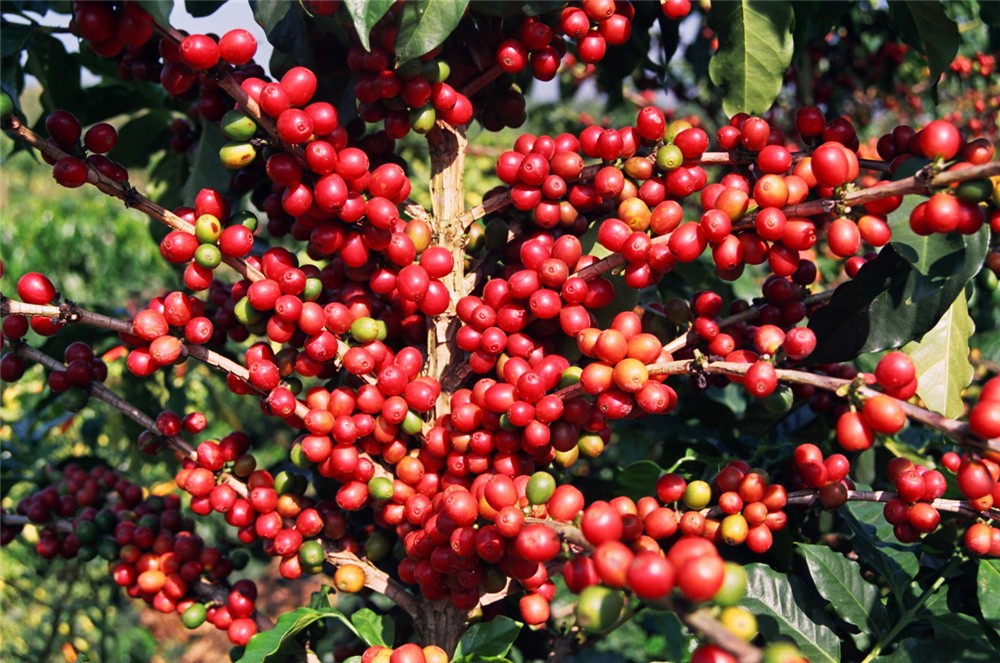
The Front Street Yunnan small-bean coffee on the FrontStreet Coffee bean list comes from Baoshan.
Yunnan Coffee Bean Processing Methods
Yunnan has a year-round rainy season with unstable climate, so most Yunnan coffee beans use the washed processing method, though there are also sun-dried coffee beans. Front Street's Catimor offerings include Front Street Washed Yunnan Small-Bean Coffee and Front Street Sun-Dried Catimor Coffee, and of course, there is also our FrontStreet Coffee estate's Front Street Sun-Dried Typica Coffee.
Front Street's Brewing Parameters for Front Street Yunnan Catimor Coffee:
Since Yunnan coffee's flavor profile does not feature prominent acidity and is primarily nutty in character, Front Street's Front Street Yunnan Catimor Coffee uses a medium roast, which preserves the Yunnan bean's herbal aroma and gentle acidity, with a finer grind size and higher water temperature, using a V60 dripper. Pour the ground coffee into the dripper, and you can smell the bean's herbal and nutty aromas.
FrontStreet Coffee believes that to brew a good pot of coffee, you mainly need to focus on four aspects: water temperature, grind size, coffee-to-water ratio, and brewing technique.
1. Water Temperature
When doing pour-over coffee, FrontStreet Coffee selects different water temperatures based on different roast levels. During roasting, the substances contained in coffee beans are lost as the roast degree deepens, so dark-roasted coffee beans use lower temperatures to avoid extracting excessive off-flavors. For medium-light roasted beans, FrontStreet Coffee recommends a water temperature of 90-91°C, and for medium-dark roast, 88°C is recommended.
2. Grind Size
Coffee grind size is also related to the roast level. Grind size refers to the size of coffee particles, because grind size affects the contact time between coffee and water. The finer the coffee grounds, the more substances water can extract in the same amount of time, but with a fine grind, the coffee is prone to over-extraction during brewing; conversely, the coarser the grind, the fewer substances are extracted in the same time, but with a coarse grind, the coffee is prone to under-extraction. Furthermore, because everyone's grinder is different, the parameters differ too. Here Front Street suggests buying a No. 20 cupping calibration sieve with a mesh aperture of 0.85mm. Take 10g of coffee beans, set a rough grind size and grind into coffee powder, then pour into the sieve to sift, and weigh the sifted coffee powder (you must sift until no more coffee powder can pass through to consider the sifting complete).
A pass-through rate of 70%-75% (7-7.5g from 10g of powder) is the most suitable grind size. For pour-over, the grind size is: 80% for light roast, and 75% for medium-dark roast pour-over. If the pass-through rate exceeds the suitable range, adjust the grind coarser; if it falls short, adjust the grind finer.
3. Coffee-to-Water Ratio
This is the pour-over coffee water-to-coffee ratio extraction parameter and taste differences that FrontStreet Coffee derived based on the SCAA Golden Cup extraction theory. Front Street produces a cup of coffee using 15g of coffee grounds. The choice of coffee dose is usually referenced to the design specification of the dripper. Front Street's dripper is suitable for 1-2 person servings, allowing between 15-20g of grounds. Too much coffee is harder to control, and the extracted coffee flavor easily becomes muddled.
Regarding the coffee-to-water ratio, 1:15 is the most commonly applied, and ratios within the range of 1:14 to 1:16 are all acceptable. Those who prefer a richer mouthfeel can choose 1:14, while those who prefer clearer flavors can choose a 1:16 coffee-to-water ratio. Front Street believes everyone's taste is different, so it takes the middle value of 1:15.
Therefore, FrontStreet Coffee suggests using the foolproof 1:15 coffee-to-water ratio when brewing coffee.
4. Brewing Technique
Finally, the pour-over technique is also important. Commonly seen methods include the three-stage pour, one-cut pour, and drip method, among others. Here FrontStreet Coffee suggests beginners use the three-pour method for brewing, because this technique is suitable for light-roasted, medium-light, and medium-dark roasted coffee beans. The three-pour segmented extraction method can clearly define the front, middle, and back-end flavors of the coffee, which better ensures the coffee's flavor presentation. Now FrontStreet Coffee will teach everyone how to do the pour-over three-pour technique.
Three-Stage Brewing Technique: (Front Street's three-stage brewing method for Front Street Yunnan Catimor Coffee)
Using a V60 dripper yields richer coffee flavors. Water temperature 88°C, coffee-to-water ratio 1:15, coffee dose 15g, grind size (75% pass-through rate on China No. 20 standard sieve).
First Pour: Blooming (Helps Degassing)
First, wet the V60 dripper so the filter paper adheres better to the coffee dripper. Pour out the water in the sharing pitcher while adding 15g of coffee grounds, and bloom with 30g of water for 30s. Many coffee enthusiasts don't know why pour-over coffee needs blooming. Actually, blooming is needed because coffee beans undergo a series of chemical reactions and physical changes during the roasting process from green beans to roasted beans. After reaching a certain degree of roasting, a large amount of gas (mostly carbon dioxide) accumulates inside the coffee beans.
Generally, the fresher the beans and the closer to the roast date, the more bubbles appear during blooming. Dark-roasted beans also release more gas during blooming than light-roasted beans. FrontStreet Coffee's coffee beans are all freshly roasted, so it is generally recommended that customers rest the beans for three days first, allowing the coffee beans to release carbon dioxide first, which avoids instability and under-extraction issues during brewing.
After the gas is released through blooming, the coffee particles can absorb water evenly, allowing for even extraction later. A good bloom allows the coffee grounds to quickly, fully, and evenly degas while also allowing the coffee grounds to fully and quickly contact water, helping the coffee grounds be evenly extracted. These are precisely the purpose and significance of pour-over coffee blooming.
Second Pour
After blooming for 30s, proceed with the second pour, starting with a small stream in a circular motion from the center until reaching 125g, then stop. To concentrate the penetrating force of the water stream, the circular movement range should be small—about the size of a one-yuan coin—then spiral outward. From the second pour onward, pay attention to the water volume, trying not to exceed the height of the coffee bed. That is, when the water stream circles close to the filter paper, you can stop pouring.
Third Pour
Wait until the coffee bed drops to half the height of the dripper, then begin the second stage using the same technique, pouring until 225g. Once all dripping is complete, remove the dripper.
From the third pour onward, observe the rate at which the water level drops. Similarly, start pouring from the center in a circular motion, with the water volume not exceeding the coffee bed height. At this point, you'll also observe that the foam ratio has covered the entire surface. The third pour should increase the tumbling of coffee particles, allowing all settled particles to tumble and thereby dissolve soluble substances.
The rolling particles will begin to settle once water is stopped. At this point, the flow rate caused by the dropping water level creates friction among the coffee particles. So once pouring stops, the coffee particles sink downward, causing clogging. Therefore, pay special attention to the pouring rhythm. If you stop pouring too many times, it's equivalent to letting the coffee particles soak in water continuously, which will cause the final extraction segment to produce astringency and off-flavors.
Time from the start of pouring, the extraction time is 2'00". Next, pick up the entire cup of coffee, swirl it to mix evenly, then pour into a cup for tasting.
Front Street believes that Yunnan coffee's flavor profile is relatively balanced—that is, it has acidity, sweetness, and bitterness simultaneously—so a medium roast was chosen to highlight the chocolate aroma while preserving some acidity.
[Front Street 2013 Sun-Dried Typica Coffee Flavor] Heavy mouthfeel, prominent sweet and sour notes, with citrus and berry tones, a hint of fermented wine aroma, caramel-like sweetness, creamy finish, and black tea notes.
[Front Street Washed Yunnan Small-Bean Coffee Flavor] Herbal, nutty aroma, chocolate, caramel.
[Front Street Yunnan Sun-Dried Catimor Coffee Flavor] Presentation: nuts, chocolate, spices, caramel, plum.
As long as you practice brewing more, you can brew according to your preferred taste. As long as it's what you like, it's all good coffee.
Front Street Coffee Brewing Suggestions:
To brew a delicious cup of coffee, you still need to pay attention to the freshness of the coffee beans. Front Street has always believed that coffee bean freshness has a great relationship with coffee flavor, so FrontStreet Coffee ships coffee beans within 5 days of roasting. Front Street's roasting philosophy is "Freshly Roasted Good Coffee," so every customer who places an order receives the freshest coffee when they get it. The coffee resting period is about 4-7 days, so when customers receive it, it's at its optimal flavor.
For those who need ground coffee, Front Street offers a friendly reminder: once coffee beans are pre-ground, there's no need for further resting, because during transport, the pressure from carbon dioxide inside the packaging also rounds out the coffee flavor, so you can brew a cup immediately upon receiving the ground coffee. However, ground coffee needs to be brewed promptly, because ground coffee oxidizes relatively quickly upon contact with air—meaning the coffee flavor dissipates relatively quickly, and the coffee won't taste as good. Therefore, Front Street recommends buying whole beans and grinding fresh for each brew, so you can better enjoy the coffee's flavor.
For professional coffee knowledge exchange and more coffee bean information, please follow Coffee Workshop (WeChat public account: cafe_style)
For more specialty coffee beans, please add the personal WeChat of FrontStreet Coffee: qjcoffeex
The above content is compiled by CoffeeHunters, a coffee news website.


