







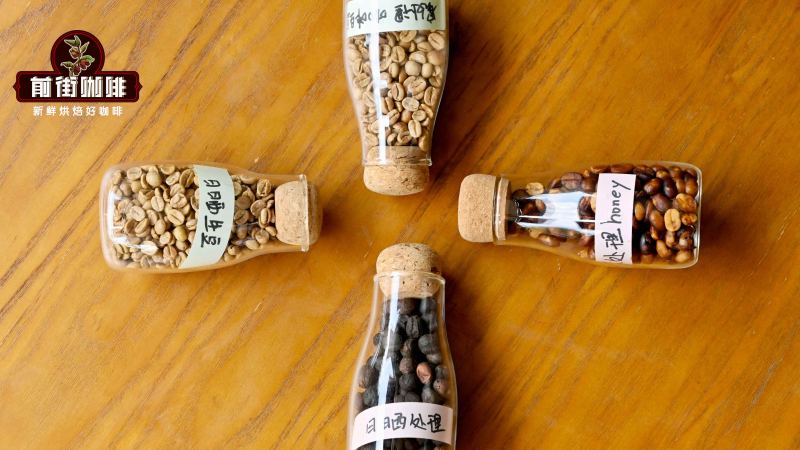
How does coffee bean processing change the cup?
Natural and washed coffee bean processing differ mainly in whether fruit pulp stays on the bean during drying. Washed beans highlight the bean's intrinsic flavor with bright, clean acidity. Natural beans dry with the fruit pulp still present, which adds aroma, sweetness, and body, and makes the cup more layered while softening the main flavor.
The difference shows up early in green bean appearance: washed beans carry a pronounced blue-green color, while natural beans lean yellow. Roasting behavior and silver skin shedding also diverge, and the gap carries into cupping and brewing. Comparing two Panama Butterfly lots, one natural and one washed, makes the effect of coffee bean process on sweetness, acidity, and mouthfeel easy to taste side by side.
Among coffee bean processing methods, natural (dry) and washed are the most common, and the two differ significantly in green bean appearance, roasting behavior, silver skin shedding, and final cup profile. Front Street Coffee has found through long-term cupping that washed beans highlight the bean's intrinsic flavor with bright, clean acidity, while natural beans, because the fruit pulp participates in drying, have richer aroma, enhanced sweetness and body, and more complex flavors. This article compares two Panama Butterfly beans—one natural and one washed—covering processing flow, pros and cons, roasting details, and actual brewing parameters, to help coffee enthusiasts understand the flavor changes brought by different processing methods and make choices based on personal preference.
For more specialty coffee knowledge, please follow our WeChat official account: Front Street Coffee
In coffee bean processing methods, natural and washed are the two most common. What differences do they actually bring to coffee? Front Street Coffee's view is: in the same producing region, the washed method presents the coffee bean's base flavor, while natural and honey processing add aroma and some sweetness on top of that. Therefore, Front Street Coffee believes the core difference between the two is: washed coffee beans highlight the main flavor, while natural coffee beans weaken the main flavor while enhancing aroma and sweetness, making the whole cup more layered. Why is there such a difference?
The key lies in whether the fruit pulp participates during the drying stage. The washed method has no fruit pulp involvement, naturally presenting the bean's most authentic taste; the natural method, because the fruit pulp continues to act during drying, leads to a richer flavor direction. Through long-term cupping and tasting, Front Street Coffee has found that natural-processed coffee beans have a fuller, more robust flavor, while washed coffee beans are cleaner and highlight the coffee's bright acidity. Below, we will introduce the specific differences between these two processing methods in detail.
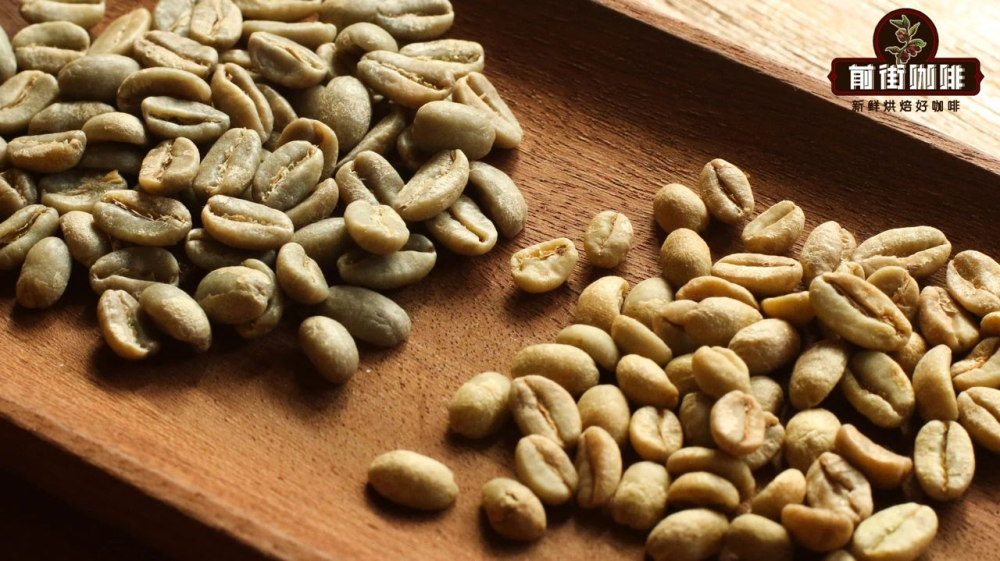
Green Bean Appearance Observing the green bean appearance of washed and natural coffee beans, Front Street Coffee found the contrast between the two is very obvious. Washed green beans show a pronounced blue-green color, while natural green beans lean toward yellow. (As shown below)
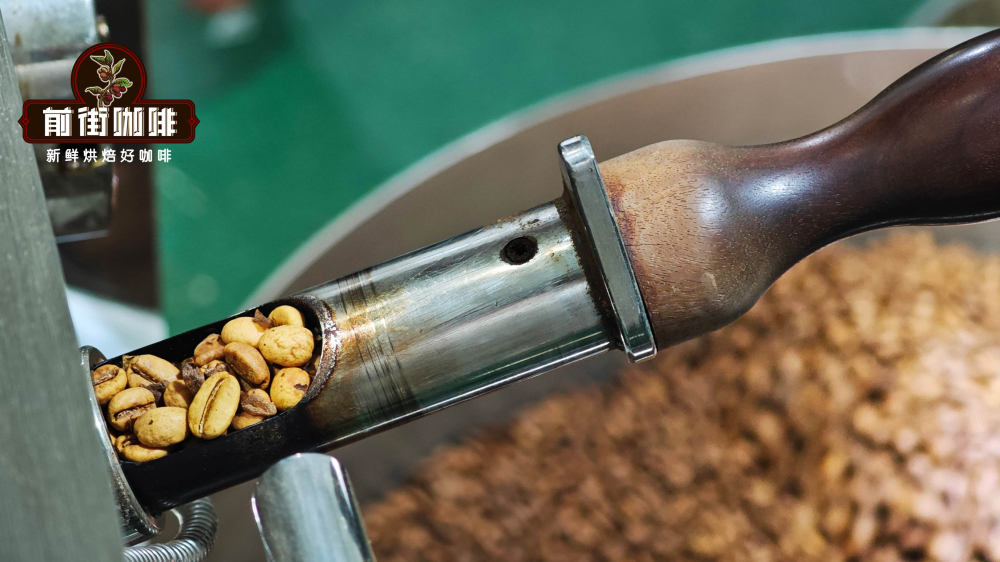
Roasting Details There are also differences when roasting washed and natural coffee beans. Front Street Coffee's roaster explains that washed green coffee beans have a slightly higher moisture content than natural-processed ones. Therefore, when roasting washed coffee beans, the drying time needs to be appropriately extended.
The drying phase generally refers to the period from when the green coffee beans enter the roaster drum until the beans finish drying and turn yellow. Moisture is continuously lost throughout the entire roasting process, but most of the green beans' moisture is removed during this phase.
During the drying phase, the green bean structure is at its most intact and most heat-resistant, requiring sufficient heat to widen the temperature difference between the bean surface and core, so the coffee beans quickly absorb heat and use this opportunity to build enough thermal momentum and bean core pressure.
As roasting progresses, the coffee bean structure becomes increasingly fragile, while the generation of flavor compounds requires sufficient heat. If thermal momentum is not established early in roasting, adding heat later can easily scorch the bean surface. Of course, even if you want to increase the rate of rise during the drying phase, you need to grasp the degree, otherwise it will also scorch the beans.
The image shows washed roasted beans
The image shows natural roasted beans
Roasted Bean Appearance Observing roasted beans, Front Street Coffee found that washed coffee beans have noticeably more silver skin than natural beans.
Front Street Coffee's roaster explains that during roasting, the silver skin at the center line of the coffee bean is the hardest to shed. Natural beans, because the outer silver skin is connected as one piece, more easily shed together with the center line silver skin, so after roasting, natural roasted beans have their silver skin peeled very clean. Washed beans are the opposite: the outer layer has almost no silver skin connection, and the silver skin at the center line crack cannot easily peel off, instead remaining after roasting—this is why washed beans have more silver skin and natural beans have less.
Brewing Details When brewing lightly roasted washed coffee beans, more attention needs to be paid to the amount of silver skin in the coffee. (Roast level also affects the amount of silver skin—the darker the roast, the more silver skin sheds.) Du Jianing, 2019 World Brewers Cup champion, removes silver skin through double grinding to reduce its impact on the coffee.
Natural Method (Dry process/Natural method) The natural method is the oldest and most primitive processing method for coffee beans. Compared to the washed method, coffee processed this dry method is also called "natural coffee" or "sun-dried coffee," where harvested coffee cherries are directly sun-dried for about two to four weeks. Generally, countries with distinct dry and wet climates use this method.
Natural Method Processing Steps 1. Harvest ripe coffee cherries
2. First remove impurities and defective beans
3. Screen floating beans: Pour the coffee cherries into a water tank; ripe, plump cherries will sink to the bottom, while underripe or damaged cherries will float to the surface.
4. Sun drying: Scoop out the ripe coffee cherries that sank to the bottom of the tank, spread them on a drying yard for sun drying, reducing moisture from 70% to around 10-12%. They need to be turned several times daily for even drying, and covered at night to prevent moisture.
5. Remove the outer shell: After about two to four weeks of sun drying, the coffee seed's outer layer has dried hard; then use a hulling machine to remove the outer shell and it's done.
6. Packaging and shipping: The hulled coffee beans are packaged bag by bag, which is what we generally call green beans. Finally, through different roasting processes and brewing variations, coffee can present millions of flavor changes.
Pros and Cons of the Natural Method Pros: The processing is very simple, requiring little investment in tools and equipment, and aside from the floating bean removal step, no water is needed, so costs are lower. It is widely used in regions with scarce water resources and less wealth. Cons: 1. It requires a sufficiently large space for sun drying, and because the coffee beans must be placed outdoors, fallen leaves, insects, and other impurities often mix in.
2. The intensity of sunlight varies daily, so it is difficult to control the drying degree of the coffee beans.
3. It requires more manpower to turn them regularly to ensure no mold or spoilage occurs.
Today there is an improved "African raised bed" design, where the mesh on legs avoids ground moisture and soil impurities, and air convection allows the coffee cherries to be more ventilated and evenly dried.
Washed Method (Wet process/Washed method) The Dutch invented the washed method technique in the 18th century. Because some countries often have rain and high humidity, making the natural method impossible to implement, although the process is relatively more cumbersome, it is currently the most widely used processing method. The biggest difference from the natural method is using fermentation to remove the pectin layer.
Washed Method Processing Steps The first three steps are the same as the natural processing method (1. Harvest ripe coffee cherries 2. First remove impurities and defective beans 3. Screen floating beans)
4. Remove peel and pulp: Put the screened good coffee cherries into a pulping machine to remove the outer skin and pulp, leaving the seeds (coffee beans).
5. Fermentation to remove pectin: Put the coffee seeds covered with a layer of mucilage (pectin) into a fermentation tank, using biological processing where fermenting bacteria dissolve the pectin.
6. Washing to remove impurities: Since fermenting bacteria remain on the coffee beans, the beans need to be sent to a washing pool for cleaning and a second screening (defective beans will float to the surface). This step consumes a large amount of clean water to wash thoroughly.
7. Coffee bean drying: Usually machines (or sun drying) are used to dry the coffee cherries, reducing moisture content to 10-14%.
8. Remove parchment and silver skin: Finally, use a hulling machine to remove the remaining parchment and silver skin, completing the processing, and then green beans can be packaged and shipped!
Pros and Cons of the Washed Method Pros: Coffee beans have fewer impurities and a more intact appearance, and since the pulp in the coffee cherries is removed from the start, there is no need to worry about mold, so overall quality is more stable. Cons: The washed method process is complex and cumbersome, and requires large amounts of water, so costs are relatively higher than the natural method, and it is less used in regions lacking water resources.

What are the taste and flavor differences between washed and natural coffee beans? The natural method is the oldest processing method and is less trouble than the washed method. Although natural beans have uneven appearance and large color differences, because the coffee beans naturally mature inside the fruit without interference from the external environment, natural coffee beans have a more intense flavor, with a wine-like fermented taste and sweetness. The washed method picks the cherries when they turn red, while the natural method ignores them, letting the cherries continue to turn purple and black until they fall off on their own, then spreading the cherries in the sun for several weeks; after the pulp dries, the seeds naturally separate, and then machines or manual labor grind away the hardened pulp to extract the seeds. The key to late harvesting is letting the seeds fully absorb the aroma and sweetness of the pulp, then after sun exposure, the flavor is more complex than washed beans, with good viscosity. Washed beans, because acidic substances are produced during fermentation in the tank, usually have bright, clean acidity. Yemen Mocha, Ethiopian Harrar, and some Brazilian estate beans all belong to this method.
So which is better, natural or washed coffee beans? In daily cupping and brewing, Front Street Coffee believes the washed processing method has stable quality, a clean mouthfeel, and better acidic aroma and brightness; while natural-processed coffee has a tropical fruit sweet-and-sour taste, retaining the coffee bean's natural richness, with rich flavor layers and sometimes a hint of wine aroma. But different people have different flavor and mouthfeel preferences, so before launching Panama Butterfly coffee, Front Street Coffee also roasted two Butterfly beans with different processing methods for comparison.

Natural Panama Butterfly Roaster Yangjia 800N semi-direct fire (roast batch 550g)
Preheat the drum to 200℃ and charge; after 30 seconds adjust heat to 160, open the damper to 3, turning point at 1'38", maintain heat; at 140℃ keep heat at 160℃, open damper to 4. At 5'40" it turns yellow, grassy smell disappears, entering the drying phase; at 168℃ lower heat to 140℃, keep damper at 4. At 178℃ adjust heat to 110, damper unchanged.
At 9'00" drying is complete, the bean surface shows wrinkles and dark spots, the toast smell turns to coffee aroma, a prelude to first crack—at this point listen carefully for first crack. At 9'18" first crack begins, damper fully open to 5, heat unchanged. Post-first-crack development time 1'30", drop at 193℃.
Washed Butterfly Roaster Yangjia 800N semi-direct fire (roast batch 550g)

Preheat the drum to 200℃ and charge; after 30 seconds adjust heat to 160, open the damper to 3, turning point at 1'31", maintain heat; at 4'50" it turns yellow, grassy smell disappears, entering the drying phase; at 165℃ lower heat to 130℃, keep damper at 4.
At 7'50" drying is complete, the bean surface shows wrinkles and dark spots, the toast smell turns to coffee aroma, a prelude to first crack—at this point listen carefully for first crack. At 8'31" first crack begins, damper fully open to 5, heat adjusted to 70℃. Post-first-crack development time 1'28", drop at 193℃.
Suggested Pour-Over Parameters for Natural Butterfly Coffee Coffee beans: 15g
Coffee-to-water ratio: 1:15 Water temperature: 91℃
Grind size: fine sugar (EK43s setting 10)
Pouring technique: three-stage
Bloom with 30g water for 30 seconds, then slowly pour with a small stream to 125g for the first stage; when the water level drops and is about to expose the coffee bed, pour again to 225g and stop; when the water level drops and is about to expose the coffee bed, remove the dripper. Total brew time (starting from bloom) is 2'00".
Flavor: Tea aroma, fermented wine aroma, and spice notes on entry, with a full body; as the temperature drops slightly, sweet-and-sour fruit flavors of citrus, plum, and sweet orange emerge, with a honeyed sweet finish.
Suggested Pour-Over Parameters for Washed Butterfly Coffee
Coffee beans: 15g
Coffee-to-water ratio: 1:15 Water temperature: 91℃
Grind size: fine sugar (EK43s setting 10)
Pouring technique: three-stage
Bloom with 30g water for 30 seconds, then slowly pour with a small stream to 125g for the first stage; when the water level drops and is about to expose the coffee bed, pour again to 225g and stop; when the water level drops and is about to expose the coffee bed, remove the dripper. Total brew time (starting from bloom) is 2'00". Flavor: Jasmine aroma, citrus, and green tea notes on entry, with a sugarcane sweet finish. The mouthfeel is clear and clean, with a rather refreshing feel.

By comparing beans from different processing methods, Front Street Coffee believes that even for the same bean, different processing methods bring different flavors. Natural-processed beans carry an obvious fermented fruit aroma, are more layered, and have a fuller mouthfeel; while washed-processed beans usually have bright fruit acidity and are cleaner and clearer in flavor, allowing you to clearly perceive the bean's flavor—very refreshing. Front Street Coffee often compares different coffee producing regions or different processing methods, hoping to provide everyone with a reference to choose based on their own preferences.
The above content is compiled by CoffeeHunters, a coffee news website.


