







Why is natural Aricha coffee a standout fine coffee?
Aricha is a natural-process Ethiopian coffee from a small village about 8 kilometers from Yirgacheffe town, known for honeyed fragrance, fruity character, and layered, fruit-bomb sweetness. It grows between roughly 1,700 and 2,200 meters, where cooler temperatures slow cherry ripening and give the trees more time to build flavor compounds in the bean.
Most local coffee comes from wild forest varieties, so a single lot may hold anywhere from 2 to 30 varieties, and lots are named for the harvesting area rather than an estate. A lightly roasted profile suits this fine coffee well, and a medium-light roast with V60 three-stage brewing keeps the honeyed and fruity notes intact.
Aricha is one of the most recognizable natural-process coffee representatives in the Yirgacheffe region, known for its honeyed fragrance, fruity charm, and rich, "fruit bomb"-like layers. Starting from the producing region's environment, variety origins, and TOH competition background, this article sorts out the cupping performance and flavor characteristics of natural Aricha and compares it with the washed processing method. At the same time, Front Street Coffee combines a medium-light roast approach to provide V60 three-stage brewing parameters and suggestions for grinding, water temperature, and coffee-to-water ratio, helping coffee lovers more fully understand this bean's style and brewing direction.
When it comes to Ethiopian coffee, Front Street immediately thinks of many beans with floral, berry, and citrus notes, such as Zhumang, Huakui, Aricha, Kochere, Worka, Gedeb, and Red Cherry, offering quite a rich selection. If one were to choose a representative that combines both honeyed fragrance and fruity charm, Front Street would recommend the natural-process Aricha coffee.
Aricha is a small village
As is well known, Yirgacheffe is the name of a town in Ethiopia and also a famous coffee-producing region. The altitude in this area is roughly between 1,700 and 2,200 meters, with relatively low temperatures. Coffee trees grow more slowly, thus having more time to accumulate nutrients and flavor compounds. Because the local coffee has a unique flavor and outstanding quality, many Ethiopian coffee farmers take pride in their coffee having a Yirgacheffe style.
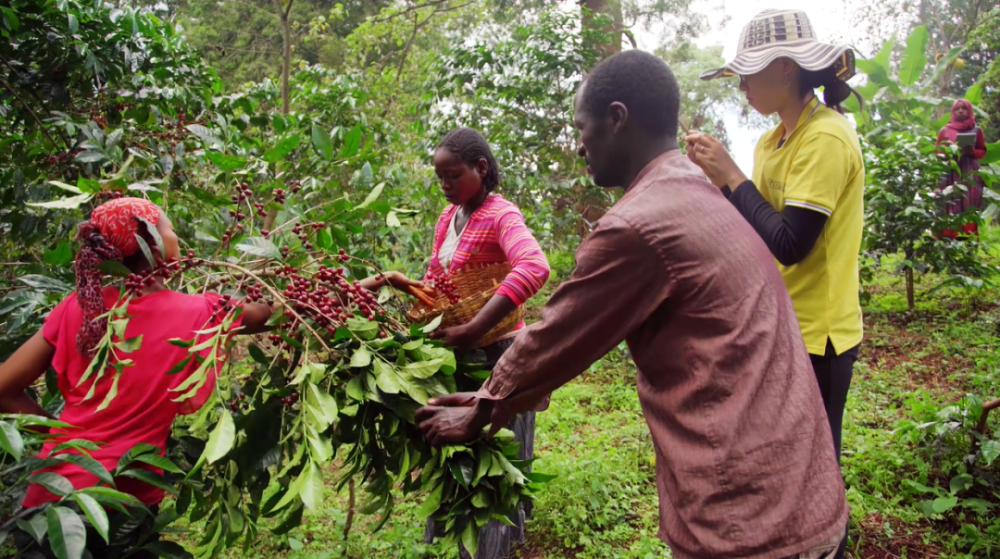
Not far east of Yirgacheffe, there is a village called Aricha kebele. Aricha is about 8 kilometers from the center of Yirgacheffe town. Kebele is the smallest administrative unit in Ethiopia, with a scale of about 500 households, equivalent to 3,500–4,000 people. Most local coffee comes from wild varieties in the forest, so the coffee tree species are very diverse, and a single lot may contain as many as 2–30 varieties. Also, because these coffees are harvested from native forests above 1,850 meters, it is difficult to name them after estates, so they are called by the harvesting area, Aricha. Due to the great variety of Ethiopian coffee varieties, it is impossible to identify and classify them one by one. At the same time, for protection reasons, the local government collectively calls these varieties "Heirloom native species."
What is T.O.H?
The full name of the TOH competition is Taste Of Harvest. It was initiated by the African Fine Coffees Association (AFCA) and is a harvest-season cupping competition, similar to the COE Cup of Excellence competition. There are 8 participating countries: Burundi, the Democratic Republic of the Congo, Ethiopia, Malawi, Kenya, Tanzania, Uganda, and Zambia. It is held every year during the African Fine Coffee Conference and Exhibition. TOH selects the highest-quality green beans from each producing region, and domestic and international judges cup and score them based on the standards of the Specialty Coffee Association of America (SCAA).
The Aricha coffee beans produced by the Adorsi processing station won first place in the natural group of the 2019 TOH competition with 91 points. The Adorsi processing station is located in the Aricha production area of Yirgacheffe, Ethiopia, at an altitude of 1,950–2,100 meters, with red volcanic soil and an average annual temperature of 23 degrees. The coffee variety is the ancient Ethiopian native Heirloom, hand-harvested and carefully selected into green beans of 17–18 screen size. The excellent local microclimate, ancient varieties, and careful picking all laid the foundation for this bean's outstanding cupping performance.
Through cupping the 2019-crop Aricha coffee beans, Front Street found its rich mouthfeel made it very much like a "fruit bomb." On the entry, there is a soft citrus fragrance and the aroma of berries and peaches. The mouthfeel is smooth with a creamy aroma, wrapped in lemon and grape acidity. The aftertaste is richly changing, and the floral fragrance is the ultimate expression of this bean!
Flavor differences between natural and washed processing
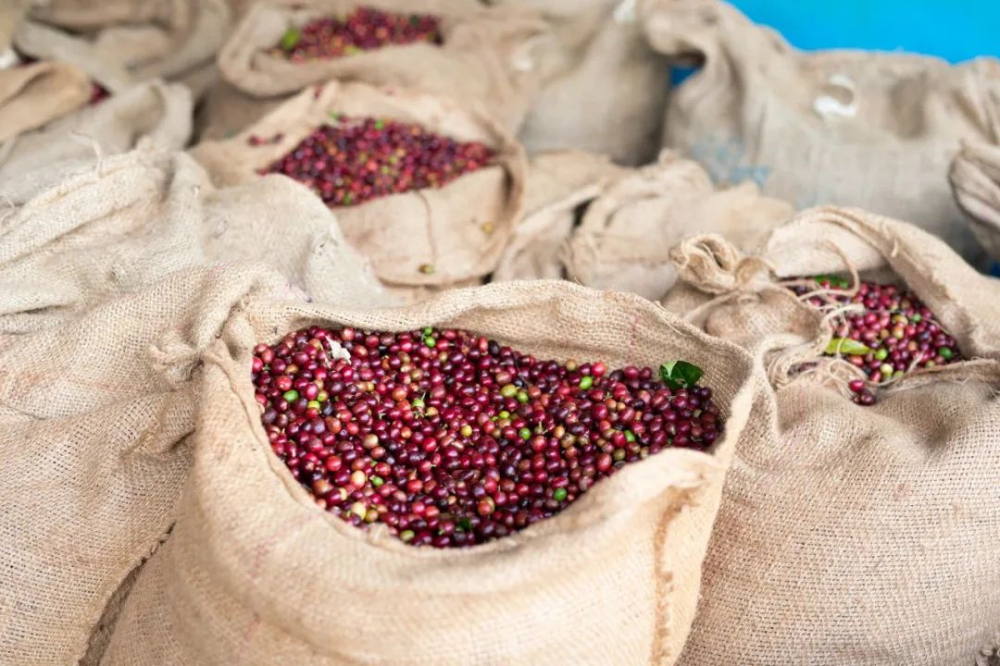
Natural processing is one of the oldest green bean processing methods in Ethiopia. After the coffee fruit is picked, it is immediately dried in the sun. It is more common in areas with abundant sunlight or scarce water resources. Nearly 70% of Ethiopian coffee is processed naturally. Front Street believes that compared with washed coffee, natural coffee has lower acidity, higher sweetness, a clearer body, but slightly lower cleanliness. In terms of flavor, it produces more berry-like notes and is also more complex.
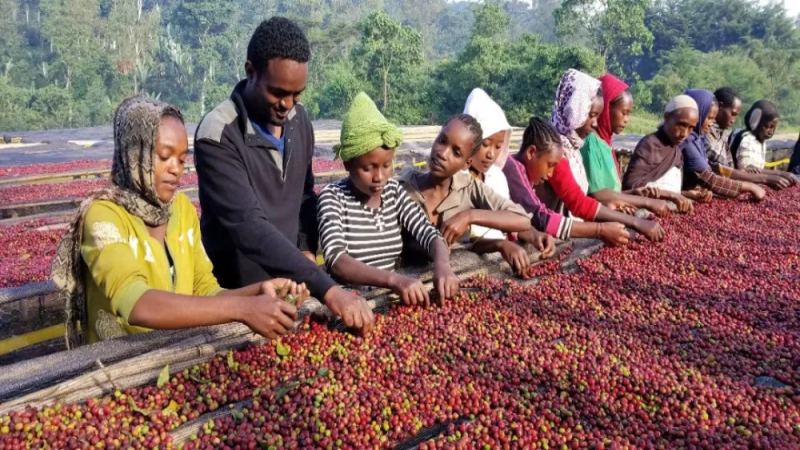
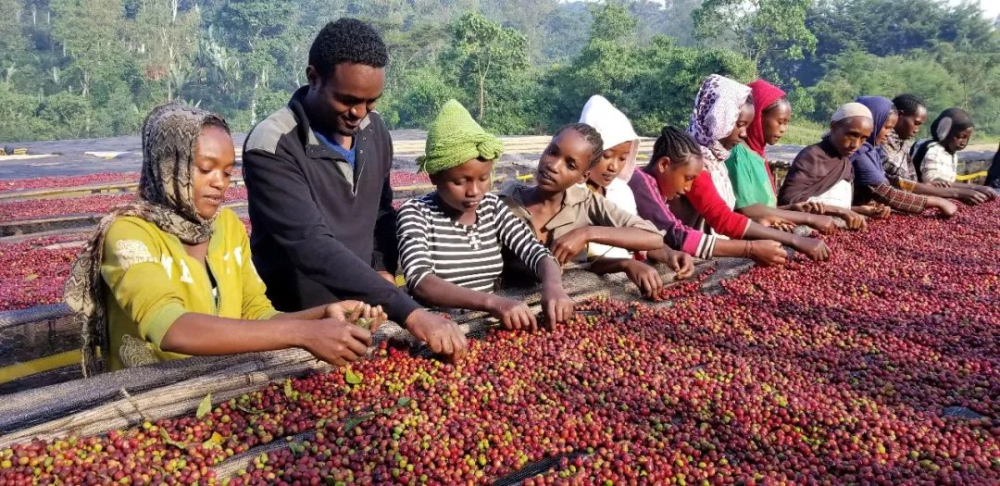
In Yirgacheffe natural processing, after screening usable coffee cherries, the whole coffee cherries with all the flesh and skin intact are placed on raised beds for sun drying. This isolates them from contact with soil from the source and prevents the development of off-flavors during sun drying, which could affect coffee quality. After more than two weeks of drying, the dark brown coffee fruits are professionally stored, waiting for the entire flavor to mature. Natural Aricha coffee has a more intense flavor, richer layers, a vinous fermented note, and relatively higher sweetness.
Front Street believes that the greatest characteristic of Ethiopian coffee lies in its fruity acidity and floral fragrance. Since it is hailed as a "fruit bomb," the roast level naturally cannot be too dark, so Front Street uses a medium-light roast to bring out the coffee's fruity notes.
Through cupping, the dry aroma of natural Aricha gives off an intense fruity scent, with heavy dried-fruit notes and aromas of strawberry, mango, and apricot jam. The wet aroma is like sweet syrup, like thick apricot pulp wrapped in rustic honey or chocolate. On the entry it is not intense, with medium body, much like fruity black tea.
Front Street Coffee brewing reference
Ethiopian coffee beans are lightly roasted, and the beans are relatively hard, requiring hot water at 92°C–93°C to bring out the floral and fruity notes in the coffee. For grind size, Front Street recommends a medium-fine grind (78% passing through a Chinese standard No. 20 sieve). Too coarse and it cannot extract rich substances, making the brewed coffee seem thin. Too fine and it is prone to over-extraction at high water temperature, making the brewed coffee likely to taste bitter.
For the brewing ratio, Front Street believes 1:15 to 1:16 is fine. If you want a richer mouthfeel, use 1:15. If you want to feel the floral fragrance and sweetness more clearly, you can use 1:16 to let the flavors spread out more.
Dripper: V60 Water temperature: 92–93°C Dose: 15g Coffee-to-water ratio: 1:15 Grind size: fine granulated sugar size (78% passing through a No. 20 sieve)
Three-stage pouring: Wet the coffee bed with twice the amount of water as the coffee grounds, forming a dome and blooming for 30s. Then, with a small stream, pour in circles from the inside out until 125g, then pause. Wait until the coffee bed drops to half the height of the dripper, then continue with the same fine stream to pour the third stage up to 225g. Once all the coffee liquid has filtered through, remove the dripper. The time is about 2 minutes.
When brewing this Aricha coffee bean, you can smell the full aroma of ripe fruit. On the entry there is a clear fermented fragrance and green grape notes. After the temperature drops slightly, there is lemon acidity and creamy smoothness, with the finish having the juice-like feel of ripe grapes.
For professional coffee knowledge exchange and more coffee bean information, please follow Coffee Workshop (WeChat public account: cafe_style)
For more specialty coffee beans, please add the private WeChat of Front Street Coffee (FrontStreet Coffee), WeChat ID: qjcoffeex
The above content is compiled by CoffeeHunters, a coffee news website.


