







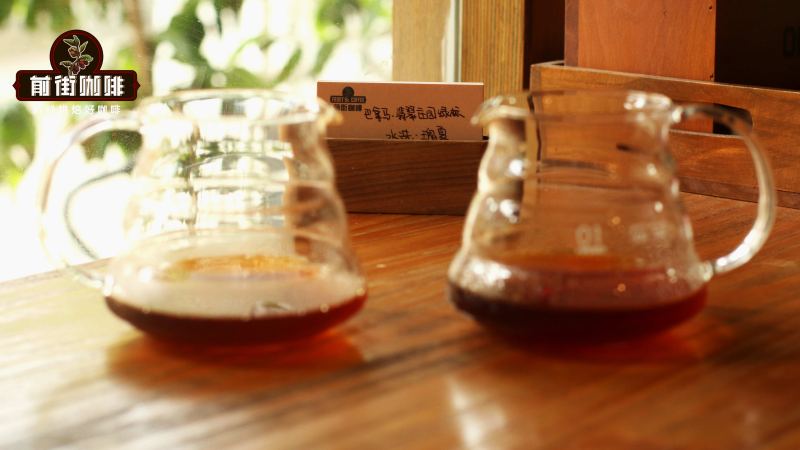
What Does Geisha Coffee Cost at Hacienda La Esmeralda?
Geisha coffee from Panama's Hacienda La Esmeralda spans a wide price range depending on label. Auction lots have reached the highest coffee price levels, climbing from $21 per pound in 2004 to $819 per pound in 2022, while everyday roasted Red Label beans sell for roughly 300-500 yuan per 100g. The three grades, Red, Green, and Blue Label, differ in lot selection, processing, and cup profile.
The estate rose to fame after its 2004 reliable of Panama entry scored an average of 94.6, a record at the time, and it kept winning through 2013. Red Label natural Geisha suits pour-over brewing, where floral and fruity aromatics come through clearly. Diamond Mountain, also under Hacienda La Esmeralda, offers a more accessible option for daily drinking.
Since Geisha coffee shot to fame in 2004, it has become a top-tier presence in the specialty coffee world. As the benchmark origin for Geisha, Panama's Hacienda La Esmeralda offers three grades—Red Label, Green Label, and Blue Label—each with its own characteristics and a price range spanning from entry-level to high-end. This article provides a detailed analysis of the price ranges, flavor profiles, and processing method differences across Hacienda La Esmeralda's Geisha series, along with a complete pour-over guide for the Red Label natural Geisha. In addition, we'll introduce the highly cost-effective Diamond Mountain brand under Hacienda La Esmeralda, as well as Front Street Coffee's hands-on experience with brewing Geisha, helping coffee lovers make clearer judgments when purchasing and tasting.
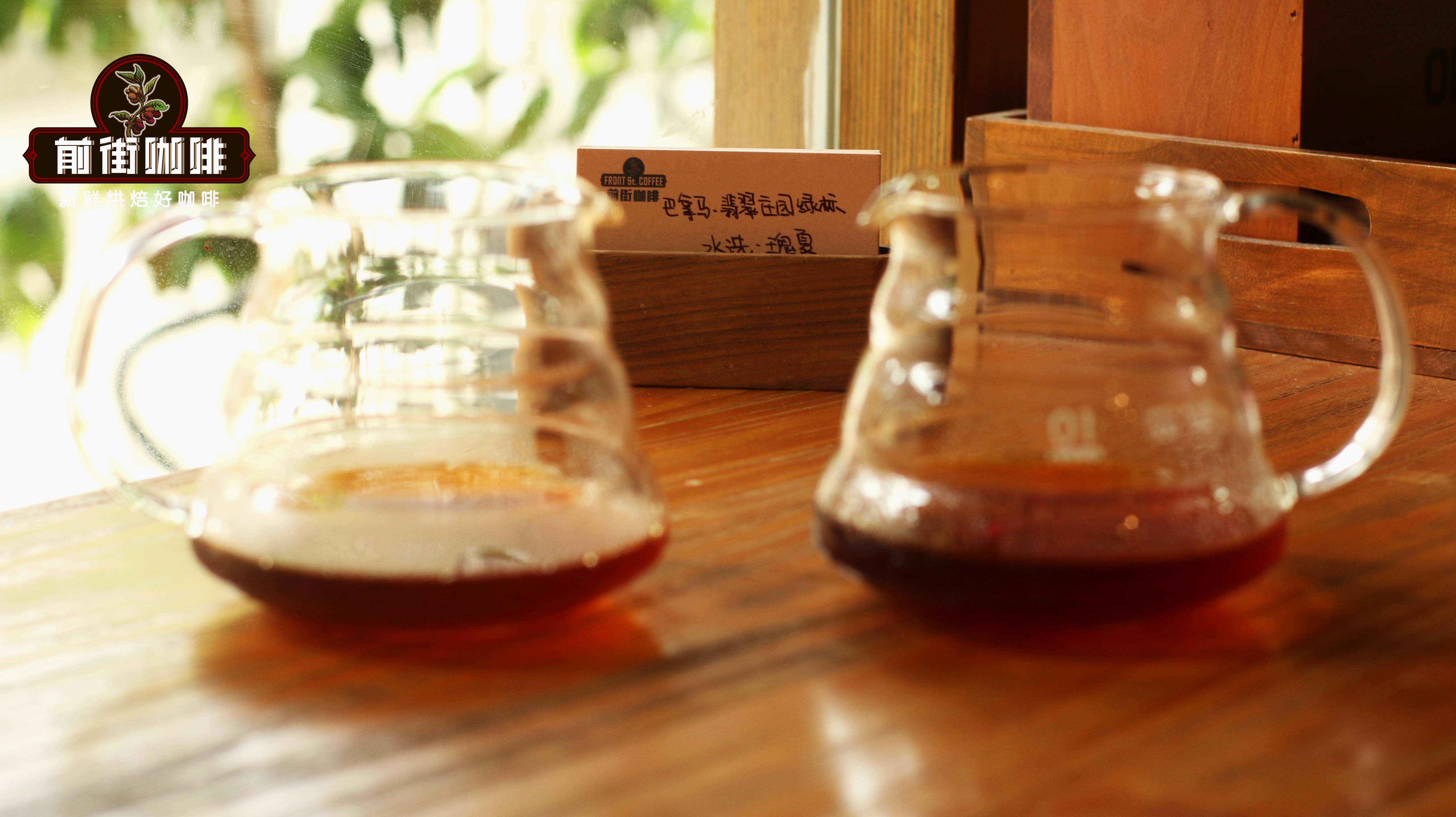
When it comes to Geisha coffee, Hacienda La Esmeralda is a name that's almost impossible to avoid. The estate rose to prominence thanks to a bold competition entry in 2004—the owner submitted Geisha to the Best of Panama (BOP) competition, a variety that the industry at the time widely considered incapable of winning and out of step with mainstream aesthetic preferences. Unexpectedly, Geisha captivated all the judges with its singular floral and fruity aromatics, achieving an average cupping score of 94.6—shattering the BOP record and taking first place.
Almost overnight, Geisha became the champion variety that the global coffee community scrambled to chase. From 2004 to 2007, Hacienda La Esmeralda's Geisha continued to win awards; then in 2009, 2010, and 2013, it took gold multiple times in single-variety competitions. Meanwhile, auction prices for Geisha soared: $21 per pound in 2004, climbing to $170 per pound in 2010, and reaching a staggering $819 per pound by 2022.
Seeing these numbers, do you think the price is absurdly high? Indeed it is. However, these prices reflect the market for Hacienda La Esmeralda's auction-grade Geisha coffee beans. Auction lots typically have extremely limited production and are difficult for most coffee brands to supply consistently over the long term; in most cases, they are secured by coffee shops and then sold in physical stores or featured at tasting events.
The Red Label from Hacienda La Esmeralda that we can buy through everyday channels mostly comes from the same harvest season as the auction beans, sometimes even from the same plot, yet the price is far more accessible. Currently, the commonly available roasted Red Label Geisha beans from Hacienda La Esmeralda sell for approximately 300-500 yuan per 100g, with washed-process lots usually slightly cheaper than natural-process ones.
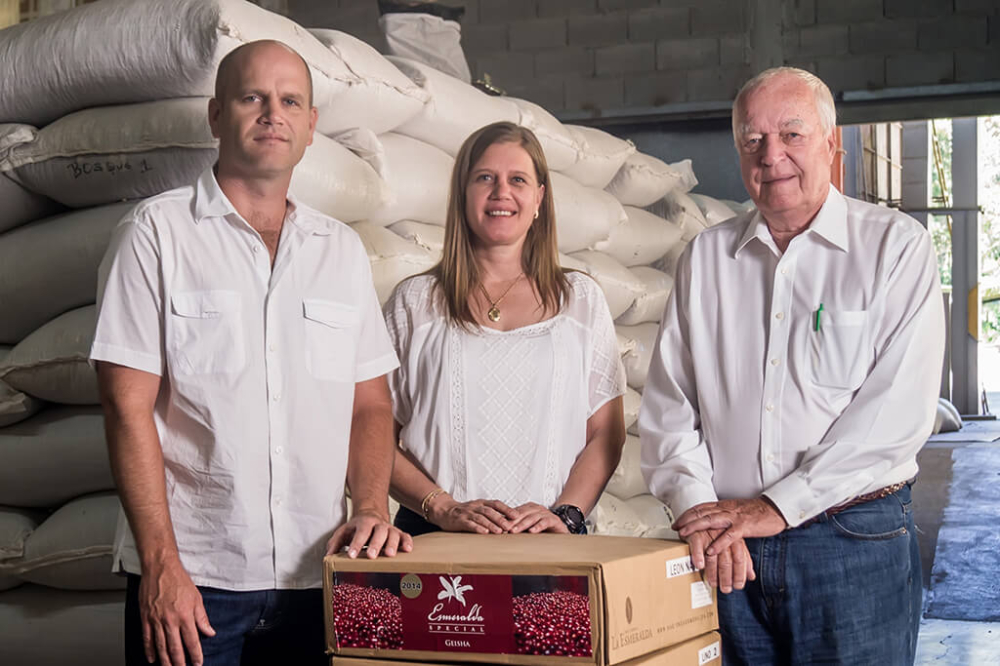
The Red Label lot that Front Street Coffee sourced uses natural processing. Whole coffee cherries are evenly dried in the sun, giving the Geisha a full-bodied juiciness, refined berry-like sweet-tartness, alluring red floral notes, and a captivating black tea finish that has won over a large number of coffee enthusiasts.
The Esmeralda Special series (Red Label) is the highest-grade Geisha coffee bean sold by Hacienda La Esmeralda, grown at clearly defined plots at 1,600-1,800 meters elevation, with each lot required to score 91 or above in cupping. This series typically comes from the Jaramillo and Cañas Verdes sub-estates.
The Red Label lots have another notable feature: each lot has its own independent number, and all beans in a single lot come from the same small plot. For example, this year's Red Label at Front Street Coffee comes from the Mario plot, with freshly roasted beans selling for 350 yuan per 100g, or 75 yuan per cup at Front Street Coffee's store (brewed with 15g of ground coffee). Front Street Coffee's Hacienda La Esmeralda natural Red Label Geisha coffee beans present a flavor profile of: ripe strawberry, rose, black tea, and grapefruit sweet-tartness woven into a floral-fruity tea character, with a berry-sweet finish and a lingering aftertaste.
The Private Collection series (Green Label) focuses on showcasing the signature flavors of Hacienda La Esmeralda's high-altitude Geisha, without emphasizing specific plots the way Red Label does. This series is a blend of lots from various individual plots, roughly understood as a Red Label without plot separation.
Front Street Coffee's Hacienda La Esmeralda Green Label coffee beans use washed processing, resulting in a cleaner and crisper mouthfeel compared to the natural Red Label Geisha. Freshly roasted beans sell for 168 yuan per 100g, or 60 yuan per cup at Front Street Coffee's store (brewed with 15g of ground coffee).
Front Street Coffee's Hacienda La Esmeralda washed Green Label Geisha coffee beans present a flavor profile of: jasmine, ginger lily, and other white floral fragrances, clean acidity like sweet orange and lemon, honeyed sweetness, and a Tieguanyin tea-like aftertaste.
Regarding Hacienda La Esmeralda's Blue Label Geisha coffee beans, according to Front Street Coffee's understanding, Hacienda La Esmeralda officially announced that it would no longer offer the Blue Label series starting from the 2021 harvest. We also noticed on Hacienda La Esmeralda's official website that Blue Label has been removed from the product descriptions, leaving only Red Label and Green Label under the Geisha category.

Blue Label Geisha coffee beans can be considered the entry-level option from Hacienda La Esmeralda, featuring citrus fruit acidity, white floral notes, honeyed sweetness, and a green tea aftertaste. Previously, Front Street Coffee sold freshly roasted washed Blue Label coffee beans at 108 yuan per 100g, or 30 yuan per cup at Front Street Coffee's store (brewed with 15g of ground coffee).
In fact, aside from the well-known Geisha, Hacienda La Esmeralda also has an extremely cost-effective brand—"Diamond Mountain." Browsing Hacienda La Esmeralda's official website, you can see that the estate first divides its coffee into two main categories by variety: Geisha and Catuai. Under Geisha, it is further subdivided into Esmeralda Special, Private Collection, and Geisha 1500—commonly known as Red Label, Green Label, and Blue Label.
But what we want to focus on today is what lies beyond Geisha. Under the Catuai category, there are two brands: Diamond Mountain and Palmyra. The Catuai variety has a long history of cultivation in Panama and is widely favored for its high yield, strong disease resistance, and clean, bright flavor.
Front Street Coffee: Panama · Hacienda La Esmeralda Natural Diamond Mountain
Region: Boquete, Panama Estate: Hacienda La Esmeralda Growing Altitude: 1,400-1,700 meters Variety: Catuai, Caturra Processing: Natural
Front Street Coffee barista's Geisha pour-over notes
Every flavor description at Front Street is based on freshly roasted beans. If coffee beans are stored for more than a month, the aromatics have likely partially dissipated and are difficult to replicate during brewing. Front Street understands the importance of freshness and therefore ensures that only coffee beans freshly roasted within 5 days are shipped, so everyone can enjoy the fullest flavor window upon receipt. Geisha coffee is known for its rich floral aromatics and complex fruit character; Front Street's roasters want to preserve more of Geisha's fine acidity, so they choose a medium-light roast (with slight adjustments for different lots).
To increase the extraction yield of Geisha coffee, avoid over-extraction while highlighting the layers of sweet-tart flavor, Front Street Coffee's baristas use a V60 dripper. The V60 has spiral ribs connecting the top and bottom as well as a large central hole, which speeds up the flow rate; the spiral groove design extends the water path, increasing contact time between coffee grounds and hot water. Each stream of water converges along the grooves toward the center of the dripper, concentrating the pressure on the coffee bed and producing a coffee with richer layering.
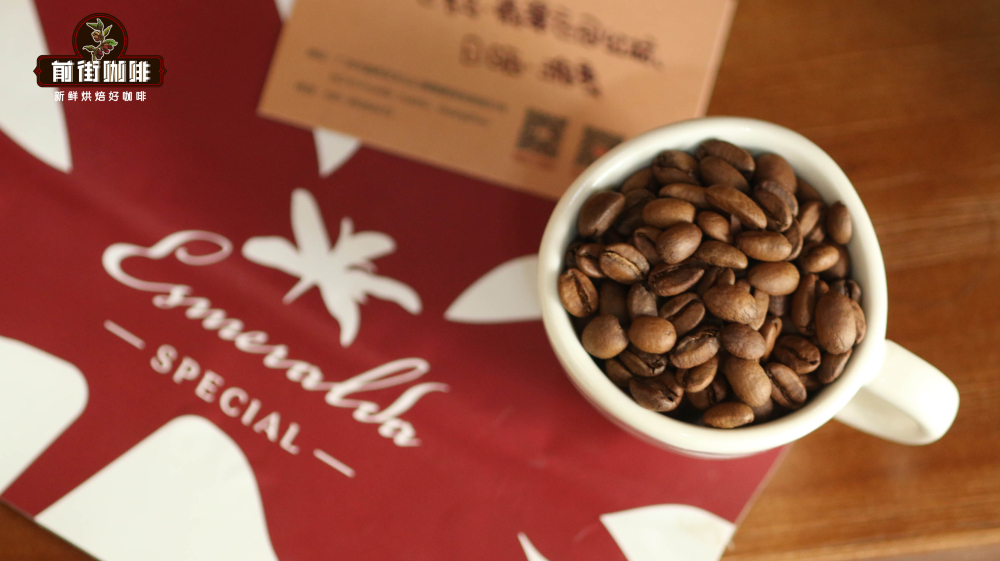
Below, Front Street demonstrates the brewing steps for the in-store Hacienda La Esmeralda Red Label natural Geisha. You can use it as a reference and compare it with your own brewing approach.
The pour-over parameters for Red Label Geisha coffee are: Dripper: V60, Water temperature: 91-92°C, Dose: 15g, Coffee-to-water ratio: 1:16, Grind size: fine sugar consistency (80% passing through a No. 20 sieve).
Three-stage extraction: First, pour 15 grams of ground coffee into the dripper and tare the scale. For the first stage, pour 30g of water for a 30-second bloom while starting the timer. Use a slow, small stream, pouring from the center outward in circles, making sure to saturate the entire coffee bed.
For the second stage, switch to a slightly stronger stream and pour 120g of water. The goal is to lift the entire coffee bed. The water stream should be poured vertically and evenly. At this point the scale should read 150g, and the pour should be completed in about 55 seconds.
When the water level drops to about halfway, begin the third stage: pour 90g of water using a slow, small stream in tight circles. Try to keep the circles small so as not to disturb the coffee bed and cause under-extraction. The total water amount is 240g, and the drip should finish at around 2 minutes 10 seconds. After removing the dripper, swirl the carafe to mix the coffee evenly and it's ready to taste.
The above content is compiled by CoffeeHunters, a coffee news website.


