







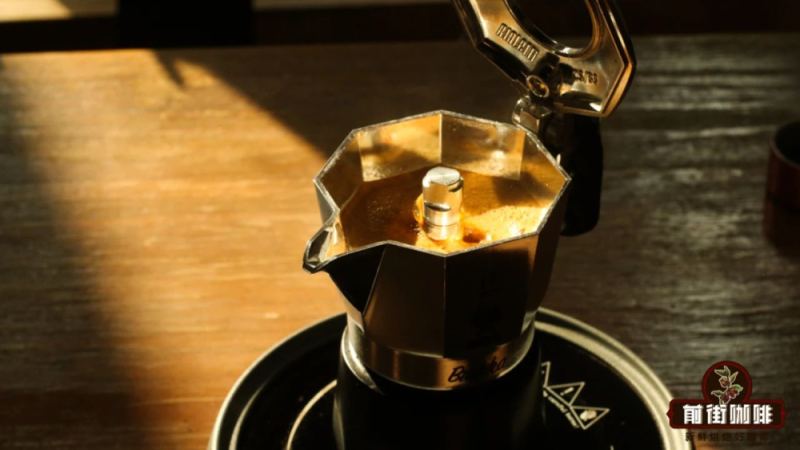
What does a moka pot need to brew a rich cup?
A moka pot brews strong, aromatic coffee at low pressure, not true nine-bar espresso, so the result is a little thinner in body but still full of flavor. The essentials are a fine but not powdery grind, water filled just below the safety valve, the basket leveled and not tamped hard, and a slow finish off the heat as soon as the flow turns pale and sputtering.
Preheat the water before assembling so the grounds are not scorched during the long climb to temperature. Use a medium or medium-dark roast, since light beans often taste sharp here. Never press the coffee down like an espresso puck, and keep the threads and gasket clean so pressure stays even. Moka pots are inexpensive and forgiving once these habits are fixed.
To enjoy a cup of espresso with crema at home, the moka pot is the most cost-effective entry-level choice for many enthusiasts. It is affordable and not difficult to operate, but to brew a richly aromatic coffee with thick crema, there are nuances from grind size control and water level to bean selection. Based on the hands-on experience of Front Street Coffee, this article outlines the structure and working principle of the moka pot and the standard operating procedure, explains the safety details during the brewing process, and answers the frequently asked question "What beans are suitable for a moka pot?", helping you consistently recreate at home a rich, mellow flavor close to espresso.
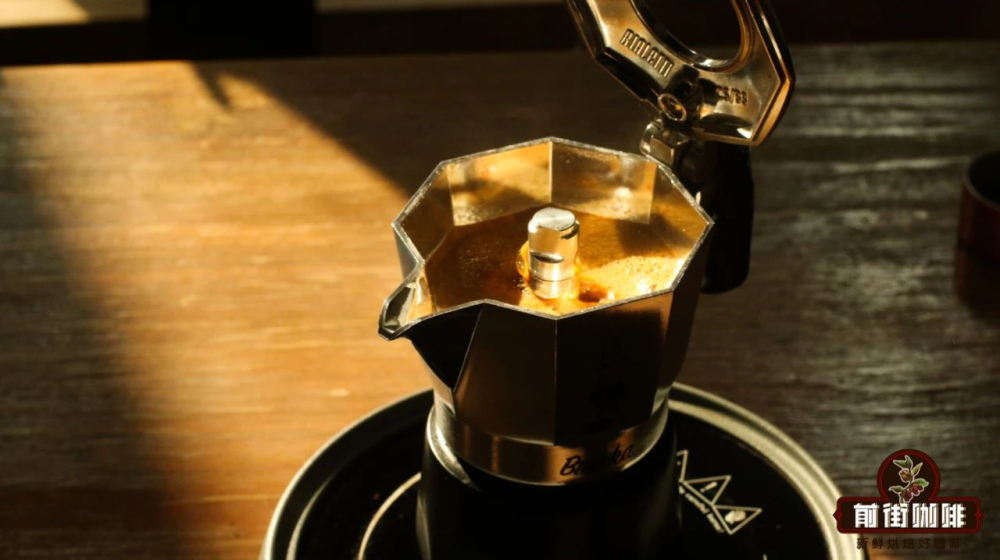
For more specialty coffee knowledge, please follow: Front Street Coffee ( Frontsteet Coffee )
Coffee is now a "new aristocrat" among everyday drinks, and everyone more or less has experience drinking coffee outside. The freshly ground cup in a café is full of aroma and sweetness, but the number of times you go out is ultimately constrained by both your schedule and the thickness of your wallet, so the most practical solution is still to do it yourself at home. Front Street has met quite a few customers who, after tasting that distinctive boozy aroma in the espresso at a Front Street store, start thinking about recreating a similar flavor at home.
Friends with a generous budget will add a dedicated espresso machine at home, while those with a limited budget mostly choose a moka pot. The moka pot is inexpensive, yet it can also brew a strong, aromatic espresso. That is why many people have their eyes on it. There are always people who come to the Front Street Coffee (FrontStreet Coffee) store to ask the baristas: What coffee beans should go with a moka pot? How can you use a moka pot to brew a delicious espresso with plenty of crema? But is what a moka pot brews actually espresso?
The moka pot is currently the preferred device for many coffee enthusiasts to make espresso. Its extraction pressure falls short compared with a professional espresso machine, and the coffee it brews is somewhat lacking in viscosity. But compared with expensive, professional espresso machines, the moka pot as coffee equipment is affordable, and usually a few hundred yuan is enough to get a good-quality moka pot set.
After a few simple steps, you can get a cup of espresso made by your own hands. At this point, many friends are probably already tempted. Next, Front Street Coffee (FrontStreet Coffee) will explain how to use a moka pot and a few usage tips.
The birth of the moka pot can be traced back to the 1930s. An aluminum industry professional who had lived in France for more than ten years returned home in glory, went back to Piedmont, and set up his own workshop to make and sell aluminum household goods. One day, Alfonso Bialetti stared at the washing machine at home and found inspiration, and thus the moka pot, a coffee brewing device, came into being.
The structure and working principle of the moka pot share a similar approach with the washing machine of that time. It is mainly divided into three parts: upper, middle, and lower. The lower chamber is used to hold hot water, the middle is a basket holding coffee grounds, a metal channel connects the upper, middle, and lower parts, and the upper chamber is responsible for receiving the extracted coffee.

When the lower chamber is heated, the water temperature keeps rising, and more and more steam is produced in the limited space, so the hot water surges upward along the metal tube in the middle, passes through the layer of fine coffee grounds in the middle, and then spouts out from the upper chamber like a fountain, leaving the espresso with coffee crema in the upper chamber. This is the extraction process of the moka pot.
Front Street Coffee (FrontStreet Coffee)'s steps for making coffee with a moka pot
1. Fill the lower chamber with an appropriate amount of hot water
2. Pour the coffee grounds into the basket and distribute them evenly
3. Place the basket into the lower chamber, and tighten the upper and lower chambers together
4. Heat the moka pot
5. When the moka pot makes a "whooshing" sound and coffee starts to emerge, turn off the heat source
There is a pressure-building stage in the process of brewing coffee with a moka pot, which means the operation carries a certain degree of danger, and you must keep safety in mind at all times throughout the process.
The grind size of the coffee grounds falls between 0.3 mm and 0.55 mm, which is hard to judge with the naked eye. You can buy coffee ground specifically for moka pots, or compare with a grind size ruler, or determine the appropriate grind size through repeated testing. When adding water to the lower chamber, note that the water level must not be higher than the pressure relief valve, and should be filled to 0.5 cm below the lower valve.
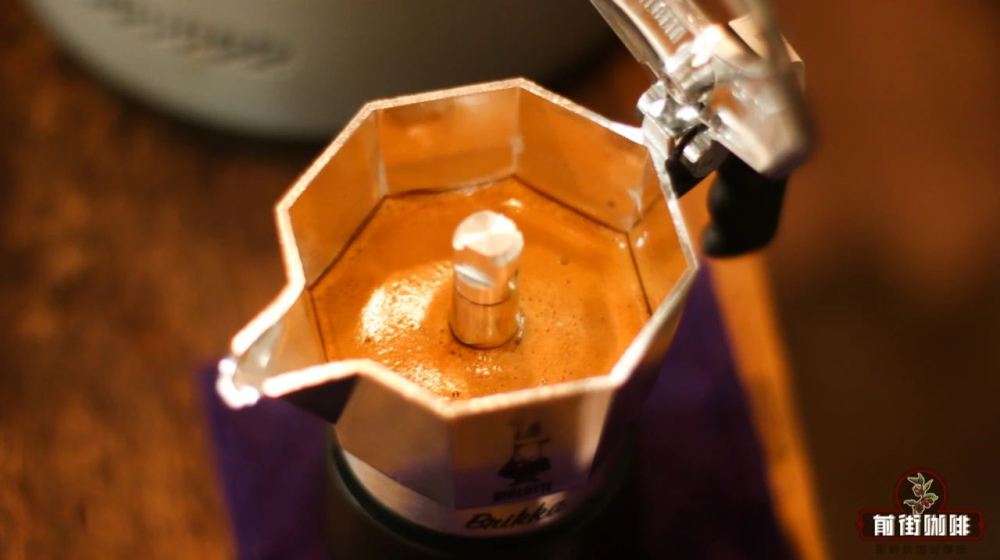
When brewing coffee with a moka pot, if the coffee surges upward too quickly, it means the coffee grounds are too coarse; if you hear the moka pot making a "whooshing" sound but no coffee emerges for a long time, Front Street suggests immediately cutting off the heat source and taking safety precautions.
In front of Front Street Coffee (FrontStreet Coffee)'s bean shelf displaying nearly fifty kinds of coffee beans, friends often stand there blankly, not knowing what beans to use for a moka pot. Many people buy a moka pot precisely to replace an espresso machine for making espresso. Espresso emphasizes being thick and smooth with rich crema, so coffee beans with a darker roast level can better satisfy these characteristics.
To make espresso with a moka pot, Front Street Classic Espresso Blend is recommended. This recipe is composed of three origins—Brazil, Indonesia, and Vietnam—so it combines the caramel aroma of American coffee with the wild character of Asian coffee. In order to maximize the coffee's mellow aroma and to let everyone easily extract rich, dense coffee crema, Front Street Coffee uses a deep roast. It is suitable whether made into an Americano diluted with water or a latte paired with milk, and can be purchased from the Front Street Taobao store or the Front Street Tmall flagship store.
The above content is compiled by CoffeeHunters, a coffee news website.


