







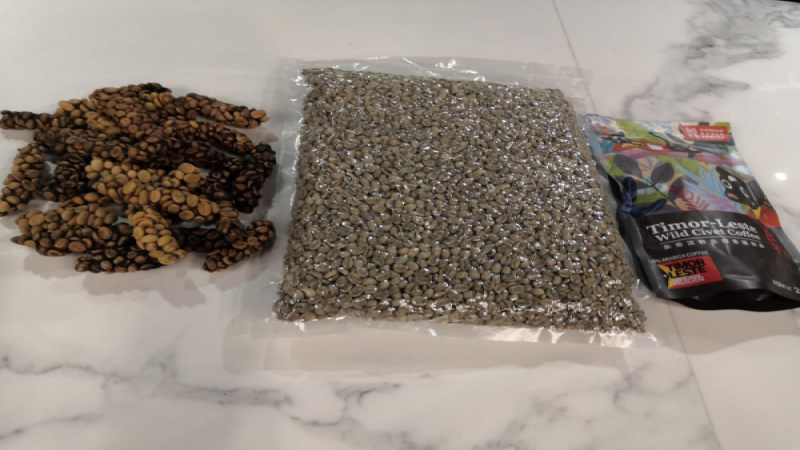
How do you brew luwak coffee taste at home?
Authentic wild Kopi Luwak can sell for as much as 7,000 yuan per catty, so brewing it well matters. Pour-over is the recommended method: the Kono Meimon dripper, with ribs reaching only to the middle and smooth upper walls, slows the flow. Control the coffee-to-water ratio, grind size, water temperature and the three-pour distribution to protect the beans' caramel sweetness.
The flavor comes from civets eating coffee cherries, after which the beans ferment inside the digestive tract before being excreted whole. That process leaves a thick, syrup-like body with earthy, gamey notes typical of Indonesian luwak coffee, plus a minty coolness that lingers from mouth to throat after the cup is finished.
Kopi Luwak is one of the world's rarest and most expensive coffees, with authentic wild beans selling for as much as 7,000 yuan per catty. If brewed improperly, it would undoubtedly be a waste of this expensive flavor. In this article, Front Street Coffee will walk you through the origins of Kopi Luwak and break down every key step of the pour-over process—from choosing a dripper and nailing the coffee-to-water ratio, to controlling grind size and water temperature, and the specific distribution for the three-pour method—to help you fully recreate this mellow coffee's signature caramel sweetness and minty cooling finish.
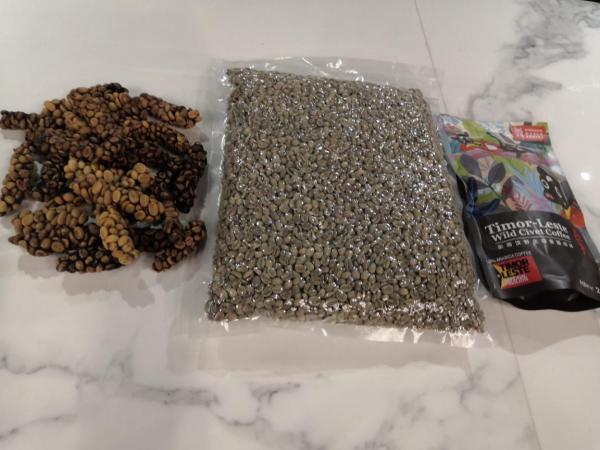
Kopi Luwak is arguably the world's rarest and most expensive coffee variety, with authentic wild Kopi Luwak beans fetching up to 7,000 RMB per catty on the market. Because of this, any mistake in the brewing process amounts to squandering this precious commodity. So if you're lucky enough to get your hands on a batch of Kopi Luwak beans, how should you brew them to avoid a disaster?
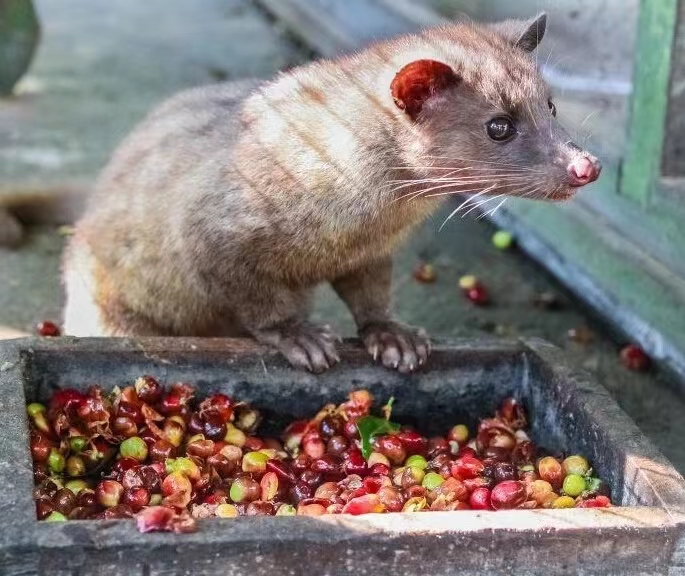
Front Street will first briefly touch on the origins of Kopi Luwak. These beans come from civets that eat coffee cherries, after which the beans undergo a unique fermentation process inside the civet's digestive tract, aided by special bacteria. Since the digestive system cannot break down the coffee beans, they are eventually excreted. Through this fermentation process, the beans develop a distinctive flavor, with a particularly thick and full-bodied mouthfeel.
Indonesian coffee itself is known for its earthy and medicinal notes, with a body that ranks among the fullest of any region in the world. Kopi Luwak's earthy, gamey aroma is even more pronounced, and its thickness is almost syrup-like, giving off a very unique fragrance. After drinking it, a subtle minty coolness lingers in the mouth—a one-of-a-kind experience that ordinary coffee cannot offer. After finishing a cup, take a deep breath or sip some cold water, and you'll clearly feel a cool sensation from your mouth down to your throat, as if you'd just dissolved a mint lozenge.
How should Front Street Kopi Luwak be brewed to taste good? Front Street recommends using the pour-over method for extraction.
For the dripper, Front Street chose the Kono Meimon dripper. Its distinguishing feature is that the ribs extend from the bottom up to the middle, while the upper half has smooth walls. When the filter paper adheres to the dripper, water cannot bypass the coffee bed from the sides, which enhances the body and makes it ideal for brewing full-flavored beans like Front Street Golden Mandheling and Front Street Blue Mountain No. 1.
The dose Front Street uses remains at 15 grams. More coffee grounds isn't necessarily better, nor is less—the specific amount should be determined by the size of the dripper. Front Street uses a 1–2 cup dripper, where a reasonable brewing dose is between 15 and 20 grams; going beyond this range makes brewing more difficult.
As for the coffee-to-water ratio, Front Street recommends 1:15. Although some suggest 1:13 or even lower, Front Street has explained in previous articles that there is no inherent link between concentration and body, and that overly high concentration can actually be unpleasant. Therefore, a 1:15 ratio can also beautifully showcase Front Street Kopi Luwak's rich body and unique aroma.
For grind size, Front Street uses a standard of 70% passing through a No. 20 sieve. When brewing Front Street Kopi Luwak, the grind should be slightly coarser than for light-roasted beans, because Front Street Kopi Luwak is a dark roast with a looser bean structure that more readily absorbs water and releases flavor compounds. If ground as fine as light-roasted beans, it easily produces a burnt, bitter taste; if ground coarser, the coffee becomes weak and insipid, with a thin, watery mouthfeel.
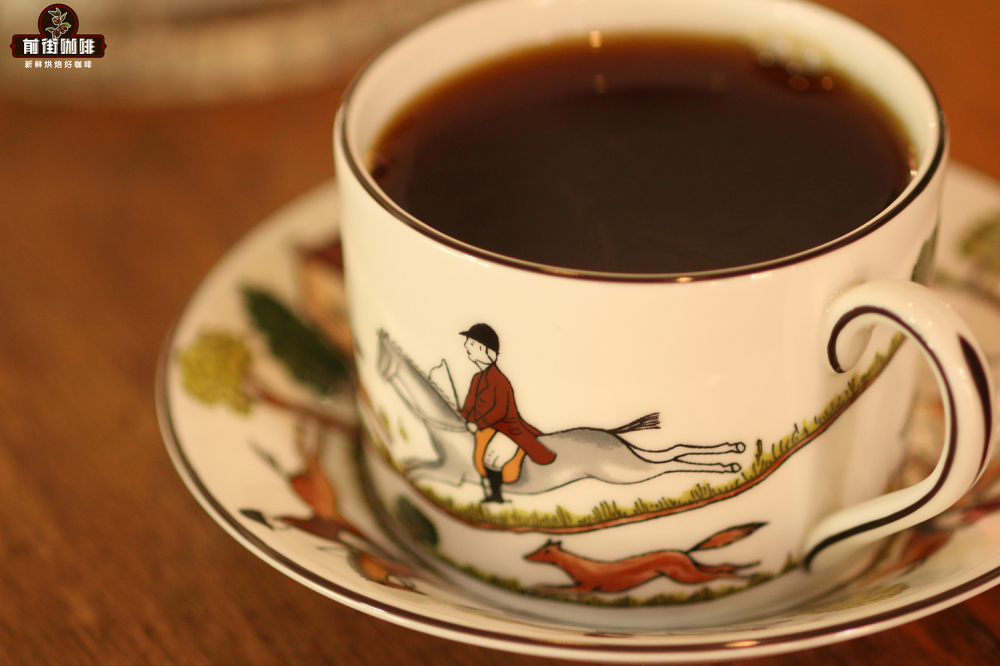
For water temperature, Front Street recommends brewing at 87–88°C. The reasoning is the same as for grind size: too high a temperature easily brings out burnt bitterness, while too low a temperature makes the coffee taste flat and produces an unpleasant sourness.
The brewing technique uses the three-pour method, which better showcases Kopi Luwak's rich body and caramel sweetness. The specific water distribution is: the first pour, the bloom, uses 30 ml—this pour fully saturates the coffee grounds and lets them degas, preparing them for better flavor extraction later; the second pour uses 100 ml; and the final pour uses 95 ml to enhance the coffee's sweetness, overall delivering a solid, full body along with caramel sweetness and chocolate and nutty flavors.
For professional coffee knowledge exchange and more coffee bean information, please follow Coffee Workshop (WeChat public account: cafe_style) For more specialty coffee beans, please add the personal WeChat of Front Street Coffee (FrontStreet Coffee), WeChat ID: qjcoffeex
The above content is compiled by CoffeeHunters, a coffee news website.


