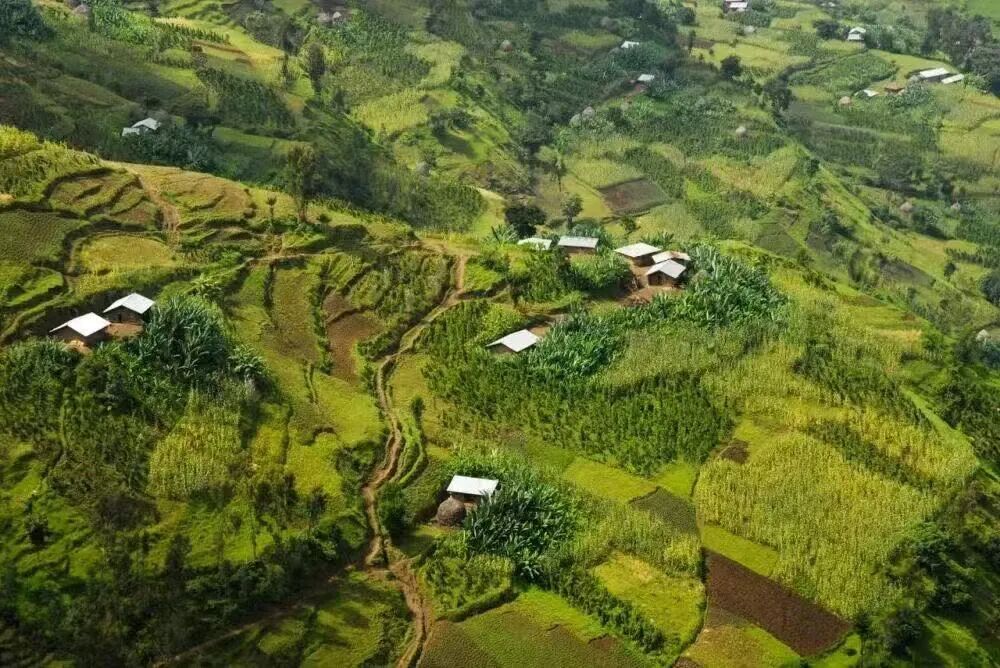
When it comes to specialty coffee beans, many friends immediately think of Yirgacheffe. Not only becauseYirgacheffehas an extremely high reputation in the coffee world, but also because the coffee produced in Yirgacheffe has outstanding flavor performance, is highly recognizable, and leaves an unforgettable impression.But brewing a good cup of Yirgacheffe coffee is not an easy task! Experienced friends know that beans from this region not only tend to clog the filter paper during brewing, but are also difficult to brew out the "Yirgacheffe flavor."No worries! Today Front Street will share how to brew a good cup of Yirgacheffe coffee, and what exactly is meant by "Yirgacheffe flavor"!What is "Yirgacheffe flavor"?Obviously, "Yirgacheffe flavor" refers to the unique coffee flavor nurtured by the Yirgacheffe region! The Yirgacheffe region is located in Ethiopia, with an average altitude of around 2,000 meters,making it one of the highest-altitude regions in Ethiopia.Higher altitudes extend the ripening time of coffee cherries, allowing the coffee enough time to accumulate sugars and develop even better flavor compounds. Combined with its unique terrain and cultivation system, it can be said to provide excellent growing conditions for coffee.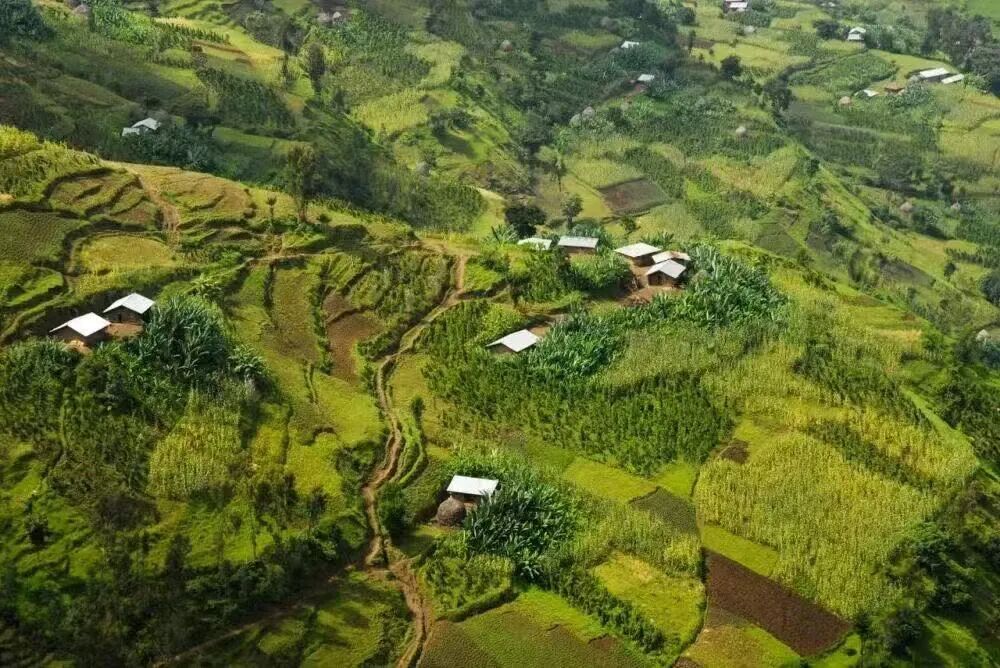
The Yirgacheffe region was originally a sub-region of the Sidamo region, but because the coffee grown there had such a unique flavor, it was separated and established as its own distinct region, and then became one of Ethiopia's most renowned coffee regions. Kochere is a small sub-region southwest of Yirgacheffe, near a village called Chelelektu, located in the Gedeo Zone. The flavor characteristics of the Kochere region are mainly citrus and stone fruits with a tea-like quality. As specialty coffee increasingly pursues regional refinement, Kochere exists as a sub-region of Yirgacheffe.
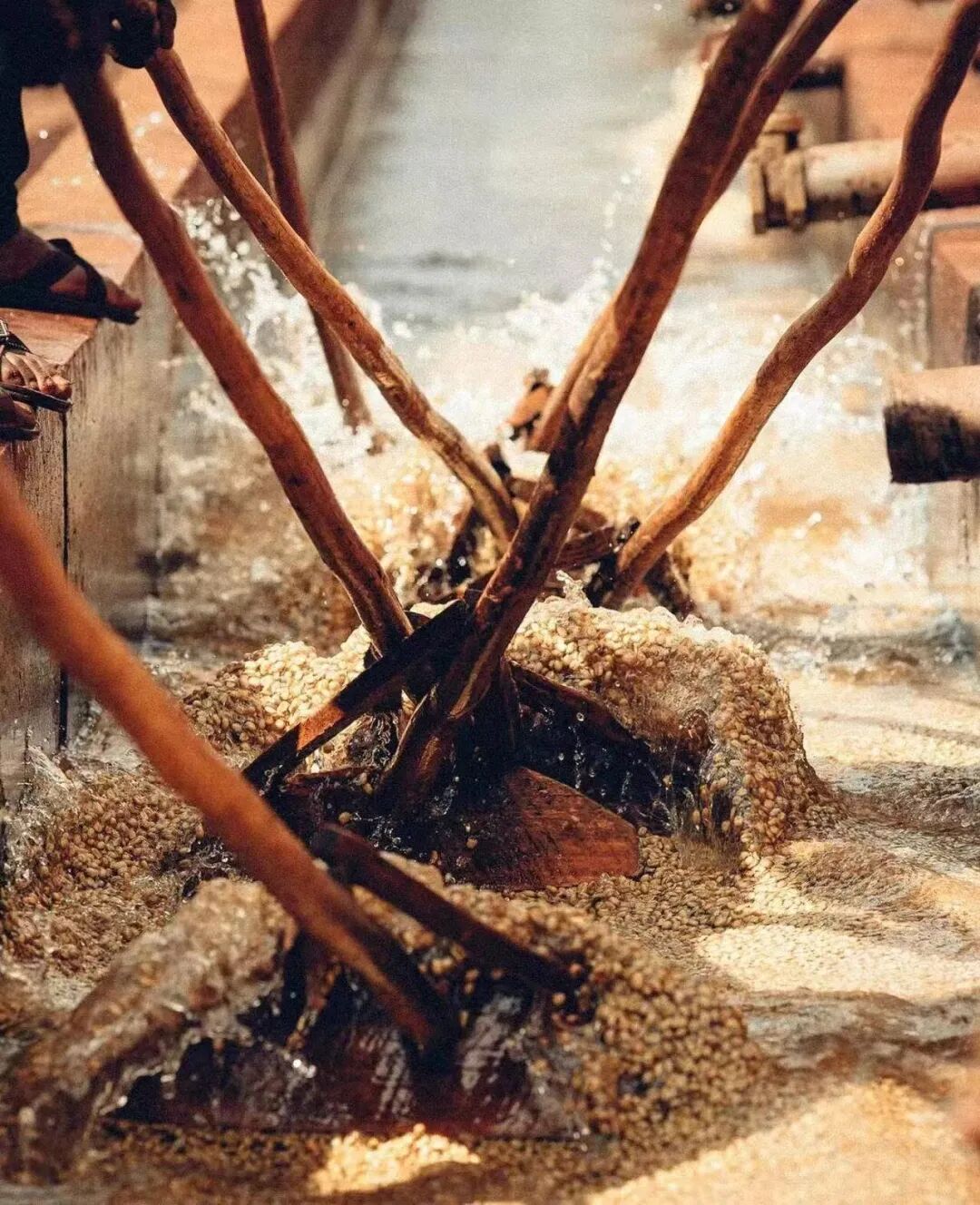
When we talk about Yirgacheffe, we must mention the washed processed coffee from this region, because the "Yirgacheffe flavor" we pass down by word of mouth actually mainly comes from the "pen" of washed processing!In earlier times, Ethiopia's processing was mainly natural (sun-dried), but due to lack of experience and poor management in the early days, the coffee was very prone to quality deterioration during processing, with a high defect rate, and the coffee's qualityoverallon the low side.In order to improve coffee quality, the Ethiopian government introduced washed processing technology and equipment in 1972, establishing the first washing station in the town of Yirgacheffe. Thanks to this measure, defects in Yirgacheffe coffee were greatly reduced and quality was significantly improved. And because washed processing does not allow the coffee beans to ferment excessively, the coffee's own flavor characteristics are better showcased: fresh and bright citric acidity, elegant and soft white floral notes, and a clean green tea finish — this is the Yirgacheffe flavor that coffee enthusiasts pass down by word of mouth.(But note that not all coffee produced in Yirgacheffe will carry the Yirgacheffe flavor) Because the effect of washed processing was so outstanding, many coffee lovers became enamored with coffee from this region after their first taste. Thanks to this, the Yirgacheffe region has adopted washed processing as the primary method, and for a long time, the vast majority of coffee produced in Yirgacheffe was washed processed(there is also natural, but less). This gradually bound Yirgacheffe coffee with washed processing, so when we talk about Yirgacheffe coffee, we immediately think of the flavor performance of washed Yirgacheffe.How to brew a good cup of Yirgacheffe coffee? How to brew out the Yirgacheffe flavor?As Front Street said, brewing a good cup of Yirgacheffe coffee is not a simple matter. Many friends often end up with Yirgacheffe coffee that is: flavorless, thin in body, noticeably bitter, unevenly extracted, and other negative outcomes. The reason is that Yirgacheffe beans generally have high density. Those who hand-grind will surely relate
 (because they are very hard to grind).The high density is both because the beans are grown at high altitudes and accumulate rich substances, and because most Yirgacheffe beans use a lighter roast. High-density beans are difficult for hot water to lift the coffee bed, so inexperienced beginners often pour hot water past the coffee bed, creatingbypass water, which affects extraction; at the same time, because high-density beans easily clog the filter paper, sometimes over-extraction occurs due to excessively long extraction time.
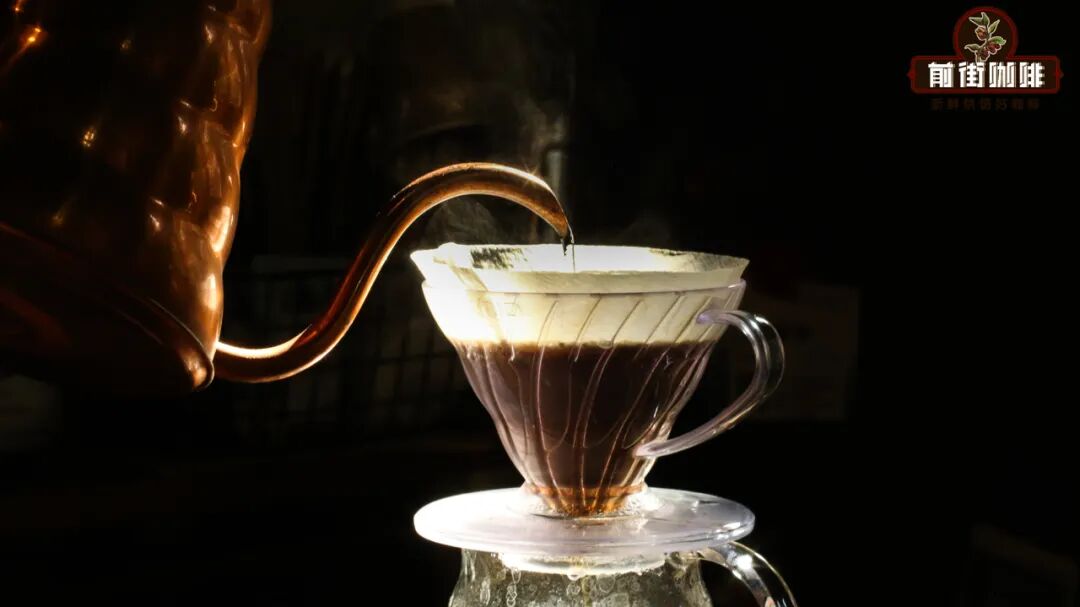
 If we want to brew this type of coffee well, we need to use higher water temperature and a finer grind for brewing, thereby improving extraction efficiency and making the coffee's flavor fuller; at the same time, be careful that the pouring height of the hot water is not too high, which reduces the agitation of the coffee grounds and prevents the filter paper from clogging; finally, divide the hot water into multiple pours anduse a small streamto pour, which can effectively prevent the hot water from overwhelming the coffee bed and creating bypass water.
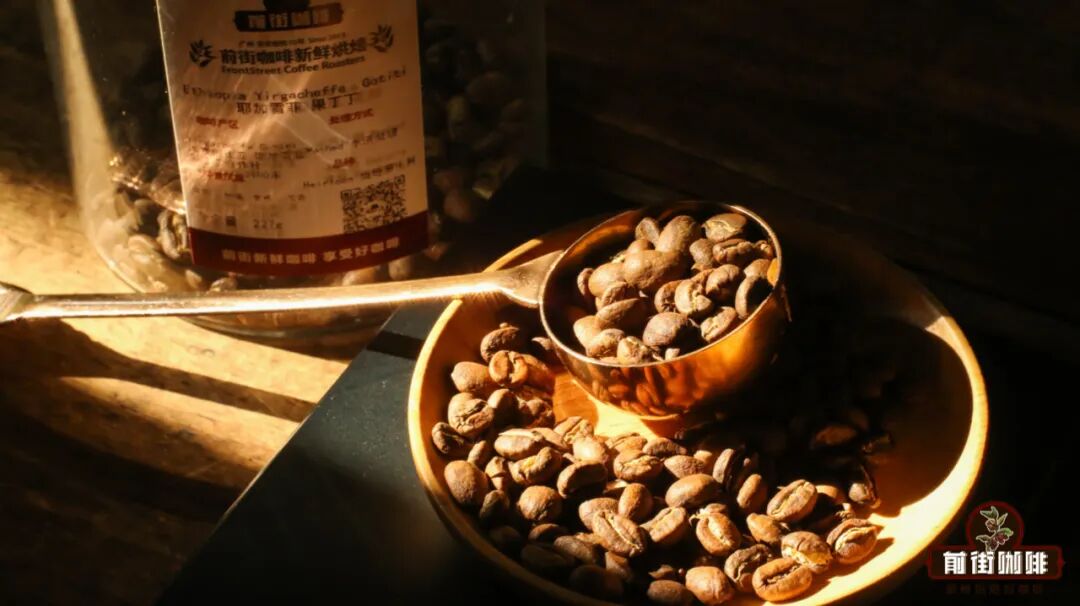
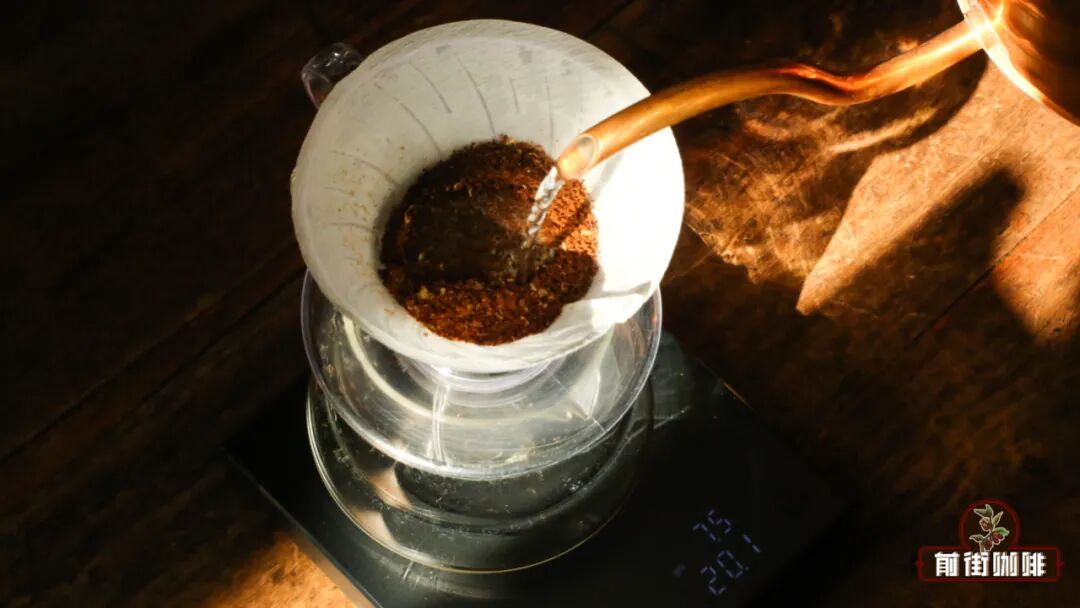
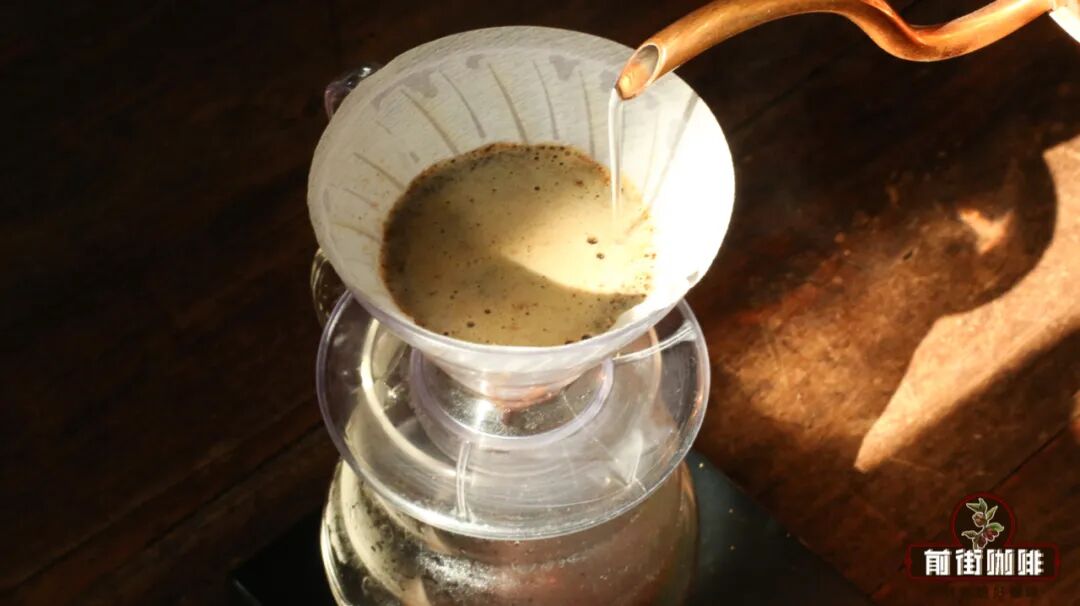
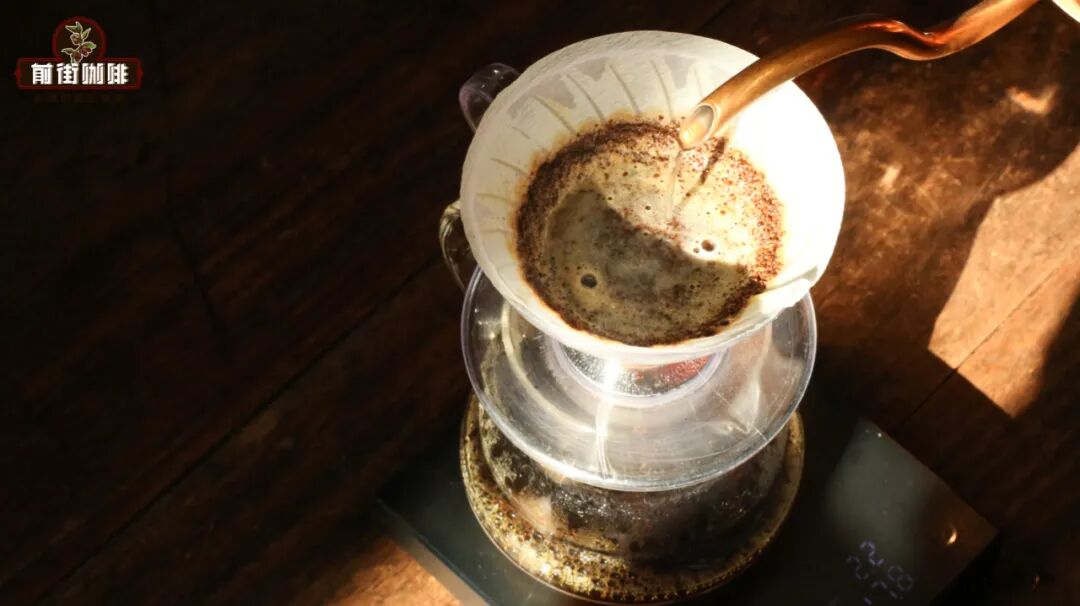
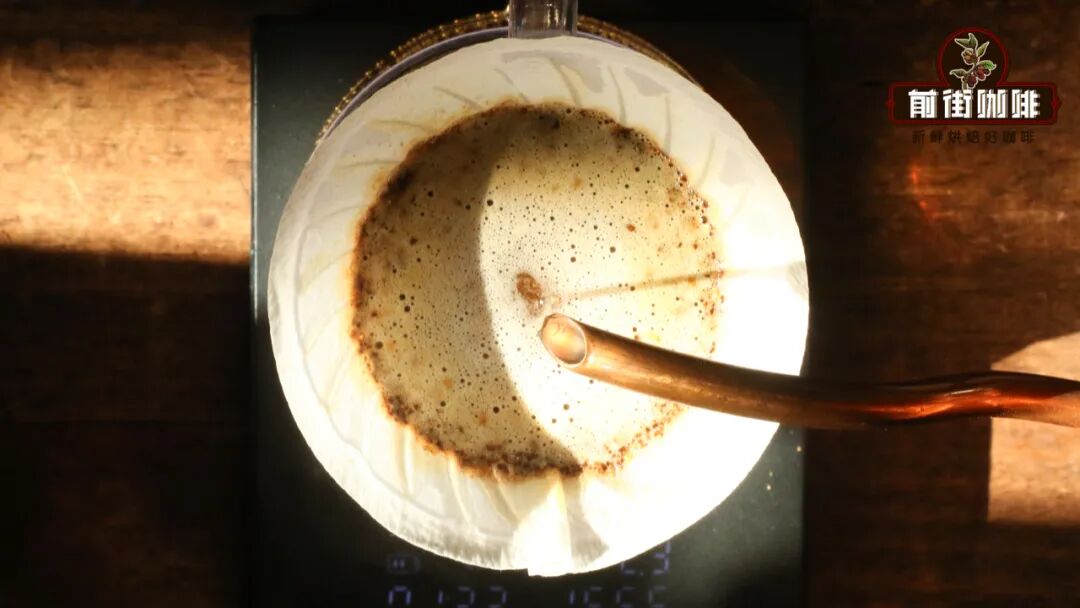
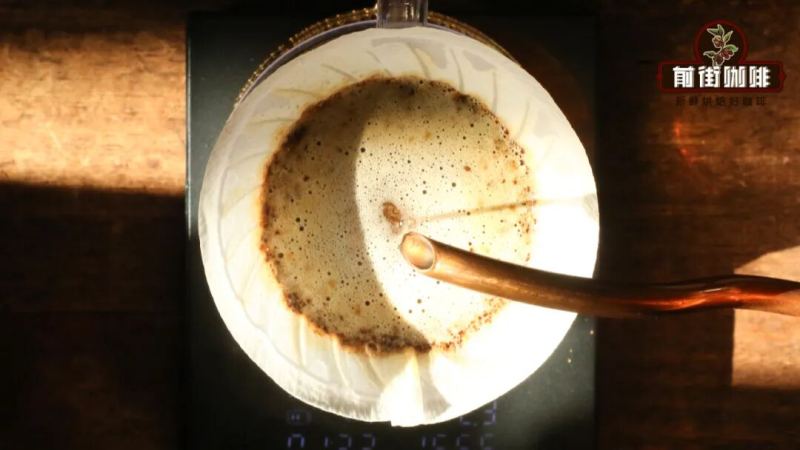
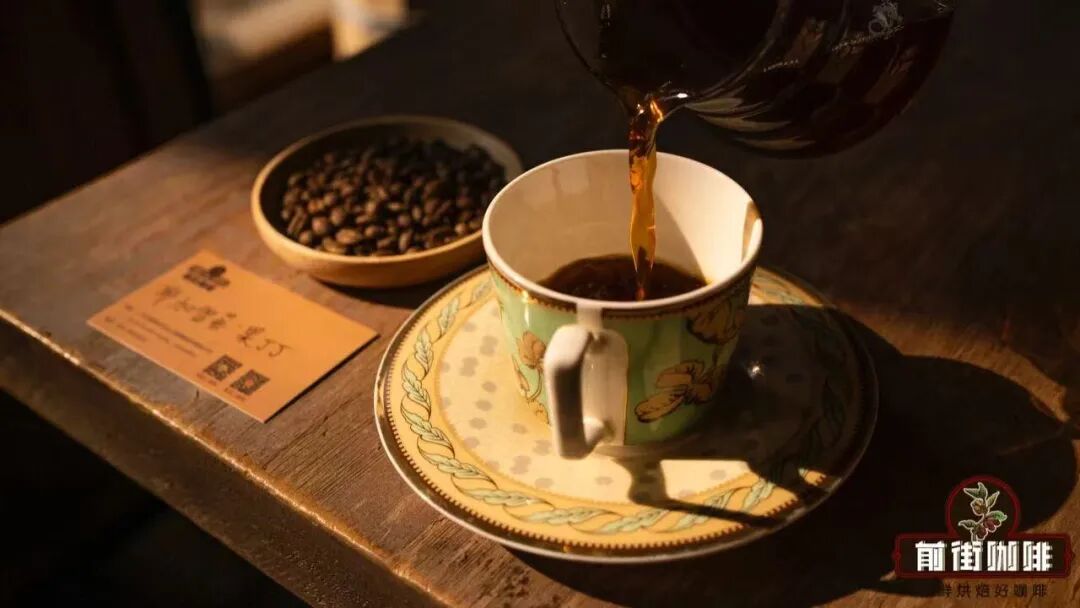
Next, Front Street will demonstrate through brewing how to make a good cup of Yirgacheffe! The beans used in this brewing session are Front Street Yirgacheffe · Washed Gude Gude from Front Street's online Taobao bean list, which carries a very standard "Yirgacheffe flavor"! The extraction parameters are as follows:Grind setting:Ek4310 clicks, 75% passing a #20 sieve, fine granulated sugar textureCoffee-to-water ratio: 1:16Brewing water temperature: 92°CBrewing method: four-pourFirst, we pour 30ml(two cups of water relative to the grounds)of hot water for the bloom, blooming for 30 seconds.After the bloom, we pour the second pour of hot water, 90ml in total, in a large circular motion, using a small stream and pouring slowly. Note that when pouring, we should try not to let the water level exceed the coffee bed too much, to prevent bypass water from occurring.After the second pour of hot water has drained through the dripper, we pour the third pour of hot water. The third pour is half of the remaining water, 60ml in total, also using a small stream, poured in a small circular motion.And when the water level is about to reach the bottom, we can pour the fourth pour of hot water, 60ml in total. While pouring, we can check the time — if it's less than two minutes, we can use a small stream in a small circular motion; if more than two minutes have passed, use a small stream poured at a single point. After the hot water is poured, we simply wait for the coffee to finish dripping, then remove the dripper to end the extraction.Total time was 2 minutes 28 seconds. Without even tasting it, Front Street could already sense the elegant white floral notes from the wet aroma. And upon tasting, one can clearly detect fresh lemon, jasmine floral notes, as well as apricot, citrus and other flavors, with a finish carrying honey sweetness and green tea freshness. The overall body is low, the acidity is bright, clean and refreshing — very nice!
The above content is compiled by CoffeeHunters, a coffee news website.








 (because they are very hard to grind).